
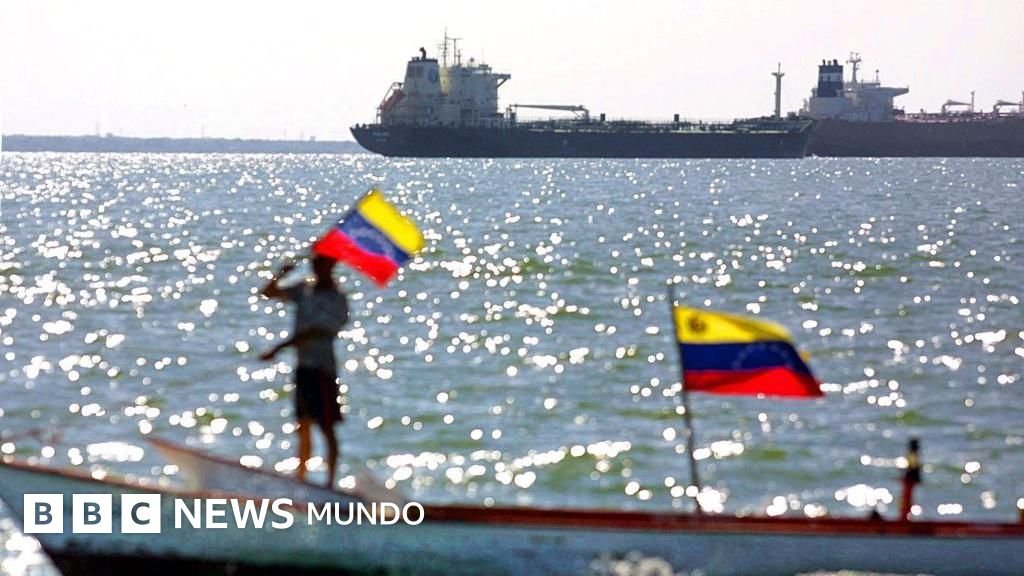
Venezuela’s Oil Blockade: Impacts and Consequences
In Venezuela, oil represents much more than just a source of exports; it is the backbone of the economy and the primary avenue for obtaining foreign currency to import essential goods like food and medicine. Therefore, the comprehensive blockade announced by U.S. President Donald Trump against sanctioned oil tankers entering or leaving Venezuela could severely impact not only Nicolás Maduro’s government but also vast segments of the Venezuelan population. Experts warn that such sweeping measures may backfire on Washington.
The Announcement and Its Context
Trump made the announcement on his social media platform, accusing the Maduro government of utilizing “stolen” oil to finance activities related to drug trafficking, human trafficking, murder, and kidnappings. This statement followed a recent incident where Washington seized a tanker off the Venezuelan coast, which Caracas condemned as “outright theft” and “an act of piracy.” Trump elaborated on Truth Social, claiming that Venezuela is “completely surrounded by the largest naval fleet ever assembled in South America,” adding that this military presence would continue to grow in unprecedented ways.
Venezuela’s Oil Dependency and Production Decline
Home to the largest proven oil reserves in the world, Venezuela currently produces nearly 1 million barrels of oil per day, a stark contrast to over 3 million barrels daily back in 1998, just before Hugo Chávez, Maduro’s political mentor, took office. This decline in production stems from a mix of poor management, lack of investment, skilled labor losses, corruption, and international sanctions. Consequently, a blockade might not significantly affect the global oil market in the short term, but for millions of Venezuelans, the implications could be dire.
The Fallout of Previous Sanctions
When Trump enacted strict economic sanctions against Venezuela in 2018, the move exacerbated an already grave economic and humanitarian crisis. The International Monetary Fund (IMF) estimated that Venezuela’s economy contracted approximately 15% that year, marking one of the sharpest declines in its recent history. Christopher Sabatini, a senior researcher focusing on Latin America at Chatham House, posits that the new blockade could lead to “an even more devastating effect” if it is sustained.
Sabatini suggests that Trump hopes this hyperbolic rhetoric will turn Maduro’s inner circle against him and yield a swift transition. But if that doesn’t happen, a severe crisis looms due to the high percentage of Venezuelan exports that typically transit through these sanctioned vessels. The funds generated from these exports not only facilitate bureaucratic payments and bribery but are also crucial for buying medicines and food, leading to anticipated shortages.
An Increasing Proportion of Sanctioned Vessels
A recent report from Transparency Venezuela noted that 41% of oil tankers (40 in total) operating off Venezuela’s coast in November were sanctioned vessels, considered part of a so-called “ghost fleet.” Independent tracking service Tanker Trackers estimates that around 37 tankers listed by the Office of Foreign Assets Control (OFAC) were operating in Venezuelan waters recently. Venezuelan economist Francisco Monaldi, director of the Latin American Energy Program at Rice University, asserts that Trump’s decision will compel the Maduro government to offer deeper discounts on oil sold through informal channels to navigate the sanctions.
Potential Economic Ramifications
In any scenario, this situation is likely to diminish revenues, leading to currency devaluation and increased inflation. Should conditions persist, a significant drop in GDP is also conceivable. The IMF has projected that inflation in Venezuela could close at approximately 269.9% by the end of 2025, according to its World Economic Outlook published on October 14, 2025.
Political Risks for Trump
Experts caution that this blockade could also yield negative consequences for both the Venezuelan opposition and Trump himself. If the blockade fails to displace Maduro’s government and the Venezuelan populace begins to incur the adverse effects, many might start blaming the opposition and Trump for the ensuing crisis. Moreover, a rise in poverty could spark a new wave of migration to Latin American countries and the United States. According to UN data, approximately 7.7 million Venezuelans have left the country since the onset of the economic and political crisis, making it one of the largest migration crises globally.
Economist Mark Weisbrot, co-director of the Center for Economic and Policy Research (CEPR), argues that the blockade could politically backfire on Trump if it lingers. “Around 90% of Venezuela’s foreign currency comes from oil exports, so a blockade could exacerbate poverty and increase migration.” Such an influx of Venezuelans into the U.S. could lead Trump’s voters to hold him accountable in the upcoming midterm elections.
Conclusion
The implications of the recent U.S. blockade against Venezuela’s oil industry could have far-reaching effects, not just for Maduro’s government but for the everyday lives of Venezuelans and even for U.S. political dynamics. The situation remains delicate, and as the crisis unfolds, all eyes will be on Washington and Caracas.
Key Takeaways
- Venezuela’s economy relies heavily on oil exports for essential imports.
- The new U.S. blockade may worsen humanitarian conditions for the Venezuelan populace.
- A significant portion of Venezuelan oil production involves sanctioned vessels, complicating the situation.
- The political fallout from these sanctions could impact U.S. domestic politics and migration patterns.