
Understanding the Bondi Beach Shooting: A Deep Dive
The recent tragic event at Bondi Beach has captured worldwide attention, revealing critical insights into the planning and execution of the attack. New court documents suggest that the suspects meticulously prepared for the incident, including practicing firearm use weeks in advance. Here’s a detailed look into what transpired.
Timeline of Events Leading Up to the Attack
According to legal documents, the two alleged attackers orchestrated the attack on December 14 with intent and careful planning extending over several months. Just two days prior, they reportedly visited Bondi Beach to survey the area.
Day of the Attack
On that day, fifteen lives were lost and many more were injured as the armed assailants opened fire during a Hanukkah celebration. The documents mention their intention to employ explosives, including an undeployed “tennis ball-sized bomb.”
Key Suspects
Naveed Akram, aged 24, is facing 59 charges, including 15 counts of murder and one of terrorism. His accomplice, his father, Sajid Akram, lost his life during a confrontation with police at the scene.
Evidence and Preparation
With the lifting of a temporary publication ban, new evidence has come to light, including videos capturing the suspects in the morbid lead-up to the incident.
Incriminating Footage
Footage from one of their mobile devices shows the men discussing their motives for the attack while seated near an image of the Islamic State (IS) flag. They reportedly condemned “actions of the Zionists,” alongside Naveed reciting passages from the Quran.
Planning and Training
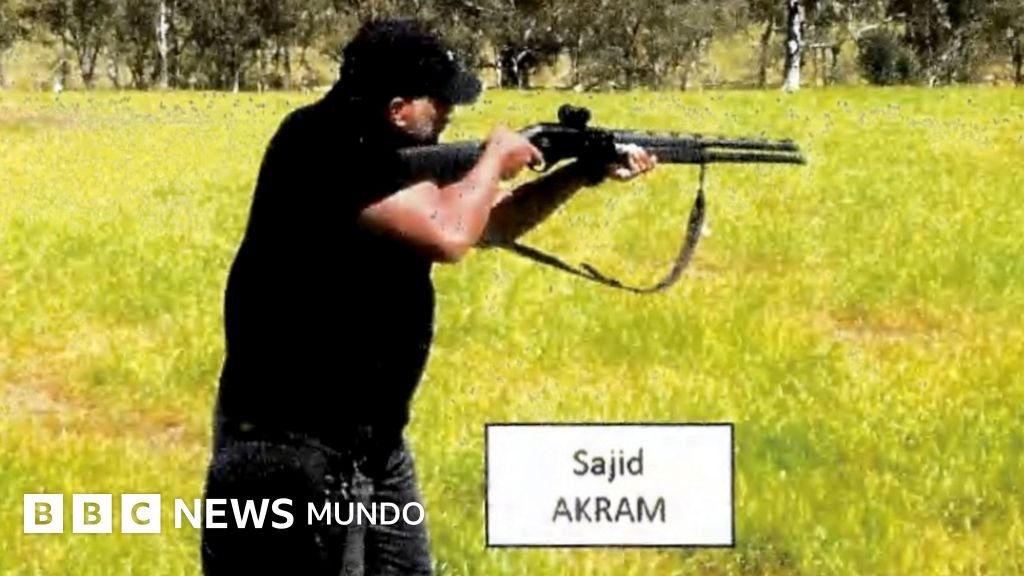
Additional images indicate that weeks prior, both father and son were seen training with firearms in rural New South Wales, engaged in tactical shooting practices.
Surveillance Video Insights
Surveillance recordings from December 12, just two days before the attack, show two individuals believed to be the suspects parked nearby, walking along the same pedestrian pathway before the tragic shooting.
Weapons and Intent
On the day of the attack, surveillance captured them leaving a rental accommodation in Sydney carrying concealed items, later confirmed to include two shotguns, a Beretta rifle, and several improvised explosive devices.
Flags and Symbolism
As the evening progressed, the suspects adorned their vehicle with Islamic State flags before removing their weaponry, showcasing an alarming level of premeditation.
Community Reactions and Aftermath
In the wake of this tragedy, the Jewish community has voiced concerns regarding Prime Minister Anthony Albanese’s response to antisemitic threats. Public sentiment has shifted, leading to calls for more stringent legislation against terrorism and hate speech.
Calls for Accountability
Prime Minister Albanese faced backlash during a memorial event, pledging to take actionable steps to ensure the safety of communities. Concerns have arisen regarding previous intelligence reports on Naveed Akram, which allegedly indicated possible links to a Sydney-based Islamic State cell.
Legislative Changes and Discussions
In light of the incident, New South Wales Parliament is set to discuss potential new laws aimed at regulating firearm access and addressing public safety concerns, reaffirming the need for balance between safety and civil liberties.
Conclusion
The Bondi Beach attack serves as a grim reminder of the lengths to which some individuals may go to perpetrate violence. This unfortunate event has sparked a wide-ranging dialogue about community safety, government accountability, and the urgent need for reforms to prevent such occurrences in the future.
Key Takeaways:
- Allegations reveal meticulous planning behind the Bondi Beach attack.
- The suspects had been actively training with firearms weeks prior to the incident.
- Community and governmental responses are evolving in the wake of the violence.
- Calls for stricter laws surrounding weapons and antisemitic threats are on the rise.