
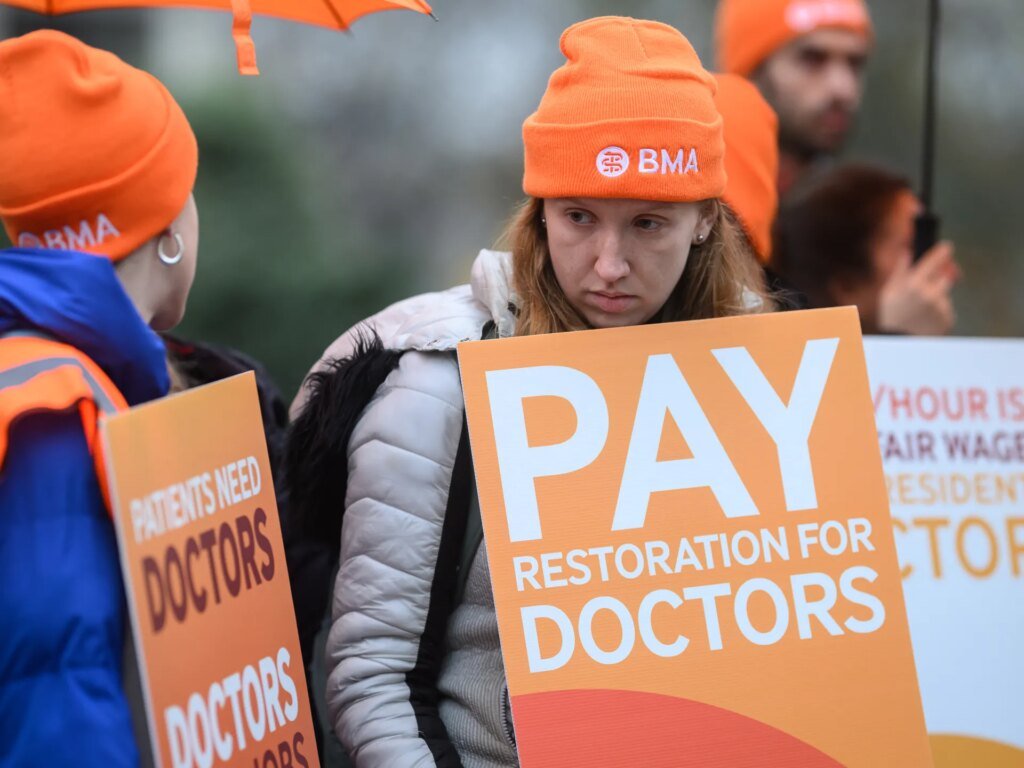
Doctors in England Proceed with Five-Day Strike Over Pay Dispute
Physicians in England are set to strike for five days, fueled by ongoing dissatisfaction with their pay and working conditions. This action marks a significant moment in the context of doctors striving to reclaim salaries that have diminished due to inflation since 2008-2009.
Background of the Strike
Resident doctors, formerly known as junior doctors, are planning to walk out starting at 07:00 GMT on Wednesday, continuing until 07:00 GMT the following Monday. These medical professionals represent nearly half of England’s healthcare workforce, making this strike particularly impactful.
The strike follows a recent vote conducted by the British Medical Association (BMA), where a considerable majority of members opted to reject a government proposal aiming to resolve the prolonged conflict over pay disparities.
Response from the British Medical Association
Jack Fletcher, chair of the BMA’s resident doctors committee, stated, “Tens of thousands of frontline doctors have united in saying ‘no’ to an offer that is clearly inadequate.” He emphasized that the union remains committed to finding a resolution even amidst the ongoing disputes.
Government Reaction and Concerns
Health Secretary Wes Streeting has called on the striking doctors to reconsider their decision. He expressed concern that the strike poses risks to patient safety, labeling the action as “self-indulgent, irresponsible and dangerous.” In an interview with Sky News, Streeting mentioned the government’s willingness to have discussions with the BMA to potentially reschedule the strike, particularly given the rising flu cases affecting hospitalizations in England.
Current Flu Situation
As flu-related hospitalizations soared by over 50 percent in early December, reaching an average of 2,660 patients daily—the highest for this season—health officials warned of an ongoing crisis without a clear peak in sight. This escalation in flu cases parallels challenges faced by health authorities throughout Europe.
BMA Vote Outcome
The survey conducted by the BMA revealed that 83 percent of resident doctors rejected the government’s latest offer, with a turnout of 65 percent from its membership of over 50,000. The recent proposal did not present new pay terms, igniting continued demands for more significant pay restoration.
The BMA has been advocating for better pay conditions even before the Labour Party’s victory in the last general election. Shortly after assuming office, Streeting offered a deal that included a 22 percent pay rise for doctors—falling short of the 29 percent increase requested by the union.
Additionally, the BMA continues to stress the need for a pay increase beyond the previously announced 5.4 percent, highlighting the ongoing issue of pay erosion that resident doctors have experienced over the years.
Conclusion
The strike by resident doctors in England underscores the urgent need for attention to their pay and working conditions—demands that reflect broader issues facing the healthcare sector today. As negotiations continue, the outcome of this strike may significantly affect the future of healthcare delivery in England.
Key Takeaways
- Doctors in England are striking for five days over pay disputes.
- The BMA reports an overwhelming rejection of the government’s recent proposal.
- The current flu season is straining healthcare resources amid rising hospitalization rates.
- Calls for pay restoration aim to reverse years of salary erosion since 2008-2009.