
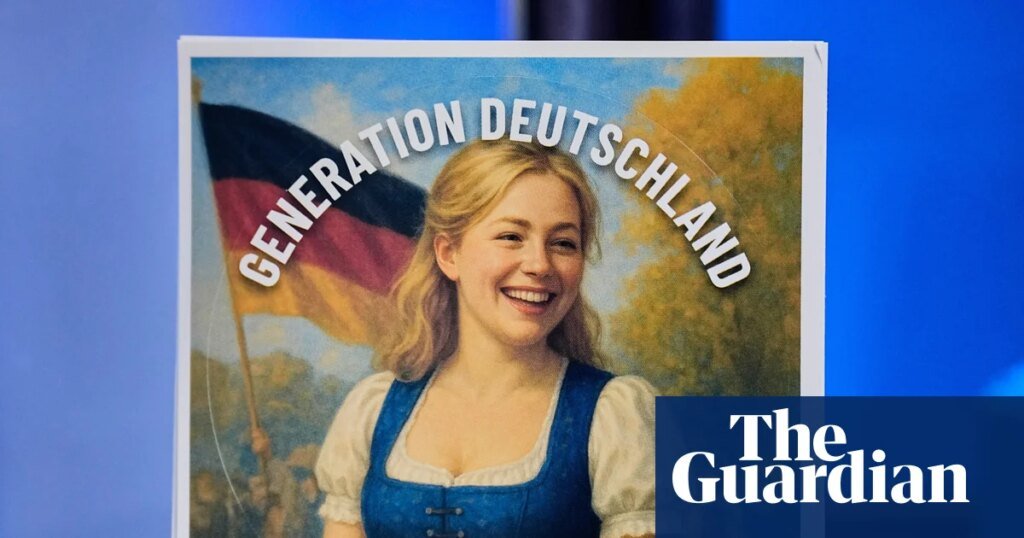
The Covert Culture of the Far Right: Through the Lens of Aesthetics
In a striking blend of culinary arts and extremist ideology, two men don ski masks, chop peppers, and slice aubergines in their series called “Balaclava Kitchen.” This phenomenon, which began in Germany in 2014, showcases the unsettling intersection of cultural production and far-right messaging. Although YouTube removed the channel for violating its policies, it highlights how extremists are embedding their beliefs within everyday cultural practices, from music to fashion, particularly in the era of social media.
A New Wave of Radicalization
Katherine Kondor, a researcher at the Norwegian Center for Holocaust and Minority Studies, reflects on how easily one can be drawn into extremist ideologies from the comforts of home. “You can be radicalized sitting on your couch,” she notes. In collaboration with the Center for Research on Extremism (C-REX), Kondor conducts a six-country study exploring the tactics of the far-right as they utilize aesthetic elements—like fitness influencers and memes—to proliferate their views throughout Europe.
From Mainstream Acceptance to Hidden Agendas
Researchers have uncovered alarming examples of how extremist messaging permeates everyday life. Kondor cites instances in Hungary where far-right bands achieve mainstream success by appearing on popular music charts. “What’s more normal than being on the top 40?” she questions, illuminating how normalization can lead to acceptance.
Another troubling trend is the rise of “tradwives,” women crafting content around traditional gender roles, which has become increasingly popular online. Although the extremist roots of this movement are often overlooked, the anti-feminist messages and idealization of a bygone era serve far-right purposes effectively.
Unraveling the Path to Extremism
Kondor emphasizes that individuals often venture into far-right ideologies not solely through explicit beliefs but rather through the cultural subcultures surrounding these movements. “People may first be drawn to a band they love and then gradually become immersed in its associated community,” she explains. Music and culture act as entry points, creating a powerful magnetism that can lead to deeper involvement.
The Unseen Links Between Culture and Ideology
The connection between extreme beliefs and the cultural methods they adopt is multifaceted. For instance, a group of far-right extremists in the Netherlands has taken to organizing wine-tasting events—a surprising yet effective way to engage people socially. “They’ve even launched their own food delivery service, demonstrating how people can unknowingly support such movements,” Kondor warns.
As technology evolves, far-right groups exploit new tools for content creation. Greta Jasser, a research associate at Germany’s Institute for Democracy and Civil Society, notes that generative AI allows for the instant creation of images, videos, and music, enhancing the speed at which such content is produced and disseminated. “The playbook is old, but the pace has dramatically changed,” Jasser remarks.
Understanding the Far-Right Narrative
The landscape of social media has transformed the economics of content creation, raising questions about the motivations behind far-right media. Jasser emphasizes that the creator could be a bot or an individual solely interested in generating revenue rather than propagating ideology. This complexity underscores the challenges researchers face in tracing the true intentions behind such content.
Educating the Public
With ongoing research, Kondor and her team are devising methods to better inform the public about their findings. They are considering various strategies, including online resources that would aid in recognizing the alarming elements propagated by the far right. “It’s shocking to people when they realize how pervasive this is,” she states. Understanding these ties is more crucial than ever in light of the upswing in far-right activity in myriad societal facets.
Conclusion
The rise of far-right ideologies intricately woven into cultural elements presents a critical challenge. As extremists continue to exploit accessible mediums to further their narratives, awareness and education are paramount in counteracting these influences. It is essential to cultivate a discerning public that can recognize and challenge the normalization of extremist ideas embedded in everyday culture.
Key Takeaways
- Extreme right ideologies are increasingly permeating mainstream culture.
- People are often drawn into extremism through cultural subcultures rather than explicit beliefs.
- The advent of generative AI has accelerated the production of extremist content.
- Public education is vital to countering far-right influences within popular culture.