
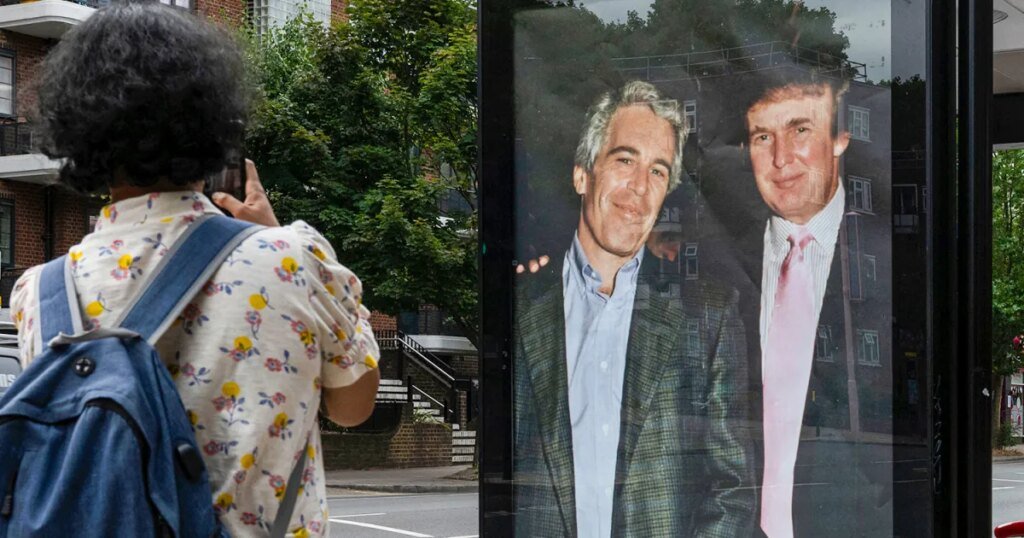
Outcry Over Epstein Document Release
The recent release of documents related to Jeffrey Epstein’s sex trafficking cases has sparked significant criticism from his victims and advocates. The U.S. government disclosed a partial collection of materials with extensive redactions, igniting frustration as many vital details remain hidden.
Government’s Partial Disclosure
On Friday, the Department of Justice (DOJ) began unveiling the trove of documents to comply with a law passed by Congress last November. This legislation mandated the release of all files pertaining to Epstein, despite attempts by some officials to keep them confidential. However, the release was met with disappointment as many pages contained heavy redactions and some documents were missing entirely.
Missing Files and Redactions
Reports indicate that at least 16 files were unavailable on the public webpage after the release, including a photograph featuring former President Donald Trump. The DOJ stated it plans to continue releasing more records gradually, citing the complexities involved in redacting survivors’ identities.
While tens of thousands of pages have been released, many deliver minimal new information regarding Epstein’s actions or the prosecutorial decisions that allowed him to evade serious charges for years. Key materials, such as victim interviews and internal DOJ memos on decisions to charge, were notably absent. Additionally, a 119-page document likely related to federal investigations was entirely blacked out.
Victims React
Marina Lacerda, a survivor who testified against Epstein, expressed her outrage, stating, “All of us are infuriated by this. It’s another slap in the face. We expected way more.” Lacerda, who faced abuse at the age of 14, was pivotal in the 2019 investigation leading to Epstein’s charges. Following his arrest, Epstein took his own life in jail.
Another survivor, Jess Michaels, voiced similar frustrations, saying she had spent hours searching the newly released documents for her victim statement, only to find those materials missing. “Is this the best that the government can do?” she questioned. “Even an act of Congress isn’t getting us justice.”
Marijke Chartouni, a victim of Epstein at age 20, lamented the absence of transparency, asking, “If everything is redacted, where is the transparency?”
Legislative Frustration
Some lawmakers voiced their dissatisfaction as well. Republican Representative Thomas Massie, a key figure in promoting the recent legislation, criticized the government for not adhering to the intent of the law. He posted on social media about the apparent non-compliance, expressing concern that many materials remain hidden from public view.
Following the discovery of the missing files, concerns grew over possible obfuscation. Democrats on the House Oversight Committee highlighted the absence of the Trump photograph, asking, “What else is being covered up? We need transparency for the American public.” Senior Democrat Chuck Schumer echoed this sentiment, suggesting the ongoing situation could represent a significant cover-up.
Responses from the DOJ
In contrast, the Trump administration has denied any wrongdoing or intent to restrict information. Deputy Attorney General Todd Blanche emphasized in an interview that there was no effort to withhold material to protect the former president. The DOJ reiterated that all materials are under review and redactions are made with caution.
Celebrity Photographs
The recently released documents included photographs of various high-profile individuals, such as former President Bill Clinton, singers Mick Jagger, and Michael Jackson, along with British entrepreneur Richard Branson. Importantly, none of these celebrities have been implicated in any wrongdoing related to Epstein. However, notable absences included any recent references to Donald Trump, despite his historical connections to Epstein in the 1990s and early 2000s.
As this situation continues to unfold, the DOJ attempts to shift focus to Clinton, stating they are merely sharing relevant images. Clinton’s spokesperson responded, arguing that using these photographs is an effort to deflect scrutiny from current issues.
Conclusion
The release of Epstein-related documents has left many survivors feeling unheard and frustrated. The substantial redactions and missing files have raised questions about the level of transparency and the government’s commitment to justice for victims. As public interest and scrutiny remain high, advocates are urging for deeper investigations and full disclosure.
- Victims of Epstein criticize the government for partial document releases.
- Numerous files were redacted or missing, leading to frustration among survivors.
- Lawmakers express discontent about the lack of transparency in the release.
- The DOJ assures that further materials will continue to be released with caution.