
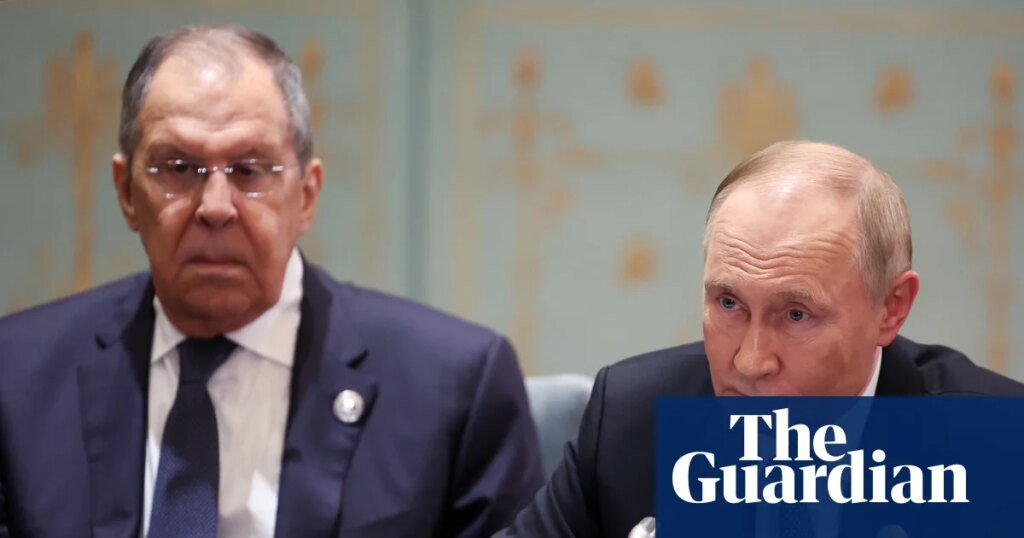
Russia Accuses Ukraine of Drone Attack on Putin’s Residence
In a recent and concerning escalation, Russia has alleged that Ukraine attempted to carry out a drone attack on President Vladimir Putin’s residence. Russian Foreign Minister Sergei Lavrov stated that air defense systems successfully intercepted 91 drones, labeling the incident as an act of “state terrorism.” Ukraine has vehemently denied these accusations, with President Volodymyr Zelenskyy criticizing Lavrov for disseminating “typical Russian lies” aimed at disrupting diplomatic discussions between Kyiv and Washington following a meeting between Trump and Zelenskyy at Mar-a-Lago.
The Context of Claims and Reactions
This allegation has emerged at a sensitive juncture in diplomatic relations as Trump asserts that a peace agreement between Russia and Ukraine is “95% done.” Zelenskyy is working diligently to maintain support from the U.S. president, while Russia seems to be attempting to present a facade of readiness to negotiate, though still holding onto ambitious war goals.
Lack of Evidence from Moscow
Interestingly, Moscow has yet to provide any evidence to back up its claims. Dmitry Peskov, Putin’s spokesperson, stated that there would be no supporting details for such a substantial aerial attack, expressing that evidence is not necessary when their air defense successfully neutralizes the threat.
Trustworthiness of Moscow’s Claims
Can the Kremlin be trusted? The answer leans towards no. The Russian government and its defense ministry have a history of making outlandish statements regarding the conflict in Ukraine. Despite frequent documentation of civilian casualties, Russia maintains that they do not target non-combatants. This situation echoes past tactics from 2014, when during the annexation of Crimea, Putin suggested that Russian personnel engaging in the operation were merely local citizens.
So, Did the Attack Actually Occur?
It’s ambiguous. Ukraine has indeed executed attacks within Russian territory in the past, including significant actions like Operation Spiderweb, where drones targeted crucial military assets deep behind enemy lines. Hence, Putin’s residence could be seen as a plausible target for Ukraine’s strategic calculations, particularly at such a crucial moment in negotiations with Trump. However, deliberately launching an operation under these circumstances would be highly unusual.
Possible Motivations Behind the Allegations
If this claim is unfounded, what might its purpose be? One theory is that Zelenskyy believes it’s a smokescreen that could provide Russia with justifications for striking government installations in Kyiv, especially since Lavrov mentioned that “retaliatory targets” have already been identified. However, Moscow has shown a tendency to act without needing excuses.
Another possibility is that Putin was concerned about Zelenskyy’s visit to Mar-a-Lago, knowing Trump tends to lean towards the last person he hears from. By accusing Ukraine of escalating tensions, Putin may have aimed to influence Trump’s perspective and deter decisions that he might perceive as too favorable towards Kyiv.
Trump’s Reaction to the Allegations
Initial reactions suggest that Trump appeared to accept the claim, expressing anger at Ukraine for the supposed drone attack. When questioned about the possibility that the attack was fabricated, Trump seemed to ponder the idea more seriously, acknowledging that President Putin had informed him of its occurrence.
International Perspectives on the Allegations
Responses in Europe have generally been met with skepticism towards the Russian assertions, but some leaders are taking the accusation seriously. For instance, India’s Prime Minister Narendra Modi expressed deep concern over the situation via social media, urging parties involved to focus on peace efforts.
Ukrainian Foreign Minister Andrii Sybiha voiced disappointment regarding remarks from Emirati, Indian, and Pakistani officials who expressed worries over a non-existent attack, noting their silence when actual attacks on Ukrainian targets occurred.
Conclusion
The situation remains complex and fluid, with accusations and counter-accusations shaping the geopolitical landscape. The claims from Russia regarding a drone attack on Putin’s residence may serve multiple purposes, including manipulating international perceptions and stirring tensions in ongoing negotiations.
- Russia alleges a failed drone attack on Putin’s residence, labeling it “state terrorism.”
- Ukraine firmly denies the accusations, labeling them as Russian disinformation.
- Putin’s spokesperson claims no evidence will be provided for the alleged attack.
- International leaders express mixed reactions, with skepticism prevailing in Europe.