
Understanding Europe’s Military Independence Debate
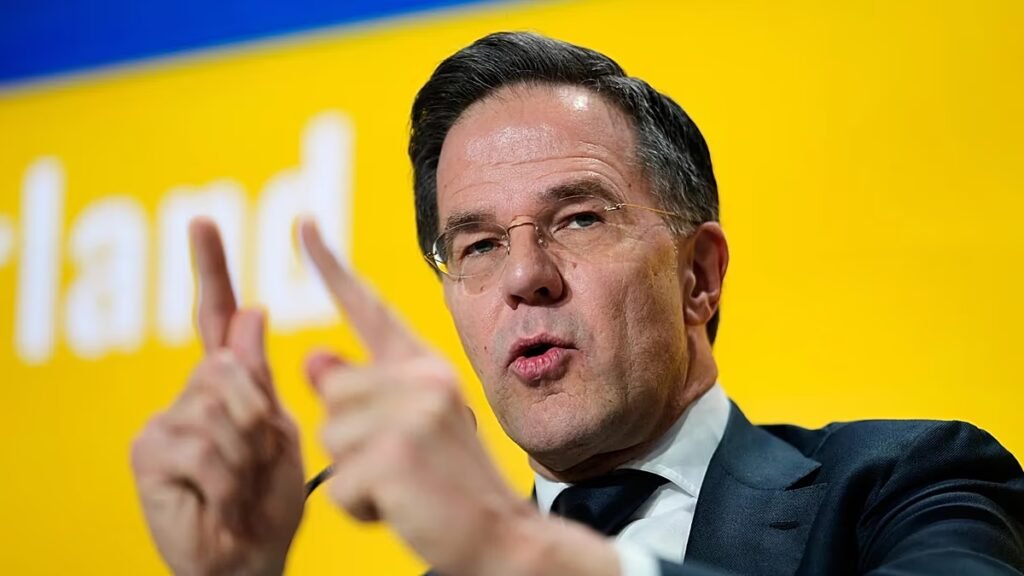
This week, MEP Henrik Dahl stepped into the spotlight, defending NATO Secretary General Mark Rutte’s remarks regarding the European Union’s dependence on the United States for defense. In an insightful opinion piece, Dahl echoed Rutte’s concerns about Europe’s military capabilities and highlighted the pressing need for a more autonomous defense strategy.
The Current State of Europe’s Defense
Dahl articulated a stark reality: as it stands, Europe lacks critical military capabilities such as independent command structures and robust intelligence and digital infrastructures. Predominantly, these elements are still reliant on U.S. support. He stated, “As of today, the European pillar of NATO cannot function as a fully autonomous deterrent force without the United States.” Dahl emphasized that without a truly independent strategic command, Europe cannot effectively conduct large-scale, high-intensity military operations on its own.
Criticism of Moral Posturing
In his piece, Dahl pointed out that simply expressing moral outrage or pride is inadequate when confronting the real challenges faced by European defense. He remarked that the response to Rutte’s comments—a mix of irritation and indignation—is misguided. “When the diagnosis is correct, indignation is not a substitute for treatment,” Dahl asserted.
The Path to Autonomy
Interestingly, Dahl does not fully align with Rutte’s assertion that European independence from U.S. security is merely a “dream.” Instead, he is optimistic that Europe can cultivate a resilient and autonomous defense strategy, if approached correctly. He wrote, “Europe will not become stronger by wishing for autonomy. It will become stronger by understanding what autonomy actually costs, how long it takes, and why pretending otherwise is the surest way not to get there.”
Rutte’s Controversial Remarks
Rutte faced considerable backlash after his statement suggesting that the EU should “keep on dreaming” about independence from the U.S. This comment surfaced amidst tensions due to earlier actions by U.S. President Trump, including attempts to assert control over Greenland, which strained transatlantic relations. Rutte resolved some of these tensions by negotiating a deal focused on Arctic security.
The Reality of Defense Spending
During his address to the European Parliament, Rutte stressed the need for European nations to drastically increase defense spending—from 5% to 10% of GDP—to compensate for reduced U.S. support. He emphasized that such a shift would necessitate building an independent nuclear capability, which comes with substantial financial implications. “In that scenario, you would lose the ultimate guarantor of our freedom, which is the US nuclear umbrella,” he noted.
Reactions from France
Rutte’s comments did not sit well, particularly in France, where officials emphasized the necessity for Europe to assume responsibility for its own security. French Foreign Minister Jean-Noël Barrot responded directly to Rutte, asserting, “No, dear Mark Rutte. Europeans can and must take charge of their own security.” Benjamin Haddad, France’s deputy minister for European affairs, echoed this sentiment, underlining Europe’s commitment to defense amid escalating global threats.
Conclusion
The discussions surrounding Europe’s security autonomy highlight a significant and ongoing debate within the EU. As global dynamics evolve, the urgency for Europe to bolster its defense strategies while maintaining crucial alliances becomes increasingly important.
Key Takeaways
- Europe remains heavily reliant on the U.S. for defense capabilities.
- Moral outrage is not a substitute for addressing the reality of European military shortcomings.
- With strategic planning, Europe can work towards establishing greater military autonomy.
- The debate over defense spending and independence continues to evoke strong reactions across the EU, especially in France.