
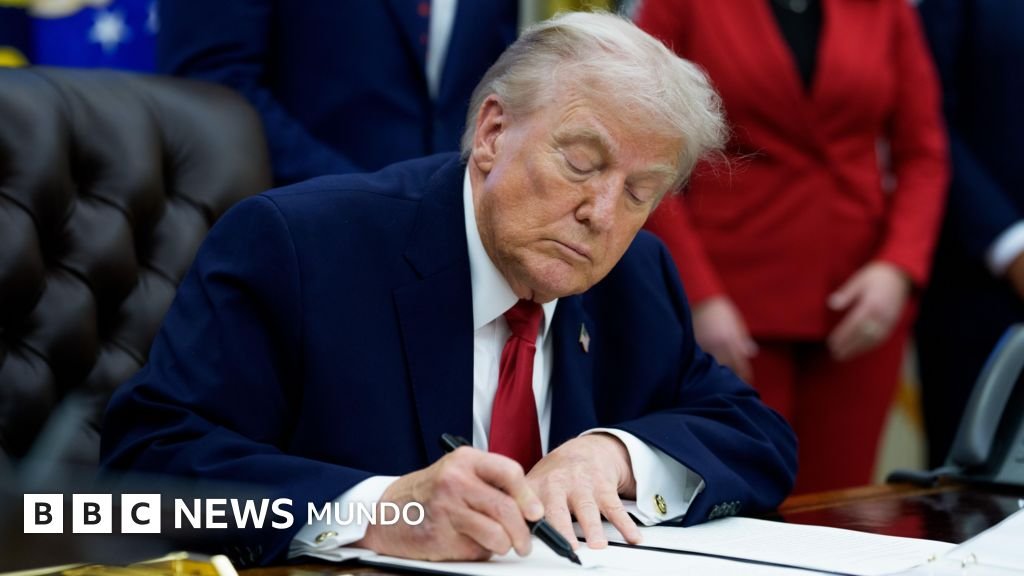
Trump’s Threat of Tariffs Against Countries Supplying Oil to Cuba
On January 30, 2026, President Donald Trump announced a potential imposition of tariffs on any nations that provide oil to Cuba, intensifying his administration’s pressure on the island’s communist government. This move stems from an executive order where Trump declared a national emergency, although the order did not specify any particular tariff rates or name specific countries involved.
Details of the Executive Order
The executive order, titled “Addressing the Threats Posed by the Government of Cuba to the United States,” highlights an emergency due to the policies and actions of the Cuban government, which Trump deems an “extraordinary and unusual threat” to U.S. interests. In response, Cuba’s Foreign Minister, Bruno Rodríguez, harshly condemned Trump’s decree, characterizing it as a “new escalation of U.S. hostility towards Cuba” and described the accusations as a “long list of lies” aimed at misrepresenting Cuba as a threat to the region.
Mexico’s Role in Supplying Oil
Following the suspension of oil shipments from Venezuela due to U.S. military intervention and the capture of President Nicolás Maduro, Mexico has become Cuba’s leading source of oil. President Claudia Sheinbaum of Mexico explained that the country sends oil to Cuba for two primary reasons: humanitarian aid and contractual agreements between Pemex, Mexico’s state-owned oil company, and the Cuban government.
Escalating Washington’s Pressure on Havana
This announcement appears to signal a new peak in Washington’s campaign against Havana, ignited largely by Maduro’s recent capture during a swift military operation in Caracas earlier this month. Trump has frequently reiterated the urgency of taking action against Cuba’s leadership, claiming that “Cuba is going to collapse very soon.” He also noted the lack of recent oil and financial support from Venezuela, the island’s previous main supplier.
U.S. National Security Claims
Trump claims his objective is to hold the Cuban government accountable for its support of “hostile actors, terrorism, and regional instability that endangers U.S. security and foreign policy.” The U.S. has accused Cuba of destabilizing the region and collaborating with adversarial nations like Russia and China, as well as terrorist organizations such as Hezbollah and Hamas, asserting that these groups find “safe haven” in Cuba.
The order opens the possibility of imposing tariffs on products from any nation that supplies oil to Cuba “directly or indirectly.” This serves as another example of how tariffs have been wielded as a foreign policy tool during Trump’s presidency since he returned to the White House last January.
Rejection of Dialogues
In recent remarks, Trump hinted at the possibility of a dialogue between Washington and Havana; however, Cuban President Miguel Díaz-Canel dismissed these prospects, accusing the U.S. of lacking moral authority. Rodríguez also took to social media to assert that the U.S. resorts to “blackmail and coercion” in efforts to compel other countries to align with its widely condemned blockade policy against Cuba.
He denounced the “brutal” 65-year economic embargo imposed by the U.S. on the island, calling it the “most prolonged and cruel economic blockade ever imposed against an entire nation,” further claiming it subjects the Cuban people to extreme living conditions.
The Effects of Potential Tariffs
Concerning these “extreme” conditions, Jorge Legañoa, head of the Cuban state news agency Prensa Latina, previously claimed that Trump’s proposed tariffs could lead to major disruptions in electricity generation, transportation, industrial production, agricultural output, healthcare services, and water supply—essentially jeopardizing all facets of daily life in Cuba.
Legañoa accused the U.S. of attempting to “suffocate” Cuba and pursue what he termed “genocide.”
Current Situation in Cuba
As it stands, Cuba is already experiencing a debilitating “special period,” grappling with challenges in securing food and basic necessities for its population, who routinely face lengthy electricity outages. A report from the Financial Times indicated that Cuba may soon begin to encounter the backlash from these new restrictions. The publication noted that “Cuba has only enough oil to last between 15 and 20 days at current demand and production levels,” citing data from Kpler.
Moreover, it was reported that Mexico’s last remaining supplier appears to have canceled a shipment while the U.S. has actively blocked deliveries from Venezuela.
Mexico’s Position
Despite these developments, President Sheinbaum expressed ambiguity regarding the pause in oil supplies, stating it stemmed from general supply fluctuations rather than U.S. pressure. “It is a sovereign decision,” Sheinbaum affirmed, explaining that Mexico’s choice to sell or provide humanitarian oil aid to Cuba is a long-standing sovereign right, not a new circumstance.
Conclusion
In light of these developments, it is clear that the situation regarding Cuba’s oil supply and U.S. foreign policy is evolving rapidly. The imposition of tariffs could have far-reaching effects, exacerbating the existing challenges faced by the Cuban populace already living under strained conditions.
- Trump threatens tariffs on countries supplying oil to Cuba.
- The executive order cites a national emergency linked to Cuba’s actions.
- Mexico is currently Cuba’s main oil supplier after Venezuelan shipments ceased.
- The potential tariffs could severely impact Cuba’s electric and healthcare systems.