
U.S. Military Interventions in Latin America: A Historical Perspective
In light of ongoing discussions surrounding the crisis in Venezuela, the topic of potential military action by the United States has resurfaced. This conversation isn’t new; it dates back to President Donald Trump’s comments in 2017 about a “military option” if deemed necessary in the country. As the situation continues to evolve, particularly following the U.S. deployment of warships to the Caribbean to monitor suspicious drug trafficking from Venezuela, the notion has gained even more traction.
Recently, the U.S. government heightened its pressure on Nicolás Maduro’s administration by issuing orders to fully block sanctioned oil tankers entering or leaving Venezuela. This came shortly after the U.S. seized a tanker off the Venezuelan coast, marking a significant escalation in Washington’s efforts against Caracas.
Venezuela’s government condemned these actions, accusing Trump of attempting to impose an “irrational military blockade” aimed at commandeering the wealth of a sovereign nation. Interestingly, many Latin American countries oppose military intervention, despite some Caribbean nations providing logistical support to the U.S. military buildup.
A Historical Context of U.S. Interventions
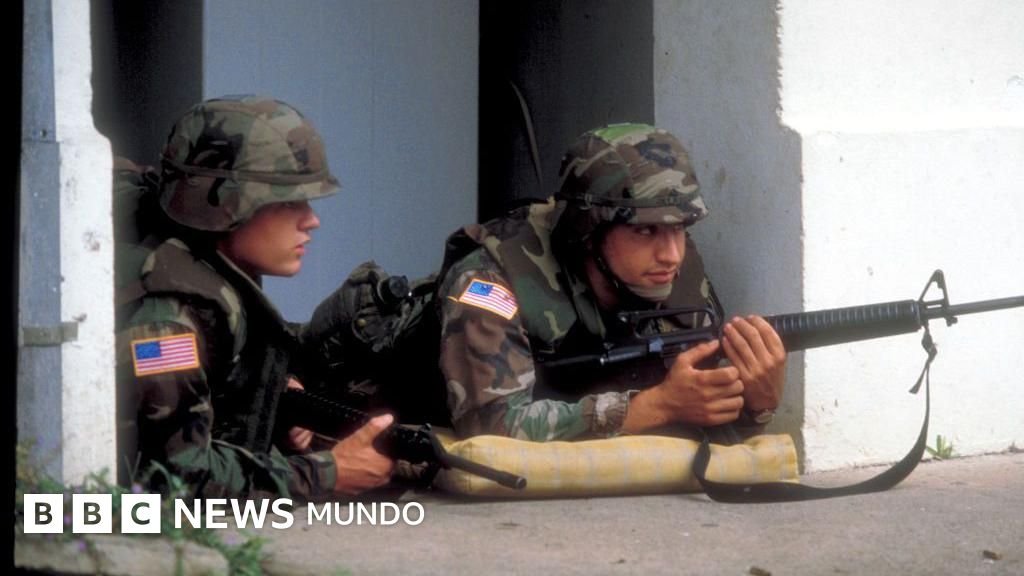
A study by Harvard University traced the pattern of U.S. interventions in Latin America, outlining 41 distinct instances from 1898 to 1994. According to the study, these interventions often created resentment towards the United States and called into question its commitment to democracy and rule of law internationally. Historian John H. Coatsworth, who contributed to this research, reflected on the unnecessary animosity fueled by such actions.
Notable Interventions in Latin America
Cuba
The U.S. interest in Cuba dates back to the late 19th century during Spain’s colonial rule. After involving itself in Cuba’s fight for independence from Spain, particularly following the explosion of the USS Maine, the U.S. emerged victorious in the Spanish-American War of 1898, leading to Spanish relinquishing Cuba along with territories like Puerto Rico and the Philippines.
Although Cuba gained independence, U.S. influence remained significant, particularly with the establishment of a naval base at Guantánamo. A later intervention in 1906 was prompted by a crisis in Cuba, again substantiating U.S. military presence on the island.
Panama
Panama’s history is closely intertwined with U.S. interests, especially in securing the construction of the Panama Canal. In 1903, U.S. support helped Panama separate from Colombia in exchange for control over development rights of the canal, physically dividing the country. The U.S. would later invade Panama again in 1989 during an attempt to capture General Manuel Noriega amid accusations of drug trafficking, resulting in significant civilian casualties.
Nicaragua
The U.S. involvement in Nicaragua was marked by a series of military interventions beginning in the early 1900s. Tensions emerged under President José Santos Zelaya, leading to U.S. support for a rebellion and subsequent military landings to protect American citizens and interests in the region. This initiated a prolonged period of U.S. influence over Nicaraguan politics.
Additional Instances
The article continues to outline significant U.S. interventions in various Latin American countries, including:
- Haiti: U.S. military action began in 1915 to stabilize the political climate and protect American investments, lasting nearly two decades.
- Dominican Republic: U.S. troops occupied the country in 1916 under the pretext of financial instability, further solidifying American control over the region.
- Guatemala: A CIA-led coup in 1954 ousted President Jacobo Árbenz, who implemented agrarian reforms seen as a threat to U.S. business interests.
- Grenada: In 1983, U.S. forces invaded Grenada following a coup, justified by claims of political instability near U.S. borders.
These interventions have left a complex legacy, often fostering long-lasting resentment and skepticism about U.S. intentions in the region.
Conclusion
The history of U.S. military interventions in Latin America paints a picture of a recurring pattern where national interests have outweighed the autonomy of the nations involved. As discussions around potential military options in modern crises continue, it’s vital to reflect on this historical context and its implications.
Key Takeaways
- The U.S. has a long history of military interventions in Latin America, often justified by national security interests.
- These interventions have frequently resulted in lasting resentment and have complicated U.S. relationships in the region.
- Several countries, including Cuba, Panama, and Nicaragua, have been significantly impacted by U.S. military actions.
- The legacy of these interventions continues to influence contemporary political and social dynamics in Latin America.