
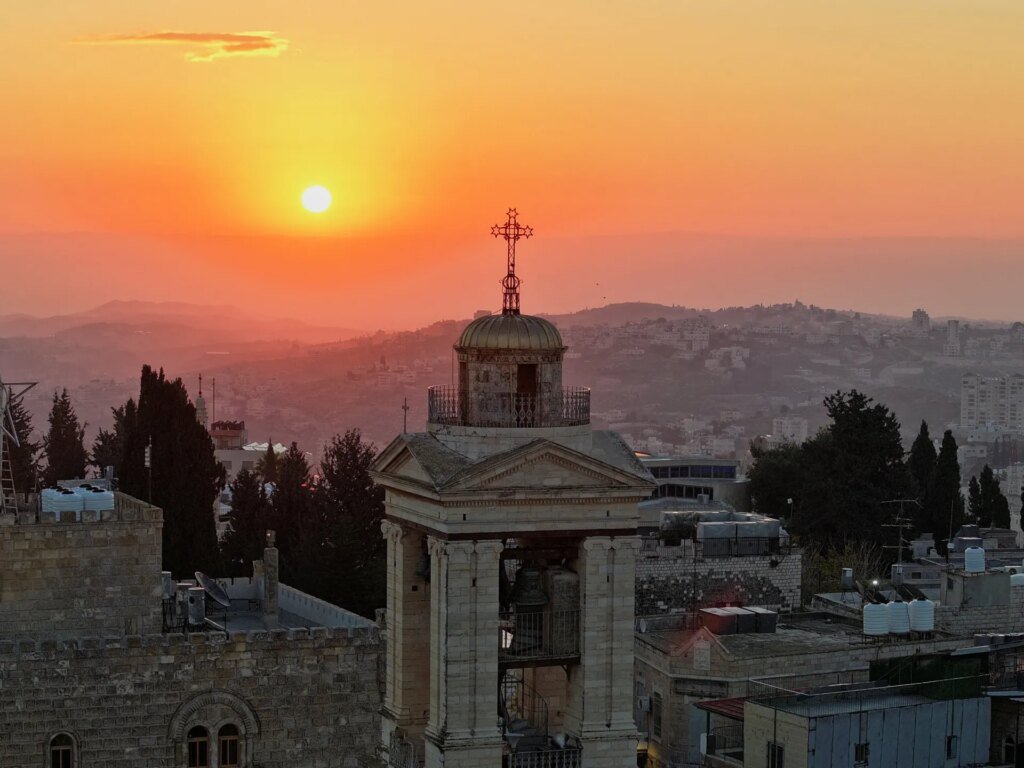
The True Meaning of Christmas: A Perspective from Bethlehem
As December rolls around, many in the Christian world are swept up in a rhythm of festivities—carols, twinkling lights, beautifully adorned trees, and the nostalgia of family gatherings. In regions like the United States and Europe, discussions often revolve around concepts such as “Western Christian values” and “Judeo-Christian civilization.” These terms have become so ubiquitous that it’s easy to forget that Christianity is not solely a Western phenomenon; it is a religion deeply rooted in West Asia and the Middle East.
Christianity’s Origins: A Middle Eastern Heritage
At its core, Christianity is fundamentally a Middle Eastern faith, steeped in the culture, geography, and historical narratives of regions that closely resemble today’s Palestine, Syria, Lebanon, Iraq, and Jordan. Even Judaism, a pillar of what is often referred to as “Judeo-Christian values,” has deep roots in the Middle East. It is crucial to recognize that Christianity was received by the West, rather than being birthed there.
The Story of Christmas through Different Lenses
Perhaps nothing illustrates the chasm between the origins of Christianity and its modern-day expressions more profoundly than Christmas itself. The holiday celebrates the birth of Jesus, a Palestinian Jew born into a setting fraught with hardship long before contemporary borders existed.
The Commercialization of Christmas
In Western culture, Christmas has morphed into a vibrant marketplace. It has been commercialized and infused with layers of sentimentality that frequently overshadow its foundational essence. The act of gift-giving has eclipsed the spirit of generosity towards those in need, turning the season into one marked by consumerism and nostalgia rather than theological reflection.
The timeless carol “Silent Night” encapsulates this distortion. While it evokes a sense of peace, it fails to acknowledge the reality of Jesus’ birth—a moment steeped in turmoil. Born under military rule, Jesus’ family faced displacement due to an imperial decree, all while violence loomed large in their world. This parallel to contemporary struggles seems all too relevant today.
The Reality of Bethlehem
For many in the West, Bethlehem—the birthplace of Jesus—is more a figment of imagination, a picturesque postcard from antiquity, rather than a vibrant city teeming with life, history, and culture. Present-day Bethlehem is encircled by walls and checkpoints, a stark reminder of ongoing occupation. Its residents grapple with a fragmented reality, feeling isolated not only from communities in Jerusalem but also from the larger Christian world that cherishes the historical Bethlehem while often overlooking its current plight.
Neglecting the Present
This disconnection reflects a troubling trend among Western Christians who may celebrate Christmas without considering the circumstances of Bethlehem’s Christians today. Many adopt theological and political viewpoints that ignore or marginalize their existence in favor of supporting contemporary political narratives.
This disconnect is significant. When Western Christians overlook the reality of Bethlehem, they distance themselves from their spiritual roots and, in turn, forget the essence of the Christmas story—a narrative born among those yearning for justice in the face of oppression.
The Meaning of Christmas for Palestinian Christians
From the perspective of Palestinian Christians, what does Christmas signify? For this small community that has nurtured its faith for 2,000 years, Christmas embodies the solidarity of God. It tells of a God who does not remain distant but chooses to be present among those marginalized by society. The concept of incarnation—God taking on human form—is not merely abstract; it’s a profound declaration that God dwells in vulnerability and among the oppressed.
God Amongst the Vulnerable
In the story of Bethlehem, God aligns not with rulers but with those suffering from systemic injustices. Instead of arriving as a mighty figure, God manifests as a vulnerable infant, representing divine empathy in its most compelling form. For Palestinians, this narrative resonates deeply, as many see their own lives reflected in the experiences of Mary and Joseph—the couple’s forced journey and the family’s flight to security echoes the experiences of millions today.
A Call for Solidarity
After two years without public Christmas celebrations, Bethlehem joyfully embraces the holiday once more. Last year was painfully marked by a genocide in Gaza, making any festive celebration feel hollow. As we welcomed the season, we couldn’t ignore or turn away from the tragedies impacting lives in the region.
This year, celebrating Christmas stands as an act of resilience—a declaration that despite ongoing struggles, Bethlehem remains the heart of Christmas, and its narrative deserves to be told. In a time when Christianity can sometimes be co-opted for cultural identity that excludes its very birthplace, it is critical to remember where the story began.
A Message to the Global Community
This Christmas, we invite people around the world, especially those in the West, to recognize that Bethlehem is not a myth but a living community with its own realities. If the Christian world hopes to honor the true message of Christmas, it must shift focus to the present circumstances of Bethlehem—a place whose people continue to advocate for justice, dignity, and peace.
Conclusion
Remembering Bethlehem is to acknowledge that God stands firmly with the oppressed and that followers of Jesus are called to do the same. Christmas is more than a celebration; it’s a reminder of the hope and justice that stem from the heart of the very community where this sacred story began.
- Christianity’s roots lie in the Middle East, not the West.
- Christmas reflects the narrative of God’s solidarity with the marginalized.
- Present-day Bethlehem is a living, breathing community facing modern struggles.
- Western Christians must reconnect with the realities of Bethlehem to honor the true meaning of Christmas.