
Taiwan’s Lai Vows to Protect National Sovereignty Amid Tensions with China
In the wake of heightened military activities around Taiwan, President William Lai of Taiwan has made a resolute commitment to defend the island’s national sovereignty. This announcement comes just after Chinese President Xi Jinping reaffirmed his ambitions regarding the “reunification” of Taiwan with mainland China, framing it as an inevitable occurrence.
Xi Jinping’s Assertions During His New Year Address
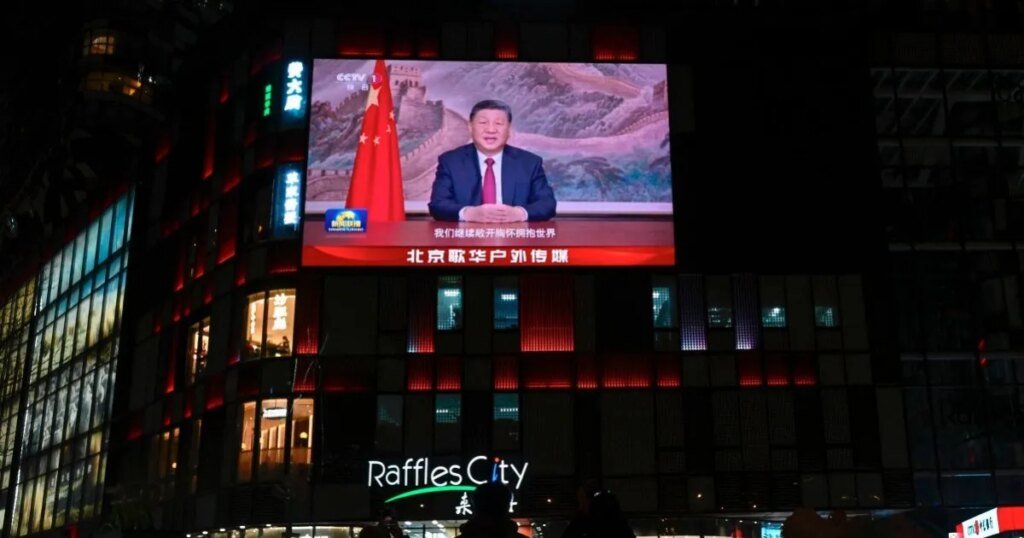
On Wednesday, during a New Year’s address, Xi emphasized the profound connection between the Chinese people across the Taiwan Strait. He described the aspiration for reunification as an “unstoppable” trend of history. Xi also introduced a new commemorative date, the “Taiwan Recovery Day,” set for 2025, which will mark the end of Japanese colonial rule following World War II.
Latest Military Drills Around Taiwan
Xi’s remarks followed two days of unprecedented live-fire military exercises near Taiwan. Dubbed “Justice Mission 2025,” these drills simulated a blockade of the island, which officials labeled a stern warning against perceived separatist efforts and outsider interference. This exercise was noted for being the largest of its kind conducted around Taiwan, emphasizing China’s serious stance regarding its claims.
US-Taiwan Relations in Focus
The military maneuvers took place shortly after the United States approved a significant arms package for Taiwan, amounting to $11.1 billion. China views Taiwan as a breakaway province that must eventually be reunified with the mainland, and officials have signalled their readiness to use force if necessary.
Taiwan, for its part, is governed by the Democratic Progressive Party, which asserts the island operates as a de facto independent nation, although it has not made a formal declaration of independence.
Lai’s Commitment to National Defense
In his New Year’s message, President Lai vowed to “firmly” maintain Taiwan’s sovereignty as he advocated for bolstering the island’s defenses. “With China’s increasing assertiveness, the world is observing closely to see if Taiwan is resolute in its determination to protect itself,” Lai stated.
Despite having its own military, currency, and government, Taiwan is recognized officially by only a handful of countries, and the diplomatic ties of these nations with Beijing complicate the island’s international standing.
The Role of the US
While the United States does not officially recognize Taiwan, it has pledged to assist the island in defending itself under the Taiwan Relations Act established in 1979. Although the Act underlines America’s commitment to supply arms, there is no explicit obligation for military intervention in the event of a Chinese blockade or invasion.
Public Sentiment in Taiwan
Recent opinion polls indicate that a substantial majority of Taiwanese people prefer maintaining the current status quo, with fewer advocating for formal independence or unification with China.
China’s Technological Advances
On a broader note, Xi highlighted China’s advancements in innovative fields such as artificial intelligence and space technology during his address. He claimed that these efforts are propelling China towards high-quality development and positioning it among the leading nations in innovation capabilities.
Conclusion
The ongoing tensions between Taiwan and China underscore a critical juncture in the region. As Taiwan’s leadership expresses a commitment to sovereignty and self-defense, the international community watches closely, particularly as military and diplomatic dynamics continue to evolve.
- President Lai reaffirms Taiwan’s commitment to defending its sovereignty.
- China conducted extensive military drills around Taiwan, signaling its intentions.
- US involvement remains crucial for Taiwan’s defense strategy, despite no formal recognition.
- Public opinion in Taiwan favors maintaining the status quo amidst rising tensions.