
China Set to Reveal Ambitious Economic Agenda at NPC
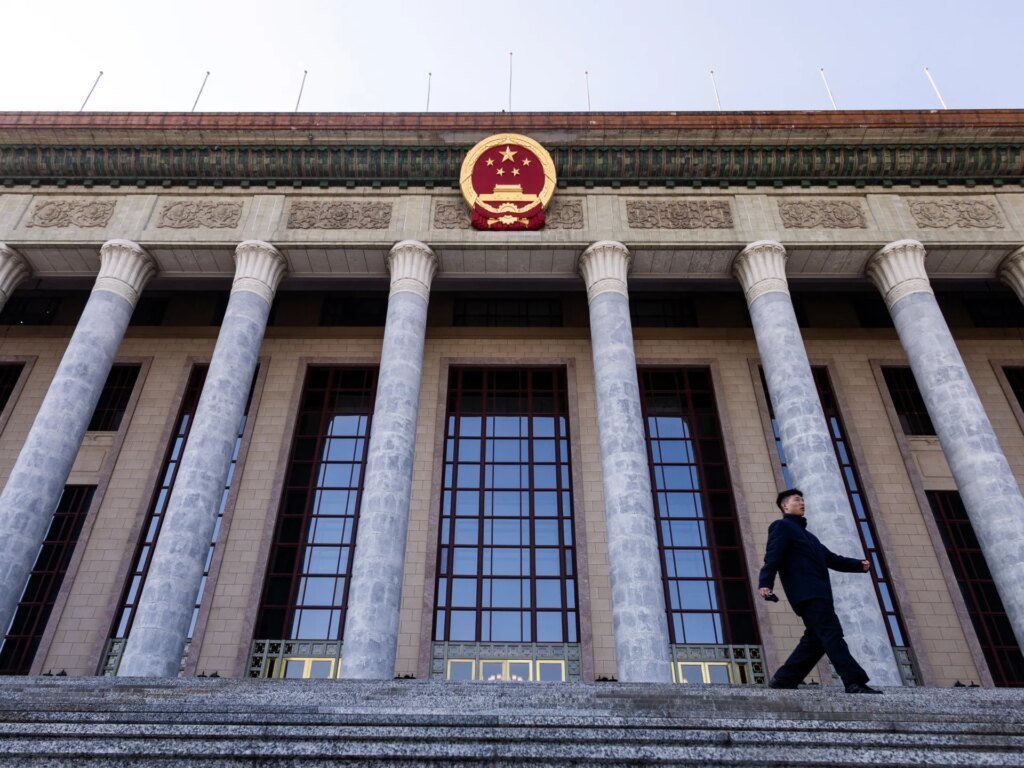
China is gearing up to present a comprehensive economic strategy for the next five years during the upcoming National People’s Congress (NPC) meeting at the Great Hall of the People in Beijing. This pivotal gathering, which kicks off on Thursday and typically spans a week, will showcase China’s 15th Five-Year Plan for the period from 2026 to 2030. Drawing around 3,000 delegates from across the nation, this event is one of the country’s key political milestones.
Overview of the NPC and Its Significance
The previous five-year plan was unveiled in March 2021, during a time when Beijing was grappling with the repercussions of the COVID-19 pandemic. Analysts anticipate that this year’s NPC will address a range of new challenges, particularly the economic impacts stemming from the trade tensions initiated by former U.S. President Donald Trump, alongside a notable decline in consumer confidence domestically.
The NPC is held concurrently with the Chinese People’s Political Consultative Conference (CPPCC), which began on Wednesday. Together, these two meetings are often referred to as the “Two Sessions.” While the CPPCC does not possess legislative authority, it offers crucial policy recommendations and serves as a feedback mechanism for Chinese leadership. In contrast, the NPC is recognized as China’s “supreme organ of state power,” representing the highest echelon of the government, even though it operates independently from the Chinese Communist Party (CCP).
According to Changhao Wei, founder of NPC Observer, this week’s assembly aims to formalize the relationship between the NPC and the CCP concerning the formulation of five-year plans under a forthcoming “Law on National Development Plan.”
Government Work Report and Economic Projections
During the sessions, Chinese Premier Li Qiang is expected to present the latest Government Work Report. This report will reflect the state of China’s economy over the past year and outline anticipated growth targets. Experts predict a gross domestic product (GDP) growth target ranging from 4.5% to 5% for 2026, accompanied by adjustments to interest rates in response to inflation, unemployment, and fiscal deficits.
Political Dynamics and Delegate Context
This year’s delegate list for the NPC and CPPCC is notable for the absence of at least 19 delegates whose credentials were recently revoked, indicating disciplinary actions against them. This list includes nine high-ranking military officials, part of a larger cohort of over 100 military officers dismissed by President Xi Jinping in recent years on various grounds, such as corruption. These dismissals appear to be a strategic maneuver by Xi to strengthen his leadership and diminish competing factions within China’s extensive governance framework.
William Yang, a senior analyst at the International Crisis Group, has noted that Xi aims to ensure that the governance system of the CCP operates with unwavering loyalty to him, eliminating any potential rival power bases that could challenge his authority.
Key Themes of the Five-Year Plan
While China has moved away from a Soviet-style economic planning model, its tradition of five-year plans continues to provide a framework for midterm economic reforms, government spending, fiscal policy, and targets for industrial and energy development. Analysts expect “industrial self-reliance” to be a focal point, as China seeks to maintain its competitive edge against the U.S. in technological domains.
China is also anticipated to introduce various technology and science initiatives, aimed at enhancing critical sectors such as artificial intelligence, semiconductor manufacturing, industrial modernization, and expansion of renewable energy resources.
According to Fred Gao, who authors the Inside China newsletter, the plan will also tackle the issue of “involution,” referring to excessive competition that undermines productivity and innovation. This harmful cycle has led various Chinese firms to engage in relentless price wars, sacrificing product quality and service in pursuit of market share.
Introducing the “Low Altitude Economy”
Another innovative concept expected at the NPC is China’s “low altitude economy,” which seeks to leverage drones and other low-altitude vehicles to enhance delivery and logistics systems across the country.
Shifting Towards Consumer-Led Growth
A significant challenge for officials during this week’s NPC will be to outline strategies for transitioning China’s economy toward consumption-driven growth. Historically, China’s economic structure has been reliant on manufacturing, construction, and real estate. However, with consumer confidence shaken by the pandemic and subsequent economic downturn, this transition is poised to be a gradual process.
Lynn Song, chief economist for Greater China at ING Group, anticipates initiatives designed to bolster domestic demand and stimulate growth within China’s service industry. Furthermore, Gao emphasizes the importance of policies that aim to bridge the income disparity between urban and rural populations, identifying measures such as adjusting minimum wage and increasing pension benefits.
Social and Environmental Policies on the Agenda
In addition to economic goals, the NPC will address social and environmental issues. A particularly noteworthy piece of legislation is the “Law on Promoting Ethnic Unity and Progress,” which aims to formalize China’s stance on its 56 ethnic groups. Although the majority of the population identifies as ethnic Han and primarily speaks Standard Chinese, China’s landscape is populated with numerous ethnicities, languages, and dialects.
According to NPC observer Wei, this law will call for a move away from ethnic privileges and distinctions, advocating for the creation of a cohesive culture and identity, which may lead to increased ethnic and social assimilation.
Conclusion
As China prepares to unveil its ambitious economic agenda for the next five years, this NPC gathering promises to address critical issues ranging from technology initiatives to social policies that promote unity among its diverse populations. The outcomes from this week will pave the way for China’s strategic direction in the years to come.
- China’s NPC set to unveil the 15th Five-Year Plan for 2026-2030.
- Focus on overcoming challenges from trade tensions and consumer confidence issues.
- Projected GDP growth target of 4.5% to 5% for 2026.
- Introduction of new concepts like “low altitude economy” and strategies for consumer-driven growth.