
China Conducts Military Drills Near Taiwan Amid Rising Tensions
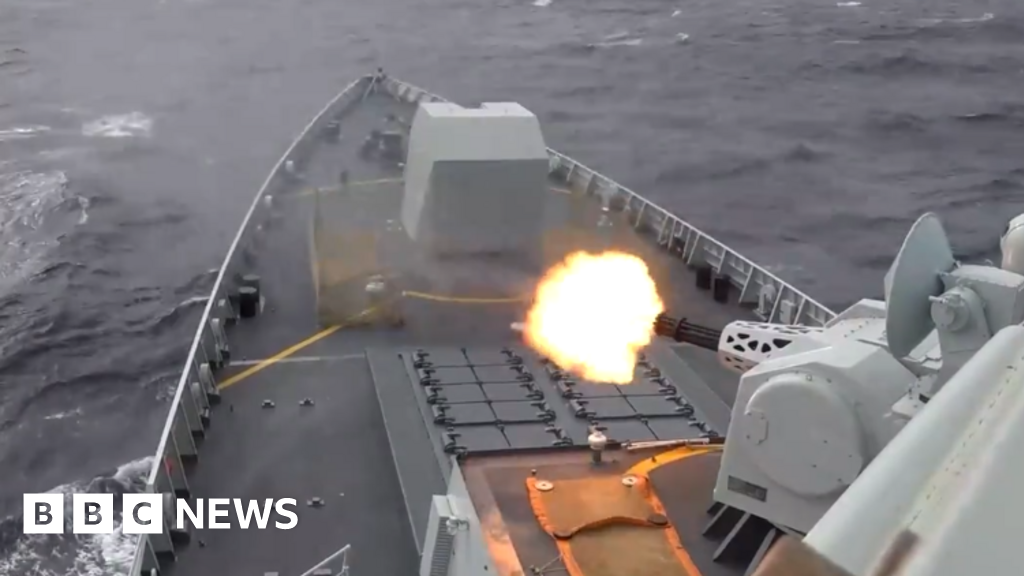
China has launched military exercises around Taiwan, simulating the capture and blockade of critical regions on the island as a stern warning against what it calls “separatist forces.” The drills, dubbed “Justice Mission 2025,” come immediately following the United States’ announcement of an $11 billion arms sale to Taiwan, which has provoked strong disapproval from Beijing.
The Scope of the Military Exercises
The Chinese military has mobilized its army, navy, air force, and rocket forces for these large-scale drills, which include live-fire exercises. The timing of this military display is particularly sensitive, as it directly follows increased defense spending and military preparation on Taiwan’s part. Beijing has long claimed the self-governed island as its own territory, and Taiwan’s efforts to fortify its defenses have only compounded tensions.
Response from Taiwan
Taiwan’s presidential office has denounced the forthcoming Chinese drills, labeling them a threat to international standards. The island’s defense ministry reported the detection of 89 Chinese military aircraft and 28 naval vessels near its airspace and waters. It has responded by heightening its own military readiness, ensuring missile systems are deployed to monitor the situation actively.
In a stark message, the Eastern Theater Command of the Chinese military characterized the drills as a “shield of justice,” ominously warning that any efforts for independence would be met with overwhelming force. Initial drills have commenced, leading up to a major exercise scheduled from 08:00 to 18:00 local time on Tuesday.
International Reactions
Beijing has referred to the military drills as a necessary consequence for “separatist forces” that seek independence through coercive means, cautioning external parties against using Taiwan as a means to contain China. Lin Jian, a spokesperson for the foreign ministry, emphasized that schemes to obstruct China’s unification with Taiwan would ultimately fail. China maintains a dual approach, advocating for peaceful reunification while also keeping the option of military action on the table.
Taiwan’s Position
President Lai Ching-te of Taiwan has countered accusations of pursuing independence, reiterating that Taiwan already operates as a sovereign nation. In a local interview, Lai stressed the importance of making it increasingly difficult for China to launch an invasion, underlining the need for Taiwan to possess real strength while assuring that his administration aims to “maintain the status quo” without intentionally provoking Beijing.
Public opinion in Taiwan generally favors maintaining the status quo, avoiding both unification with China and a formal declaration of independence. Recently, the Taiwanese transport ministry announced plans to divert both domestic and international flights around the military exercise zones, potentially impacting over 100,000 travelers.
Future Developments and Military Preparedness
China has intensified military drills in the Taiwan Strait since 2022, often in retaliation to perceived threats, such as diplomatic engagements with U.S. officials. The latest live-fire exercises mimic past operations, which simulated missile strikes on critical infrastructure. The drills are significant as they are also the first under new leadership for the Eastern Theater Command.
In contrast, Taiwan continues to enhance its defense capabilities in light of growing tensions, having recently conducted its largest military exercise known as Han Kuang. Following his election, President Lai pledges increased defense budgets and innovations, such as a dome-like air defense system, to counter perceived threats.
- China’s “Justice Mission 2025” military drills around Taiwan are a direct response to heightened defense measures from the island.
- Taiwan’s government has condemned the drills as a challenge to international norms and increased its military readiness.
- President Lai Ching-te emphasizes Taiwan’s commitment to sovereignty while seeking to avoid unnecessary provocation of China.
- Public sentiment in Taiwan generally favors maintaining the current status quo regarding relations with China.