
China Conducts Military Drills Near Taiwan: A Stern Warning
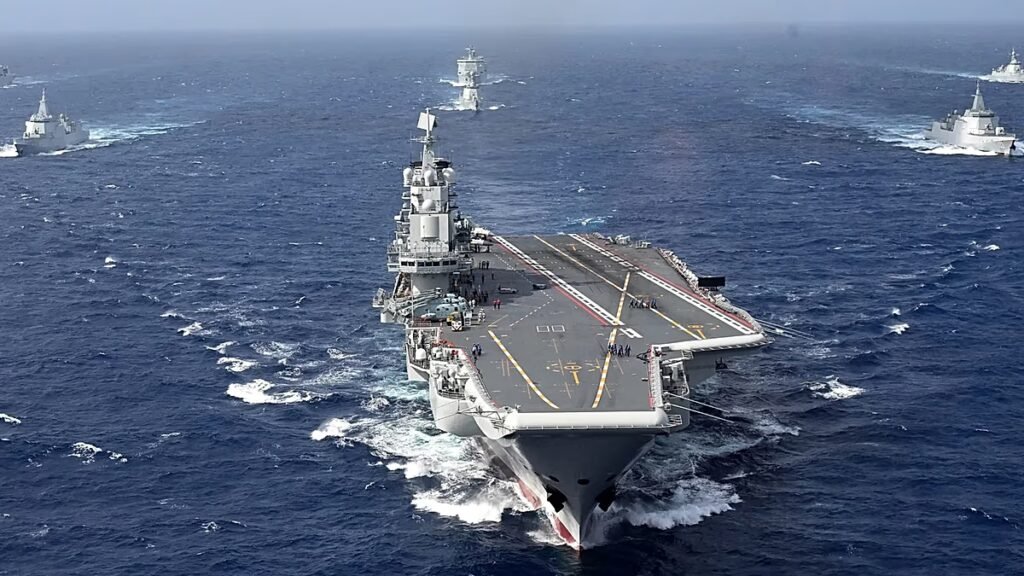
In a recent show of force, China has deployed its air, naval, and missile units for joint military exercises around Taiwan. This move, which Beijing is framing as a “stern warning,” highlights escalating tensions between the island and mainland China, particularly in light of recent U.S. arms sales to Taiwan and remarks from Japanese officials. As the situation continues to unfold, both China and Taiwan are on high alert.
Details of the Military Exercises
On Monday, Senior Colonel Shi Yi, spokesperson for the Eastern Theatre Command of the Chinese People’s Liberation Army (PLA), announced that the drills would take place in the Taiwan Strait and regions surrounding the island. The focus is on sea-air combat readiness, securing operational superiority, and establishing blockades at strategic ports.
Shi emphasized that this marks the first time the PLA has publicly acknowledged “all-dimensional deterrence outside the island chain” as a goal of its military exercises. He described these operations as a legitimate response to separatist movements and foreign interference, asserting that they are essential for preserving China’s sovereignty and national unity.
Responses from Taiwan
In reaction to China’s maneuvers, Taiwan’s Defence Ministry reported on X that its military is executing rapid response drills, ensuring forces are prepared for any potential escalation. They have mobilized appropriate units and initiated combat readiness exercises.
Karen Kuo, spokesperson for the Taiwanese president’s office, condemned China’s actions, stating that they destabilize the Taiwan Strait and the broader Indo-Pacific area, while openly challenging international laws and norms. “Our country strongly denounces the Chinese authorities for their disregard for international standards and their use of military threats against neighboring nations,” she remarked.
A Historical Context
Since 1949, following a civil war that saw the Communist Party rise to power in Beijing, Taiwan and China have been governed separately. The Nationalist Party, defeated in that conflict, retreated to Taiwan and established its own government. Despite this, Beijing claims the island as its own territory and has not dismissed the possibility of using force to assert control.
Ongoing Military Activities
On Monday, China positioned destroyers, frigates, fighter jets, bombers, and drones in the Taiwan Strait, conducting live-fire exercises targeting maritime objectives. They also tested their sea and air coordination capabilities in exercises within the eastern strait’s airspace.
Major military exercises are set to continue on Tuesday from 8 AM to 6 PM, during which live-fire activities are planned across five distinct areas around the island. The PLA has creatively promoted these drills online, releasing posters themed “Shield of Justice, Smashing Illusion,” suggesting that any foreign forces or separatists breaching the “shields” will be swiftly dealt with.
U.S. Relations and Sanctions
In the backdrop of these military activities, China recently imposed sanctions on 20 U.S. defense-related companies and 10 executives following a significant arms sale package to Taiwan, estimated at over $10 billion. This would represent the largest U.S. military sale to the self-governing island if approved by Congress, a move that complicates U.S.-China relations. Historically, the U.S. has been obligated to assist Taiwan’s defense, particularly since formal diplomatic ties were established with Beijing in 1979 under President Jimmy Carter.
In recent years, China has routinely sent warplanes and naval assets toward Taiwan, significantly ramping up the frequency and scale of such military activities. Just last month, Taiwan’s government announced plans to expedite the development of its “Taiwan Shield” or “T-Dome” air defense system in response to the lingering military threat from China.
At the same time, Taipei’s Mayor Chiang Wan-an expressed a desire for the Taiwan Strait to symbolize peace and prosperity rather than turmoil during a recent visit to Shanghai, highlighting the contrasting narratives surrounding this increasingly volatile region.
Conclusion
The military tensions surrounding Taiwan are indicative of the complex dynamics between China, Taiwan, and international powers. As military drills escalate and diplomatic relationships shift, the situation will require careful observation and responsive measures from affected nations.
- China has initiated joint military exercises around Taiwan, citing them as a warning.
- Taiwan remains vigilant, conducting rapid response drills amid rising tensions.
- The U.S. continues to support Taiwan’s defense through significant arms sales.
- China’s military activities are increasing in frequency and scope, raising alarms in the region.