
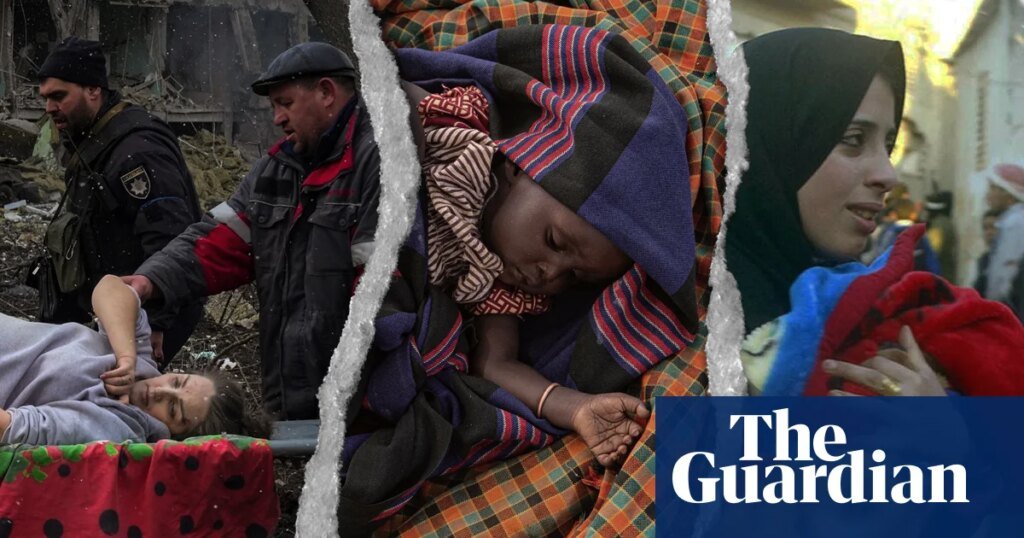
War’s Impact on Maternal Care: A Rising Toll on Women and Children
In a staggering reminder of the toll war takes on vulnerable populations, a recent incident at a maternity hospital in El Fasher, Sudan, has highlighted the peril faced by women during childbirth in conflict zones. On October 28, thirty women, some in labor and others who had just given birth, were caught in a brutal attack that has shocked the world. A lab technician named Abdo-Rabo Ahmed emerged as one of the few survivors from the hospital, recounting the horrifying sounds of screams as armed soldiers stormed the facility, targeting patients and caregivers alike.
The Atrocity in Sudan
This attack was reportedly carried out by the Rapid Support Forces amidst the ongoing civil war in Sudan, resulting in the tragic deaths of over 460 individuals associated with the hospital. Rights groups have denounced this as “an unspeakable atrocity,” underscoring the collapse of protection for civilians caught in violent conflicts. This incident highlights a larger, disturbing trend of violence against healthcare facilities that not only occurs in Sudan but also in war-torn regions such as Ukraine, Gaza, Myanmar, and the Democratic Republic of the Congo (DRC).
Although international law mandates the protection of civilians under the Geneva Conventions, the last year has witnessed a record surge in assaults on healthcare systems. Pregnant women and mothers are notably at heightened risk due to their reliance on local medical services during childbirth.
Growing Violence Against Maternity Care
According to a recent investigation, nearly 300 attacks targeting maternity care—including strikes on facilities and assaults on medical staff and pregnant women—have been documented over the past three years. At least 119 incidents involved direct assaults on hospitals and delivery wards. The overwhelming majority of these attacks have occurred in Ukraine, Gaza, and Sudan, placing countless expectant mothers in life-threatening situations.
Amidst these upheavals, women have not only faced direct violence but have also been obstructed from accessing necessary care. Reports indicate that at least 68 healthcare professionals specializing in obstetrics have lost their lives while trying to assist women in labor, while others have faced kidnappings and arrests.
“These are not natural consequences of war. They constitute a pattern of reproductive violence.”
The numbers indicative of this crisis may be underestimated, as they reflect only the incidents that managed to attract media attention. In numerous conflict areas, reliable communication is often compromised, making it challenging to gather comprehensive data. A report indicated that last year, half of all maternal deaths occurred in areas of conflict, reinforcing the urgent need for protection and intervention.
Healthcare in Conflict Zones: A Global Crisis
The destruction of healthcare facilities poses a dual crisis: it not only directly impacts maternal health but also jeopardizes the ability of countries to stabilize and repopulate. In reports from Gaza, the UN has cited attacks on healthcare as a central factor contributing to claims of genocide against the civilian population.
Even in the aftermath of ceasefires, like the one in October, reports indicate that women and children continue to perish due to shortages in medicine and other crucial resources. In Gaza, it has been noted that women have resorted to giving birth in unsafe environments, such as in the debris beside roads, due to the absolute lack of access to hospitals.
Comments from health professionals like Dr. Adnan Radi maintain that deliberate targeting is reported against maternity care facilities, further complicating the landscape of maternity healthcare amidst ongoing hostilities.
Motherhood Under Fire
Since the onset of the conflict, Ukraine has witnessed extensive damage to at least 80 maternity hospitals, with frontline accounts revealing that births are now often forced underground due to the violence surrounding them. In similar situations, hospitals in regions like Sumy fear that any facility can fall victim to attacks, making circumstances unduly perilous for mothers and newborns alike.
For the 676 million women living near active conflict zones, there are minimal protective measures in place, compounded by a culture of impunity surrounding war crimes targeting maternal health services. As human rights advocates have pointed out, actions like forced pregnancies and sterilizations can be classified as genocide when they aim to obliterate specific populations and undermine their ability to reproduce.
El Fasher has faced humanitarian blockades long before the tragic massacre at the maternity hospital, leading to escalating malnutrition rates among its population, particularly affecting pregnant women and children. Reports from the DRC indicate that even in the absence of reliable data, shelling has devastated health facilities, leading to further casualties among women and children.
In Myanmar, assaults on medical facilities have increased, with numerous reported casualties among mothers and midwives, further emphasizing the dire circumstances faced by pregnant women in conflict zones.
Conclusion
Healthcare systems in conflict areas are crumbling, with essential services for maternal care increasingly strained or completely obliterated. This crisis demands urgent attention to ensure protective measures are enacted to safeguard the lives of mothers and children caught in the crossfire of war. The targeting of maternity care must be addressed as a critical violation of human rights, requiring a collaborative global response.
- The massacre at a maternity hospital in Sudan highlights the extreme vulnerability of women in conflict zones.
- Nearly 300 attacks on maternity care have been documented in recent years, mainly in war-torn regions like Ukraine and Gaza.
- Maternal deaths are disproportionately high in conflict areas, with many women unable to access safe childbirth services.
- Global awareness and protective measures are urgently needed to address violence against maternity healthcare in war zones.