
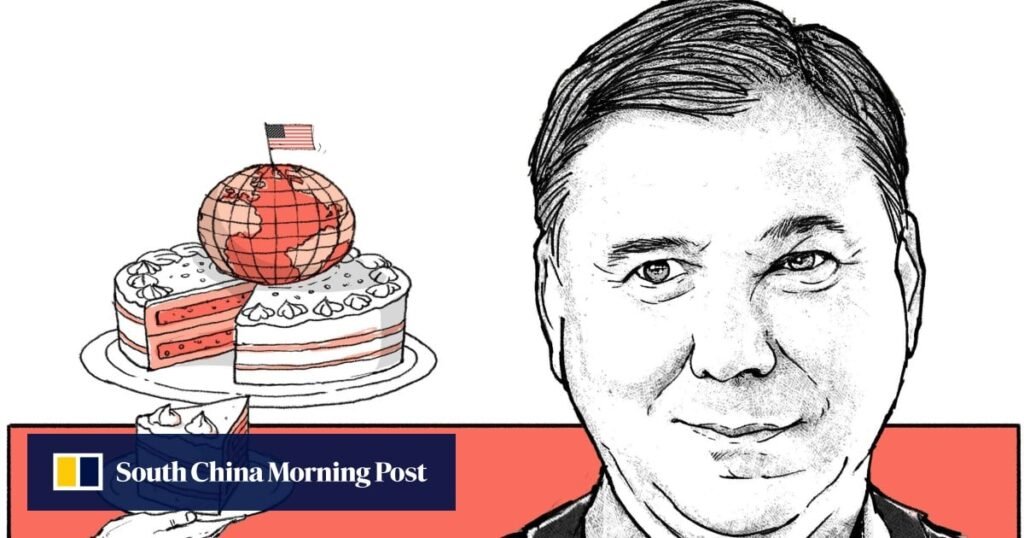
Redefining Europe’s Role in a Transforming Global Landscape
In a thought-provoking interview, renowned Bulgarian political scientist Ivan Krastev explores Europe’s position in an increasingly challenging world. Known for his insights into Europe’s democratic crisis and the legacy of the post-communist era, Krastev shares his perspectives on the evolving geopolitical dynamics and the impact on transatlantic relations. As 2025 approaches, he offers a vivid analysis of Europe’s prospects amid these changes.
A Shifting Global Landscape
Krastev identifies three critical developments shaping Europe’s influence on the world stage. He argues that the transformation began not in 2025 but during the upheaval brought by the Covid-19 pandemic. Central to this evolution is a notable shift in the United States’ political landscape, which has profound implications for Europe.
“The concept of a liberal order has long been debated, but it has now become an undeniable reality,” Krastev emphasizes. “We can no longer cling to the illusion that the established world order remains intact.” This sentiment reflects a growing concern that Europe is grappling with the loss of its traditional influence in global affairs.
The Loss of Comfort
The pain of this transformation is palpable for Europe. Krastev elaborates, referencing a poignant remark from Thomas Bagger, a former German ambassador to Italy, regarding the notion of “The End of History.” What was once a guiding principle has turned into a stark reality for Europe, as it faces the daunting prospect of navigating a world that has shifted under its feet.
This transition signifies a profound existential challenge for European nations, which must rethink their roles without the previously assumed frameworks of power and influence. Krastev’s reflections encourage a critical examination of how Europe can adapt and assert itself in a new geopolitical context.
Conclusion
As Krastev’s insights reveal, Europe stands at a crossroads, forced to redefine its identity and role in a world that no longer prioritizes traditional alliances. The impending future will test Europe’s resilience and adaptability as it seeks to navigate these turbulent waters.
- Krastev highlights Europe’s diminishing influence in a rapidly changing global landscape.
- The shift in the U.S. political environment plays a crucial role in this transformation.
- The concept of a liberal order is now a reality, challenging Europe’s previous understanding of its role.
- Europe must adapt to maintain relevance in an evolving geopolitical context.