
Holiday Spirit Returns to Bethlehem Amidst Challenges
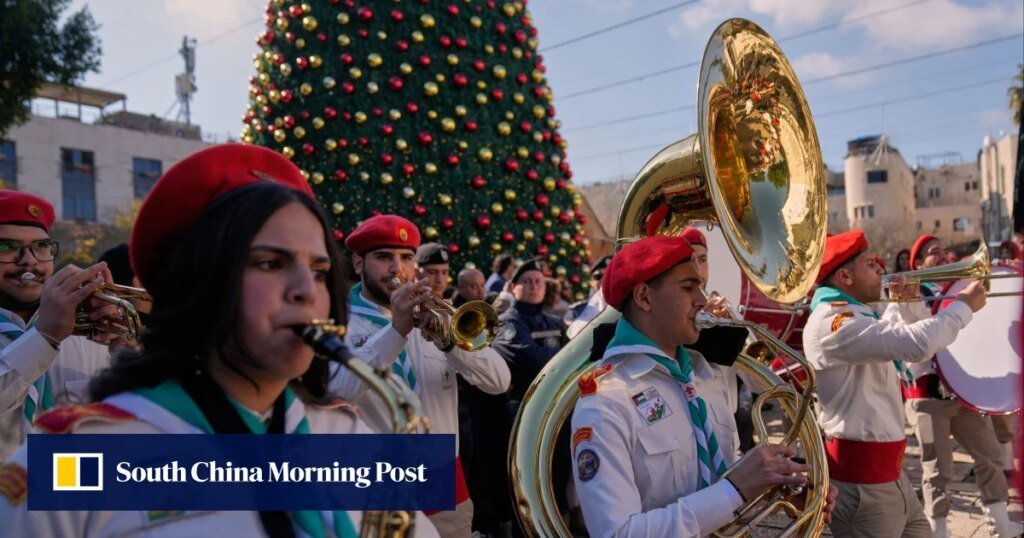
This Christmas Eve, Manger Square in Bethlehem came alive with joyous celebrations as thousands gathered to mark the occasion. The return of a grand Christmas tree, absent for the last two years due to the Israel-Gaza conflict, symbolized a much-anticipated resurgence of holiday spirit.
Resuming Traditions After Difficult Times
Bethlehem, believed by Christians to be the birthplace of Jesus, had to cancel its Christmas festivities for two consecutive years. Instead, previous gatherings were shadowed by a nativity scene featuring baby Jesus amid rubble and barbed wire, reflecting the harsh realities of the ongoing situation in Gaza.
An Inspirational Celebration
Kicking off this year’s festivities was Cardinal Pierbattista Pizzaballa, the leading Catholic figure in the Holy Land. He commenced the traditional procession from Jerusalem to Bethlehem, conveying a message of hope for “a Christmas full of light.”
Upon arriving in Manger Square, Pizzaballa brought with him warm wishes from the small Christian community in Gaza, where he celebrated a pre-Christmas Mass just days earlier. Despite the devastation he witnessed, he remarked on the resilient desire to rebuild and foster hope.
A Message of Unity and Light
“Together, we choose to be the light, and the light of Bethlehem is the light of the world,” he proclaimed to the gathered crowd, which comprised both Christians and Muslims.
Economic Impact on Bethlehem
While the festive atmosphere marked a joyous occasion, the repercussions of the ongoing conflict remain deeply felt in Bethlehem. Approximately 80% of the residents in this predominantly Muslim city rely on industries tied to tourism, as reported by local government sources.
- Thousands celebrated Christmas Eve in Bethlehem’s Manger Square, embracing the holiday spirit.
- A grand Christmas tree returned after a two-year absence due to conflict.
- Cardinal Pierbattista Pizzaballa delivered a hopeful message of unity to attendees.
- The economic challenges of the region remain acute, especially for tourism-dependent families.