
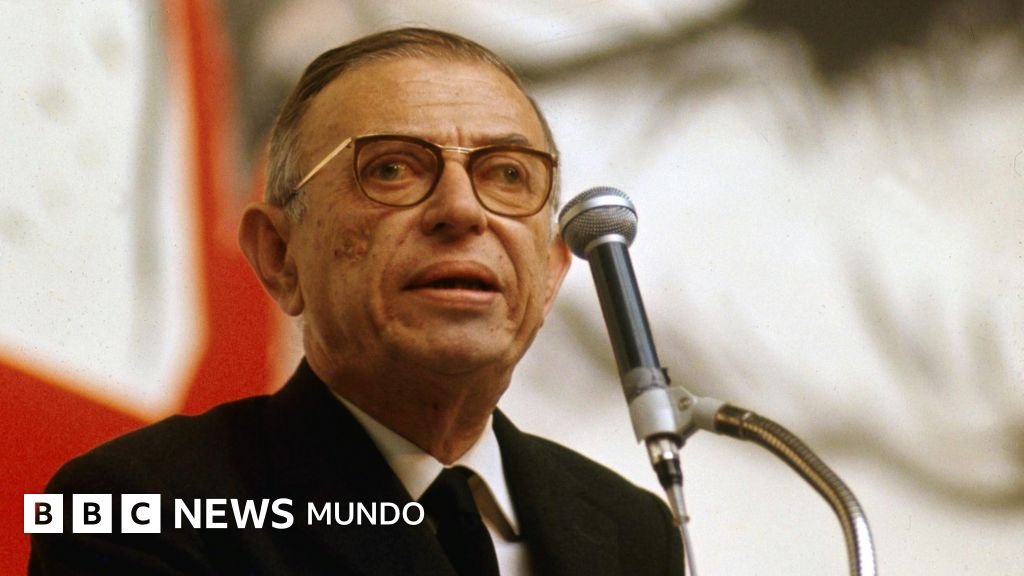
Exploring the Existential Freedom of Sartre
In this article, we delve into the profound ideas of Jean-Paul Sartre, the renowned French philosopher, playwright, and novelist. Known for his remarkable contributions to existentialism, Sartre’s thoughts illuminate the concept of freedom and responsibility in human existence. Discover how his belief that “existence precedes essence” shapes our understanding of life, choices, and the weight of our actions.
The Human Condition and Freedom
According to Sartre, humans are “thrown” into existence, condemned to make choices continuously. Failing to choose is, in itself, a choice. He articulated this view by claiming that we bear the full responsibility for who we are and what we do, leaving us no escape from our freedom. This perspective often leads to existential angst.
The Legacy of Existentialism
Friedrich Nietzsche had earlier declared, “God is dead,” establishing a foundation for existentialism that Sartre would explore. Yet, amidst overwhelming ideas, Sartre encourages us to view ourselves as blank canvases. By asserting that “existence precedes essence,” he posits that we are not bound by a pre-set mold; instead, we possess the freedom to create our identities.
Life Choices and Potential
Sartre believed in the vast potential of individuals to shape themselves, arguing that circumstances do not define us. Embracing this radical freedom and the absence of an inherent purpose provides us with an endless potential to be anything we desire.
An Influential Intellectual
Sartre was not just a philosopher; he was a prolific writer of plays, novels, and biographies. A towering figure of modern existentialism and Marxist humanism, he became one of the most prominent intellectuals of the post-war era. Controversial and politically active, he famously declined the Nobel Prize for Literature in 1964, citing his desire to remain free from institutional constraints.
Major Works and Thought
Born in 1905, one of his most notable works is “Being and Nothingness,” published in 1943. This elaborate examination set the stage for his later lecture “Existentialism is a Humanism,” delivered in 1945. This period was marked by intellectual vigor and cautious optimism following the liberation of Paris and the harsh realities exposed by the Holocaust.
Sartre’s Ethical Framework
In his 1945 lecture, Sartre tackled ethical discussions that formed the backbone of existentialism. As Professor Danila Suárez Tomé explains, his philosophy challenges historical essentialism—particularly concepts rooted in the divine or predetermined nature of existence. Instead, he asserts that humans create their essence through choices, rather than being defined by them.
Against Essentialism
Sartre’s philosophy pushes back against the notion that we possess a fixed nature. He critiques essentialist views, such as those suggesting gendered behaviors derived from biological determinism or astrological influences, which strip us of personal accountability.
The Notion of Nothingness
Surprisingly, Sartre’s existentialism posits that humans are essentially “nothing.” This “nothingness” provides the foundation for human creativity and potential. Suárez elaborates that by recognizing our inherent emptiness, we unlock infinite opportunities for growth and creation.
Freedom and Responsibility
Our existence does not adhere to a divine plan or preordained purpose. Sartre emphasizes that we are thrust into the world with the need to define our own meaning. The only thing we cannot escape is the necessity of being free—a freedom accompanied by anxiety.
Contingency and Existence
Sartre explored the idea of human contingency, noting that we could have easily not existed at all. This potential for non-existence invites us to examine our reality and imagine it differently, fostering a sense of responsibility for our choices.
Freedom’s Boundaries
While acknowledging our ability to push against boundaries, Suárez reminds us that true freedom is not absolute. Factors such as our environment, socio-economic status, and even our corporeal existence shape our choices. We did not choose our birth circumstances or community; rather, we must negotiate our identities in interaction with others.
The Nature of Actions
For Sartre, our actions are expressions of our freedom and not mere reactions to external stimuli. He posits that we define ourselves through deliberate choices and goals, allowing us to shape meaning in our lives.
Responsibility and Bad Faith
Living without an intrinsic purpose might seem liberating; however, with this freedom comes the weight of responsibility. Suárez notes that Sartre asserts the importance of acknowledging our role in creating value in our lives, while avoiding the lure of essentialist excuses that absolve us of this responsibility.
Simone de Beauvoir’s Perspective
While Sartre’s notion of radical freedom sparked intrigue, it evolves through dialogues with others, notably Simone de Beauvoir. As his partner and intellectual companion, she emphasized the limitations imposed by external societal factors, particularly the patriarchy, which restricts the freedom of oppressed groups.
Revisiting Sartre’s Ideas
Sartre’s metaphor of a blank canvas is alluring, yet it is essential to acknowledge various constraints that influence our ability to exercise radical freedom. As he refined his thoughts, later works like “Critique of Dialectical Reason” adopted a more critical, social lens.
Finding Joy in Existence
Ultimately, Sartre proposes that we should live authentically, embracing our freedom with joy rather than fear. Instead of seeking a definitive purpose, we can find fulfillment in our existence and collective human experience, holding the power to shape our future.
Conclusion
In exploring Sartre’s philosophies, we come to understand that although life can seem daunting, the freedom to define ourselves is also an invitation to embrace our potential fully. The responsibility of shaping our essence allows us to engage meaningfully in the world.
- Sartre believed human existence is marked by radical freedom and responsibility.
- He challenged essentialist views, emphasizing self-creation over predetermined nature.
- Our actions define us, enabling personal agency in a contingent world.
- The dialogue with thinkers like Simone de Beauvoir deepens the understanding of freedom’s limitations.