
Coordinated Attacks Disrupt Annual Olive Harvest in the West Bank
In a distressing turn of events, Israeli settlers have launched a series of attacks against Palestinians across the occupied West Bank, aiming to disrupt the critical olive harvest season. The violence, which escalated on Friday, involved the destruction of property, injury to individuals—including a journalist from a major publication—and has raised serious concerns over ongoing settler violence.
A Wave of Violence During Harvest Season
Masked settlers, armed with various weapons including clubs, have been reported to attack Palestinians engaged in olive picking. According to local authorities, incidents were noted in eight different villages, resulting in injuries to at least 20 individuals. This surge in violence is part of a worrying trend, leading to accusations of systemic “ethnic cleansing” directed at Palestinians, with even the British government echoing these sentiments.
Specific Incidents in Abu Falah
In the town of Abu Falah, close to Ramallah, a group of around 80 settlers gathered to obstruct the olive harvest. Witnesses indicate that some settlers were visibly armed, using slingshots to throw stones at farmers, all while Israeli military vehicles looked on. When Palestinians attempted to defend themselves by picking up rocks, the military responded by deploying tear gas against them.
Journalist Attacked
Among the injured was Washington Post photographer Heidi Levine, who suffered a brutal attack lasting over ten minutes. During the incident, her belongings—including her passport, phone, and camera equipment—were stolen. “I was assaulted and pushed to the ground. Fortunately, I was wearing my flak jacket and helmet; otherwise, I might not have survived, as they just kept kicking me,” Levine recounted from her hospital bed in Ramallah. Her colleagues intervened to protect her.
Government Response
The Israeli Prime Minister’s office, led by Benjamin Netanyahu, described the details surrounding Levine’s attack as “unclear,” attributing blame potentially to “200 Arabs and far-left activists” who were allegedly confronting Israeli youths. The office did, however, condemn violence broadly.
Escalating Attacks Against Palestinians
Recent statistics reveal a concerning increase in settler violence, with rights group Yesh Din reporting over 170 attacks since September 27, coinciding closely with the beginning of the annual olive harvest. As Israel’s elections approach at the end of October, there appears to be a troubling rise in hostility, leading to at least four Palestinian deaths and 100 injuries in just the past month. Additionally, thousands of olive trees have been vandalized or destroyed during this time.
New Restrictions on Harvesting
This year, Israeli authorities have implemented additional restrictions on olive harvesting, effectively barring Palestinians from over 8,800 hectares (approximately 21,800 acres) of agricultural land in Area C, which is predominantly under Israeli military control. This marks a significant 30% increase in restricted land compared to the previous year, while Israeli settlers were granted access to more land. The rights group Peace Now indicated a reduction in the area barred to Israeli citizens, reflecting a tendency to facilitate settler activities.
The Economic Impact on Palestinians
The olive harvest holds vital economic significance for Palestinians, particularly after many lost employment opportunities following the Hamas-led attacks on October 7, 2023. Recent imagery has revealed severe damage in areas like Kufur Malek, where Israeli bulldozers uprooted extensive olive trees.
Accountability and International Response
Despite the gravity of these incidents, settlers often escape accountability for their actions, even when evidence is clear. Rights organizations assert that Israeli military forces frequently protect settlers rather than intervene during attacks against Palestinians. Although Netanyahu has occasionally condemned such violence, actions to curb it remain limited, especially amid the rapid expansion of Israeli settlements under his administration—all of which have garnered widespread international condemnation as infringements of international law.
Frustrations at Violence and Theft
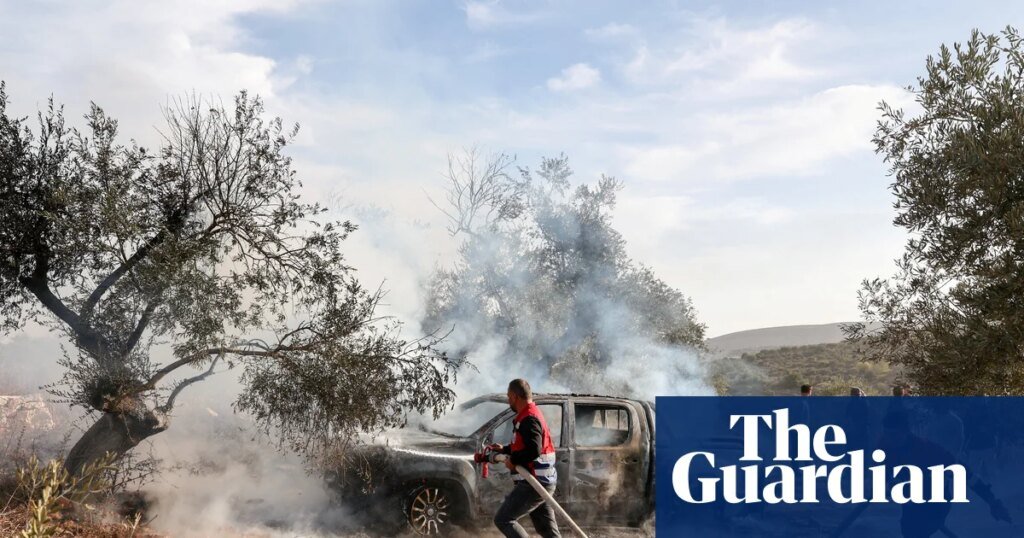
On the same day as the Abu Falah incident, another attack occurred near Turmus Ayya, where settlers burned vehicles belonging to Palestinians. Footage shared by the rights group B’tselem depicted scenes of settlers violently stealing olives from local farmers, an unprecedented scale of theft according to long-time activists like Sarit Michaeli.
As the situation unfolds, attention remains on the impact these actions will have on the Palestinian community, their livelihoods, and the broader implications for peace in the region.
Conclusion
The violence against Palestinians during the olive harvest highlights the ongoing tensions in the West Bank. The situation raises serious questions about accountability and the protection of human rights, inviting further scrutiny both locally and internationally.
- Israeli settlers have attacked Palestinians during the annual olive harvest, with at least 20 injuries reported.
- New military restrictions have barred Palestinians from accessing over 8,800 hectares of agricultural land.
- Settler violence has significantly increased in recent weeks, raising concerns over systemic violence against Palestinians.
- Despite reported attacks, accountability for settlers remains a significant issue, with limited action taken by Israeli authorities.