
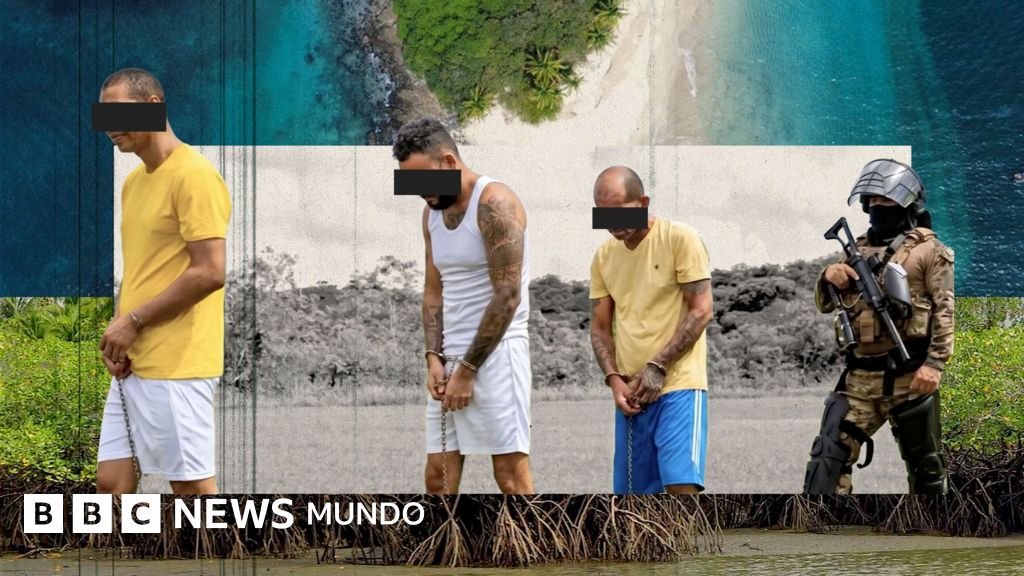
Coiba: From Brutal Prison to Nature’s Paradise
Crabs scuttle away from our footsteps as we unload our boat on the pristine shores of Coiba, an untouched gem in the Pacific waters of Panama. With serene waves lapping at the bright sand and only the rustle of lush vegetation to break the silence, one could easily mistake this for an idyllic escape. Yet, beneath the tranquil surface lies a haunting legacy of violence and human suffering.
A Dark History
Coiba, an archipelago about 25 kilometers southwest of Veraguas, was once synonymous with terror, having operated for 85 years as a notorious open-air prison. Here, notorious criminals and political dissidents during Panama’s dictatorship (1968-1989) endured unimaginable torture and forced labor. After its closure in 2004, the island transitioned into a nature reserve dedicated to preserving its dark history, earning UNESCO World Heritage status.
Intriguingly, the very years Coiba functioned as a prison helped its diverse ecosystems flourish, practically untouched by human hands. As of June 2023, Panama dispatched 29 inmates to a naval base on the island following a violent prison escape in the capital, triggering debates about the implications of such a move.
The Naval Base Debate
The action, labeled as a security measure by President José Raúl Mulino, has sparked concern among scientists and environmental advocates. The Coiba Marine Park is the largest of its kind in Central America, encompassing 270,125 hectares of aquatic and terrestrial domains, making it a crucial ecological laboratory.
During a sweltering weekend in May before the government’s controversial decision was known, we accompanied a group of researchers and a park ranger, Narciso “Mali Mali” Bastidas, who had spent a decade incarcerated on the island.
Mali Mali’s Story
“The day of the homicide was November 29, 1986. I was 23,” recalls Mali, now 63 and originally from Guna Yala, an indigenous district on Panama’s Caribbean coast. We stayed overnight at the Coiba AIP scientific station, nestled in nature’s embrace. Mali was wrongfully convicted of murder and served his sentence in Coiba, where he insists he was innocent.
“In the 80s, Panama was under a military regime. The authorities tortured me to sign false confessions,” he shares.
Unlike many inmates transported by sea, Mali arrived by air. The aerial view revealed the same farmlands he would later toil in. “Yet, it was beautiful,” he reflects.
The Prison’s Operations and Effects
Established in 1919 under President Belisario Porras, the prison was designed to be self-sufficient, forcing inmates to work long hours without pay. Mali’s task involved clearing land in the jungle, where he and others lived in makeshift camps constructed from local materials, while a concrete facility remained largely unused. “Thanks to the prison’s existence, the majority of Coiba has remained untouched,” he notes.
Survival Amid Violence
The brutality wasn’t confined to their forced labor; it also manifested in horrific treatment from guards, especially under the militaristic rule of Omar Torrijos and later Manuel Noriega. Historical accounts reveal severe human rights violations, torture, and inhumane punishments that were commonplace. Mali describes: “If someone shared a bite of food, we would be beaten mercilessly.”
Many lost their lives due to harsh conditions or rivalries between factions within the prison. The lack of bars provided inmates with some movement but also heightened the danger. One particularly notorious incident in 1998 involved a mass execution of inmates who attempted to escape but were intercepted by their rivals.
Return to Nature
Our exploration of Coiba was filled with wonder and discovery. A fishing boat loaded with supplies allowed us to traverse the archipelago’s 30 islands, where we observed thriving wildlife and untouched ecosystems. Marine biologist Edgardo Díaz Ferguson highlighted that Coiba serves as a “modern Jurassic park,” providing invaluable research opportunities into rejuvenating ecosystems that have faced no human interference for millennia.
Recent Developments and Concerns
The recent transfer of inmates to Coiba raised alarms among environmental groups, who argue that housing prisoners in a protected area defies existing laws prioritizing conservation and scientific research. In July 2023, families of the prisoners protested the government for limited contact with their loved ones.
The Future of Coiba
For Mali, his journey from prisoner to park ranger illustrates hope for personal redemption and environmental preservation. He became a keen advocate for Coiba’s conservation and shares knowledge about its biodiversity with researchers.
“I see Coiba as a familial part of nature. It transformed my life,” he affirms.
Conclusion
Coiba symbolizes a complicated intersection of humanity and nature—born from a history of pain but evolving into a sanctuary for biodiversity. As debates unfold and tensions rise regarding prisoner transfers, the hope remains that this pristine island can continue to serve as a refuge for countless species as well as for the people who call it home.
Key Takeaways
- Coiba’s transformation from a brutal prison to a UNESCO World Heritage site highlights the resilience of nature.
- The recent relocation of inmates has reignited discussions on environmental protection versus security needs.
- Mali Mali’s journey reflects the powerful connection between personal redemption and conservation.
- The unique ecosystems of Coiba provide insights into historical environments untouched by human impact.