
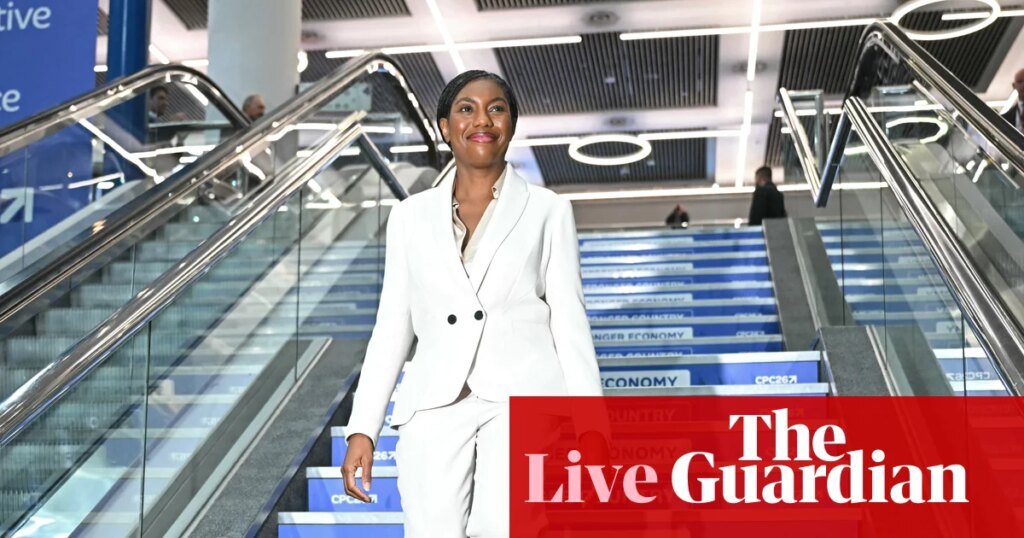
Tories’ Stance on Pensions and Other Key Political Developments
In a recent interview, Tory politician Kemi Badenoch made waves regarding the future of the pensions triple lock, hinting that any changes proposed by Labour may not be reversed by a future Conservative government. Additionally, various speeches and events at the recent party conference brought to light critical discussions on defense, transportation, education, and labor issues affecting the UK today.
Badenoch on the Pensions Triple Lock
Kemi Badenoch, speaking on Times Radio, suggested that if the Labour party moves ahead with legislation to alter the pensions triple lock before the next general election, a future Conservative administration may not undo those changes. Labour’s Andy Burnham recently announced plans to adjust the triple lock by 2030, aiming to redirect savings towards establishing a National Care Service. Despite the government’s assurance to maintain the current form of the triple lock, Badenoch’s responses hint at uncertainty about the party’s next steps should Labour implement the changes.
“I have said that the triple lock is our policy and it remains our policy. I don’t think going after pensioners is the right thing when there are loads of people who can work, who won’t work.”
Badenoch emphasized that while the triple lock remains a priority, the eventual decision will depend on how Labour decides to allocate resources. She explicitly stated that she will not mislead the public merely for votes, underscoring her commitment to transparency.
Defence Concerns Raised
In a strong critique of the Conservative party’s defense record, Wes Streeting, a member of the opposition, pointed out the inadequate size of the military and significant funding gaps. Following a speech that promised £10 billion for a new missile defense system, Streeting responded:
“The Conservatives put more effort into defending their abysmal record than they ever put into defending Britain.”
He contended that previous Conservative leadership has left the defense of the nation in a vulnerable state, demanding accountability from the party for years of underfunding.
Transport Development Plans in Wales
Welsh ministers, under the leadership of Plaid Cymru, have announced ambitious infrastructure projects to alleviate traffic congestion, notably a third crossing over the Menai Strait and the expansion of the M4 around Newport. The estimated cost for the Menai crossing is around £750 million, while the M4 project could reach up to £1.7 billion.
Mark Hooper, the deputy transport minister, noted:
“We will carry out an 18-month study to consider a range of road-based solutions for the M4 around Newport.”
The Welsh government is exploring various funding options to support these critical projects, which are viewed as essential for both local and national connectivity.
Labor and Welfare Issues
Shadow Work and Pensions Secretary Helen Whately shared serious concerns about the high number of working-age adults relying on benefits, stating that the current expenditure on welfare is unsustainable. She expressed:
“We’re spending £170 billion a year on working-age welfare, two and a half times more than we spend on defense.”
Whately emphasized the importance of ensuring a sustainable future for welfare, advocating for reform while still recognizing the need to support those truly in need.
Education Policies Criticized
The National Education Union responded strongly to Laura Trott’s speech at the conference, accusing her of initiating a “culture wars” narrative that wrongly targets teachers instead of addressing pressing issues like funding and class sizes. NEU President Daniel Kebede described the critique of educators as both disappointing and misinformed.
Economic Perspectives
In her newly released mini-book, Kemi Badenoch has faced scrutiny over her comments indicating skepticism towards minimum wage policies. Labour’s Bridget Phillipson took issue with this, insisting that the Tory party’s historic resistance to minimum wage legislation reveals their fundamental opposition to workers’ rights.
“It’s the same old Tories. They never learn.”
Conclusion
The recent discussions and proposals emerging from the Conservative party conference illustrate a complex interplay of political strategies, where issues of pensions, defense, transport, and labor rights are at the forefront. As the political landscape evolves, the implications of these debates will shape the future of UK governance.
Key Takeaways:
- Kemi Badenoch indicated potential continuity for the pensions triple lock despite Labour’s proposed changes.
- Critiques emerged from the opposition regarding defence funding and welfare policies.
- Ambitious transport infrastructure plans were unveiled by the Welsh Government to ease congestion.
- Concerns about education policies and minimum wage commitments were raised in response to Tory statements.