
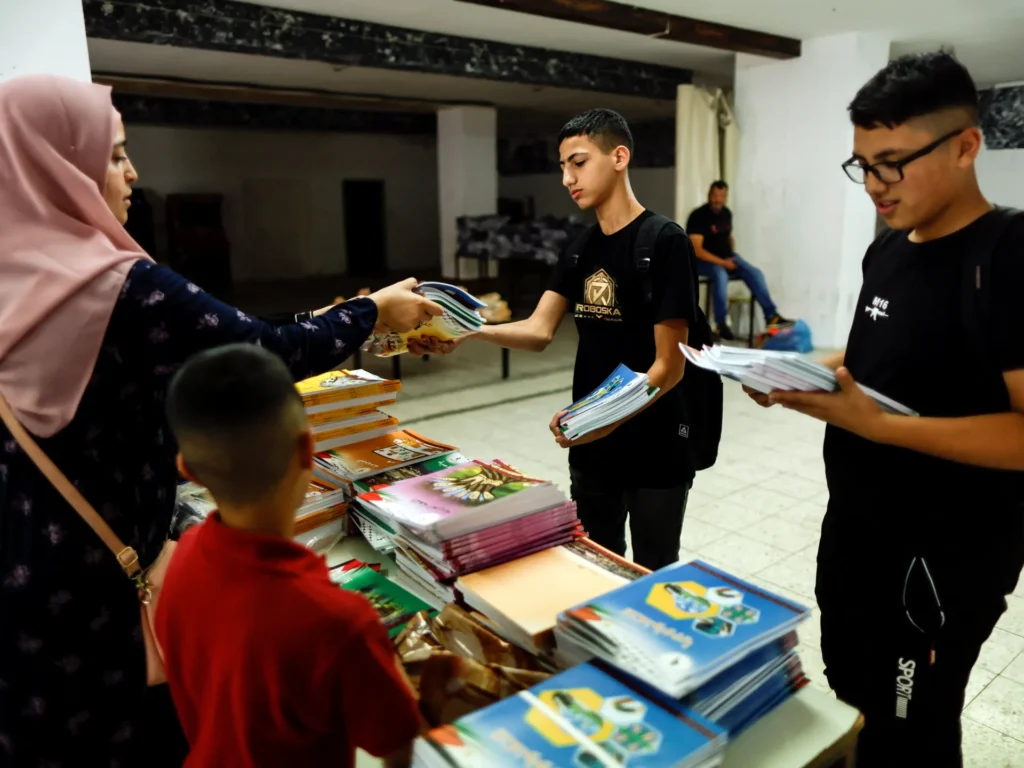
The Impact of Curriculum Changes in Occupied East Jerusalem
The new school year has commenced in occupied East Jerusalem, bringing with it the controversial revelation that 45,000 Palestinian children are now following a curriculum established by Israeli authorities. This figure accounts for over a third of the Palestinian student population in the region and marks nearly a two-fold increase from the previous year. In contrast, Christian schools have initiated a strike due to a lack of permits granted to teachers from the occupied West Bank, complicating the educational landscape further.
The Struggles of the Palestinian Education System
For Palestinian residents of occupied East Jerusalem, the introduction of this curriculum represents yet another form of encroachment on their national rights. Israeli authorities justify this intervention, arguing that Palestinian textbooks produced by the Ministry of Education and educators trained in Palestinian institutions propagate hate.
International Humanitarian Law and Educational Rights
According to international humanitarian law, an occupying power is obligated to ensure the smooth operation of educational institutions and refrain from interfering in their administration. The recently updated commentary by the International Committee of the Red Cross emphasizes that an occupying force should not replace existing educational systems with its own or impose alternative curricula.
Wider Implications of Educational Interference
Israeli intervention in Palestinian education extends far beyond East Jerusalem, affecting schools in the West Bank and, more recently, in the Gaza Strip. For years, successive Israeli governments have sought to pressure international allies, particularly the United States and European nations, to compel the Palestinian Authority to revise its educational materials as a condition for aid. The devastation faced by Gaza’s educational system has enabled NGOs backed by Western donors to introduce Israel-approved curricula.
Revising History: What’s at Stake?
The Israeli assertion that these changes are necessary to prevent Palestinian children from learning hate does not hold up under scrutiny. Academic research, including a study conducted by both Palestinian and Israeli scholars and funded by the U.S. Department of State, has indicated that Palestinian textbooks do not incite hate or dehumanization towards Israelis.
So, what specific revisions does Israel seek in Palestinian educational content? Studies have highlighted that changes made to textbooks often involve the elimination or alteration of references to Palestinian national symbols, such as the flag and anthem, as well as aspects of history and sovereign rights. A 2025 analysis of primary school textbooks demonstrated modifications like substituting “Palestine” with “Israel” in certain contexts and omitting discussions on the realities of occupation.
The Significance of Palestinian Identity in Education
Israel’s intent to erase references to the occupation, Palestinian history, and self-determination from educational materials is not motivated by a desire to eliminate hate but rather to undermine Palestinian national consciousness. This effort aligns with a broader Israeli narrative denying the existence of a distinct Palestinian people.
Resistance against the Israeli curriculum in East Jerusalem should thus be seen as a fight against the appropriation of Palestinian identity and rights. Families and educators fear that acceptance of the Israeli curriculum equates to acquiescing to the annexation and erasure of their cultural identity.
Western Scrutiny of Israeli Curricula
While the Israeli government exercises control over Palestinian curricula, little scrutiny is applied by its Western allies regarding the content of Israeli educational materials. Research conducted by Israeli philologist Nurit Peled-Elhanan revealed that Israeli history and geography textbooks prominently feature racist stereotypes and erase Palestinian narratives. In her book, she expresses concern that students graduate with resentment towards Palestinians and a lack of understanding of their realities.
Further examination of 123 Israeli textbooks by scholar Yael Teff-Seker uncovered prevailing themes of ethnocentrism and a limited perspective on Palestinian stories, while sensitive narratives, such as the Nakba, are given marginal attention. A research paper by academic Roy Weintraub highlighted that this term is only partially included in educational content, with teaching materials often justifying Israeli military actions during the 1948 War.
The Broader Conflict: Education as a Power Struggle
The debate surrounding educational content in Israel-Palestine transcends mere schooling; it extends into the realms of power and identity. When one entity maintains control over land, movement, and educational institutions, it fundamentally affects how history and societal narratives are constructed for the next generation. The classroom thus becomes yet another battleground in this ongoing conflict.
Ultimately, the struggle over Palestinian textbooks embodies a deeper contest over which narratives are deemed valid in shaping the histories and identities of future generations.
Conclusion
The introduction of a curriculum by Israeli authorities in East Jerusalem not only raises questions about educational content but also highlights deeper issues of identity, power, and rights. As Palestinian communities resist these changes, the implications reach far beyond the classroom.
Key Takeaways
- Over 45,000 Palestinian children are now studying an Israeli-authorized curriculum in East Jerusalem.
- International humanitarian law mandates that occupying powers must not interfere with existing educational systems.
- Research shows that Palestinian textbooks do not promote hate, contrary to Israeli claims.
- The struggle over educational content reflects broader issues of identity and historical narratives in the Israeli-Palestinian conflict.