
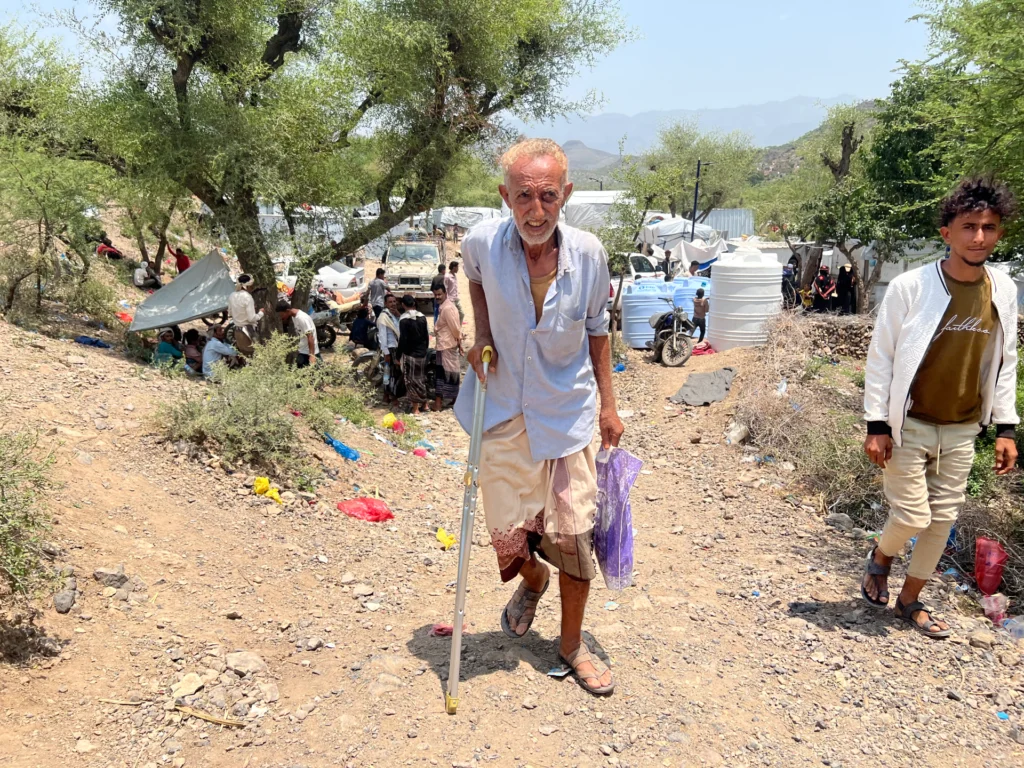
Life Amidst Conflict: The Plight of Displaced Families in Yemen
In the midst of ongoing conflict, many families in Yemen face devastation as they are forced to flee their homes. One of them is Hajja Fatima Mohammed Saleh, a 70-year-old woman caught in the turmoil of recent fighting in Taiz governorate. This article explores her harrowing experiences and the broader implications of the renewed hostilities between Yemeni government forces and the Houthi rebel group, known for their control over significant areas of northwestern Yemen.
The Human Cost of Conflict
Hajja Fatima’s home village, situated in the Maqbanah district along Yemen’s western coast, recently became the epicenter of a Houthi offensive that successfully seized the entire Red Sea coastline, including the crucial port city of Mocha. The United Nations estimates that around 100,000 individuals have fled their homes due to the escalating clashes, often leaving behind most of their belongings as they seek safety from the advancing Houthi forces.
Desperation and Survival
Saleh recounted the terrifying moments of the assault, stating, “The attack was massive, we had never seen anything like it before. Shells were falling heavily on the village, and bullets were flying in every direction.” For her, the journey to safety was particularly challenging, as she had to leave her wheelchair behind and crawl through difficult terrain for miles. “We had no choice but to leave and flee to a safe place,” she emphasized, detailing the hardship she endured in the face of danger.
Increasing Displacements and Humanitarian Challenges
The humanitarian situation in Taiz is dire, with increasing numbers of people seeking refuge. According to Ali al-Shumairi, the director-general of the Executive Unit for the Management of IDP Camps in Taiz, between August 10 and September 15, nearly 65,845 individuals were displaced, primarily from five districts that witnessed the most intense fighting.
Rising Tensions and Military Actions
As government forces attempt to reclaim Mocha from the Houthis, air assaults have intensified, placing the strategically significant Bab al-Mandeb Strait in the spotlight of international concern. This strait connects the Red Sea to the Gulf of Aden and is crucial for global shipping routes. The renewed conflict, which reignited in July, has signaled a troubling shift in Yemen’s long-standing civil war.
Conditions in Displacement Camps
The living conditions in camps for internally displaced persons (IDPs) are a reflection of the broader humanitarian crisis. At al-Munij camp, located about 40 kilometers southwest of Taiz, many displaced families struggle for basic necessities. Hajj Saif Qaed Thabet, a 73-year-old resident, shared his plight after leaving behind a farm and livestock, stating, “Since arriving at the camp, we have been living like this, waiting for our situation to be addressed.”
Hope Amid Despair
Residents like Malouk Ahmed Ali, who fled with her large family, harbor hopes of returning to their homes, but concerns remain about their lost possessions and the fate of their livestock. “As for our livestock, most of them died, some fled to the mountains, and what remained was looted,” she lamented.
Conclusion
The ongoing conflict in Yemen continues to uproot families and devastate communities, with displaced individuals desperately searching for shelter and support. As the situation evolves, it is crucial to highlight their struggles and advocate for increased humanitarian assistance to address their dire needs.
Key Takeaways
- Recent fighting in Yemen has displaced around 100,000 individuals, causing a humanitarian crisis.
- Many displaced families, including older adults and those with disabilities, face arduous journeys to safety.
- Conditions in displacement camps are dire, with residents lacking basic services and adequate shelter.
- The international community must take action to alleviate the suffering of those affected by the Yemeni conflict.