
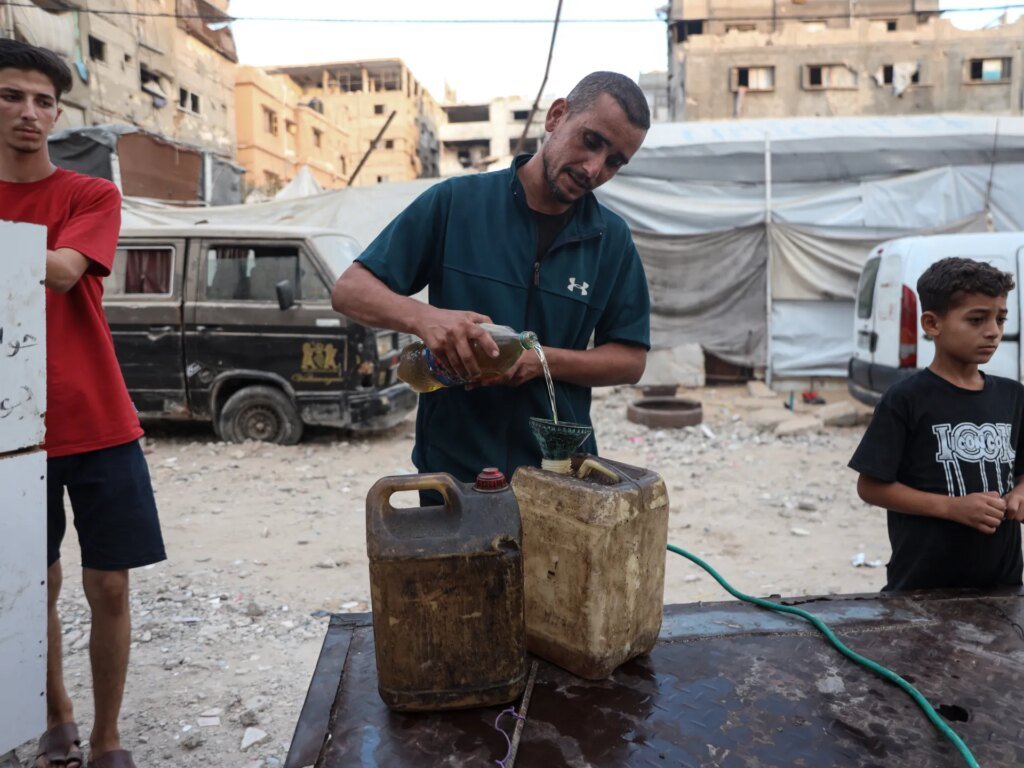
Life in Gaza: Coping with Water and Electricity Shortages
In Gaza City, residents are adapting to extreme challenges of daily life in the wake of ongoing conflict. Hajj Rabhi al-Fairi, a 79-year-old man, has become accustomed to waiting outside his home with his family and neighbors for their turn to use a rented generator, essential for accessing water. This article delves into the struggles faced by families like al-Fairi’s, highlighting the innovative yet challenging solutions they employ to address water and electricity shortages.
Chasing Water with Generators
For over four hours, al-Fairi stands, watching as the generator owner fills it with fuel. Each family receives just a few minutes to use the generator, enough time to operate a pump that pushes water to a rooftop storage tank. “We have an old water pump, but without electricity, it’s useless,” al-Fairi explains. Upon returning home in October 2025 after fleeing their neighborhood due to conflict, al-Fairi discovered that their community was devastated. The absence of municipal electricity and running water has forced residents to rely on generators, which come at a cost.
Previously, families paid around 80 to 90 shekels (about $26-$30) for an hour of generator service. However, this price has risen to between 100 and 120 shekels ($33-$40), not counting the cost of fuel.
The Role of Mobile Generators
Khalil Abu Ouda, 39, operates a portable generator on a horse-drawn cart, delivering much-needed power to homes. With soot-covered machinery, he connects various households to water pumps, often facing long waits. “This machine is my livelihood, but it’s also a service to the community,” he states. Mobile generators like his are becoming rare due to breakdowns and the scarcity of spare parts amid the ongoing blockade.
Fuel and engine oil are increasingly hard to come by, and though Abu Ouda would like to decrease rental prices, demand is peaking. He works 10 to 12 hours a day to meet the community’s needs, driven by the dire circumstances at hand.
Rethinking Daily Chores
As the war persists, many Palestinians must adapt by hiring services for basic household tasks that were once done at home. Abeer Ghorab, 52, used to wash clothes on her own but now relies on a local laundry. “These services have been a relief,” she remarks, especially during the winter months when heavy fabrics take longer to dry.
Despite the convenience, Ghorab finds the expenses add up quickly. Before the conflict, her household had a washing machine and other appliances—luxuries that now feel like distant memories.
Infrastructure in Crisis
The ongoing conflict has wreaked havoc on Gaza’s infrastructure. A recent assessment indicated that 91 percent of households are facing considerable water shortages. Significant damage has rendered many homes uninhabitable, complicating daily life for families who are trying to find a way to survive.
Adjusting Laundry Operations
Fadi Abu Shawarb, at his family’s laundry, has had to make adjustments in response to the changing landscape. “We used to rely on large washing machines, but operating them has become too costly,” he notes. Instead, they’ve swapped out the 50kg machines for smaller ones to conserve energy.
Abu Shawarb serves many displaced families who are without basic utilities. The laundry processes around 20 to 30 loads each day, charging between six and twelve shekels depending on the power source.
Concluding Thoughts
The struggle for everyday essentials in Gaza highlights the resilience of its residents amidst adversity. Whether waiting for water or rethinking laundry solutions, families are navigating a complicated survival landscape shaped by conflict.
Key Takeaways:
- Residents rely on rented generators for essential water access due to electricity shortages.
- Increasing costs for generator rental and fuel strain families financially.
- Many households have turned to commercial laundries, altering traditional daily tasks.
- Significant destruction has changed the fabric of life, forcing creative adaptations in Gaza.