
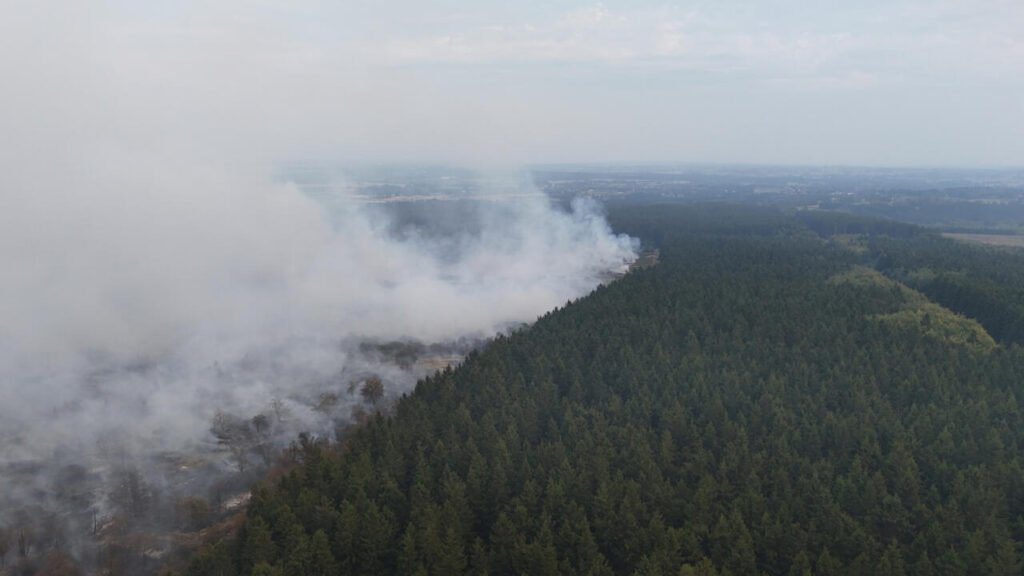
Devastating Wildfire Forces Evacuations in Eastern Belgium
On Saturday, eastern Belgium found itself in the grip of a crisis as hundreds of residents faced evacuation orders due to one of the nation’s most severe wildfires. Firefighters are tirelessly working to combat the blaze, which has transformed expansive areas of a nature reserve into a charred expanse. The situation escalated quickly after the fire erupted on Friday in the High Fens park, located near the German border, prompting reinforcements from across Belgium and support from the European Union.
The Emergence of the Wildfire
Officials are labeling this inferno as the most significant wildfire in Belgium’s modern history, reminiscent of catastrophic wildfires that devastated the same region in 1911 during a similar spell of extreme heat and drought. By Sunday morning, over 3,000 hectares (approximately 7,500 acres) had been scorched, a staggering rise from the 80 hectares reported just a day earlier.
Eyewitness Accounts
Local residents have shared their harrowing experiences. David Rodolfs, who owns a restaurant in the nearby Waimes area, recounted, “You can’t see a thing anymore, there’s smoke everywhere.” He described how ash began falling on patrons’ tables, leading to an urgent evacuation: “There was no dessert; everyone had to go.” Meanwhile, the authorities indicated that the region’s rugged terrain was hindering firefighters’ typical methods.
Evacuations and Shelter Efforts
As a precautionary measure, officials ordered evacuations in the nearby villages of Sourbrodt and Buetgenbach, affecting around 600 residents. A gymnasium in Malmedy has been converted into a shelter for those displaced. Romane Bouhaben from the Belgian Red Cross stated, “We are here to provide them with information and meet their basic needs of food, water, and a place to rest, especially for the most vulnerable.”
Keeping Safe
Residents not directly affected by the evacuations have been advised to stay indoors and keep doors and windows shut. Nicolas Yernaux, a representative of the regional authorities in Wallonia, warned about the fire’s unpredictability, stating, “There is a risk that the fire could reach homes, but we are deploying all resources available for protection.” An AFP journalist reported seeing vast areas of the forest reduced to blackened remnants, with thick smoke still hanging in the air.
International Assistance
In response to the disaster, Belgium activated the European Union’s civil protection mechanism, facilitating the arrival of personnel and equipment from across Europe. A Dutch helicopter was already on the scene, with additional support arriving, including two Swedish water-bombing aircraft expected to be operational shortly. European Commissioner Hadja Lahbib highlighted the ongoing “climate upheaval” affecting the continent, emphasizing, “Never before has the wildfire season started so early in the year and reached such northern latitudes.”
The Challenge of the Terrain
Fighting the fire has been complicated by the area’s challenging landscape, which consists of heathlands, peat bogs, and raised wooden boardwalks. Yernaux mentioned that firefighters have had to retreat to the forest’s edge and allow portions of the heathland to burn due to accessibility issues. “The situation remains complicated and highly reliant on aerial support,” he noted.
Community Support
The community’s response has been heartening, as numerous farmers have taken to social media to share images of themselves heading to the fire zone to assist emergency services. Interior Minister Bernard Quintin expressed his astonishment at the fire’s rapid destruction but also gratitude for the community’s support, saying, “You can see the farmers out here driving around and continuing to wet down the area.”
Current Conditions
Belgium is undergoing a spell of extreme heat, with temperatures soaring to 37 degrees Celsius in some regions, exacerbating the wildfire risk. This situation unfolds alongside another significant blaze in western Germany that has already led to the evacuation of approximately 1,800 people, with flames threatening residential areas.
Conclusion
The wildfire in eastern Belgium serves as a stark reminder of the impacts of climate change and the urgent need for effective response strategies. As firefighters continue to battle the flames, the community remains resilient, coming together to support those affected by this devastating event.
Key Takeaways
- Hundreds of residents were evacuated as Belgium faced one of its worst wildfires in history.
- The fire rapidly spread in the High Fens park, affecting over 3,000 hectares.
- International help has arrived, including helicopters and water-bombing aircraft from neighboring countries.
- Community support has played a crucial role in aiding emergency responders during this crisis.