
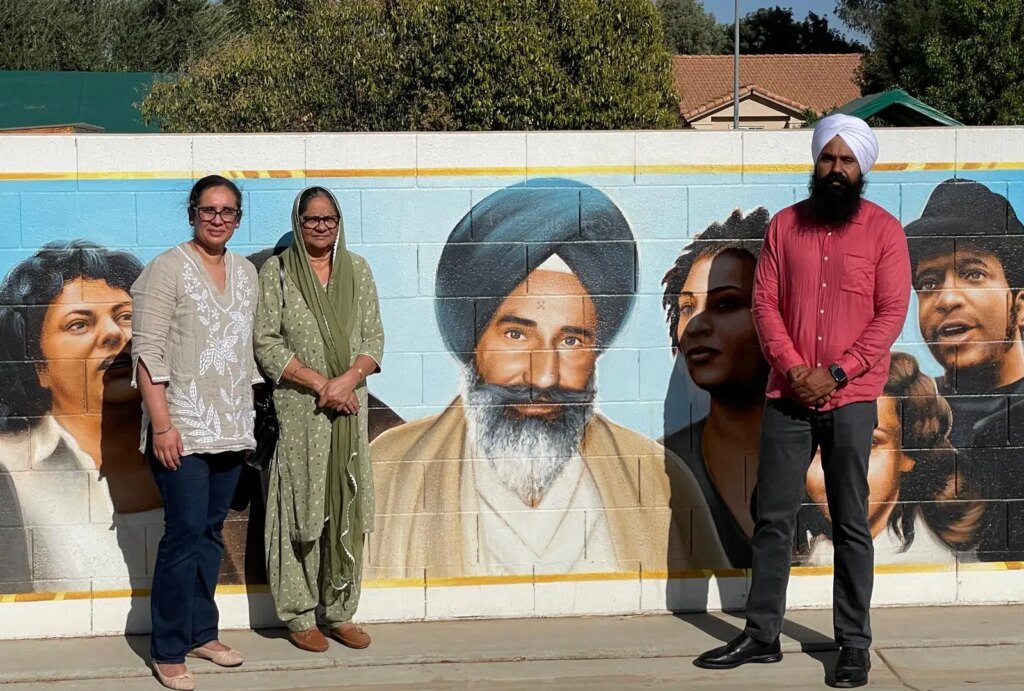
The Legacy of Jaswant Singh Khalra: A Journey for Justice
On the morning of September 6, 1995, life seemed normal for human rights activist Jaswant Singh Khalra. In Amritsar, Punjab, he washed his car, while his wife, Paramjit Kaur, prepared to head to work and their children, Janmeet and Navkiran, got ready for school. Little did they know that this ordinary day would become the turning point in their lives, forever altering their futures.
A Day That Changed Everything
Shortly after Paramjit and the kids left, police took Khalra into custody. What followed was a harrowing experience of secret torture that ultimately led to his murder, with his body never being recovered. Khalra was targeted because of his investigations into the disturbing trend of disappearances and extrajudicial killings attributed to Indian security forces during the Sikhs’ separatist movement in the 1980s, aimed at establishing Khalistan as a sovereign homeland. Following the infamous Operation Blue Star in June 1984, where military forces stormed the Golden Temple, many lives were lost, sparking immense turmoil.
The Repercussions of Political Violence
The fallout from Operation Blue Star tragically led to the assassination of Prime Minister Indira Gandhi later that year, which in turn incited anti-Sikh riots across India, resulting in thousands of deaths. In response, a ruthless crackdown on the Khalistan movement ensued, allowing security forces to exercise extreme measures, including torture and arbitrary killings.
Among the numerous victims of enforced disappearances was a close friend of Khalra, which ignited his relentless pursuit of justice. In 1995, he petitioned the Supreme Court of India, alleging that the police had cremated around 25,000 unidentified bodies sans acknowledgment. This assertion was met with denial and dismissal from the authorities.
Despite ongoing threats and intimidation, Khalra fearlessly brought families together who were mourning their lost relatives. His relentless search for truth was met with the ultimate sacrifice when he was abducted from his home.
A Legacy of Resistance and Activism
Khalra’s case became pivotal in the narrative of human rights abuses in India, prompting a call for governmental investigation after his wife took up the mantle of activism following his disappearance. To this day, although five police officials are serving life sentences for his murder, countless others are still missing, with families left searching for answers.
In a significant cultural reflection, the feature film titled Satluj seeks to explore Khalra’s life and the ongoing struggle for justice, despite the government’s attempt to suppress its release due to alleged security concerns. Sikh organizations and rights advocates have continued to screen the movie, reigniting conversations around Khalra’s legacy, accountability, and the need for free expression.
A Daughter’s Reflection
Three decades after her father’s tragic fate, Navkiran Kaur Khalra shares her insights, recounting the harrowing memories of that fateful day. She recalls, “It was an ordinary morning… but that day marked the beginning of a nightmare that changed our lives forever.” Her family’s search for her father showcased the despair and injustice faced by many similarly affected families in Punjab, highlighting a dual existence—one that kept up normalcy while grappling with the trauma of loss.
As years passed without closure, a pivotal moment came in 1998 when a key witness exposed the reality of her father’s torture and murder. This confirmation reshaped the family’s understanding of their ordeal, leading them to perform his last rites without ever recovering his body. Although some police officers faced justice, Navkiran emphasizes, “The trial ended, but justice never happened.” Her family’s battle serves as a testament to the ongoing struggle for recognition and rectification within a flawed system.
A Vision for Justice
Khalra’s activism encompassed more than just cataloging killings; he fought for the recognition of the families left in limbo without legal proof of death. As Navkiran poignantly remarks, “The system didn’t just take one person away; it condemned entire families to decades of uncertainty.”
After years of avoiding media portrayals, the Khalra family decided to support Satluj when they felt the project genuinely represented their story and advocacy. The unexpected grassroots response to the film following its suppression exemplifies the enduring quest for stories of truth and justice.”Even thirty years later, people are still searching for truth, justice, and accountability. That is why his story continues to matter,” Navkiran shares.
Conclusion
The legacy of Jaswant Singh Khalra is a vivid reminder of the ongoing struggle for human rights in India. His life and work continue to inspire activism and foster vital conversations, amplifying the stories of countless families enduring similar tragedies.
Key Takeaways
- Jaswant Singh Khalra was a pivotal figure in the human rights movement in India.
- His disappearance highlighted the extreme measures taken by state authorities during Punjab’s insurgency.
- His family’s ongoing fight for justice emphasizes the importance of recognition and legal validation in cases of enforced disappearances.
- The public reception to the film Satluj illustrates the enduring demand for accountability and free expression regarding human rights abuses.