
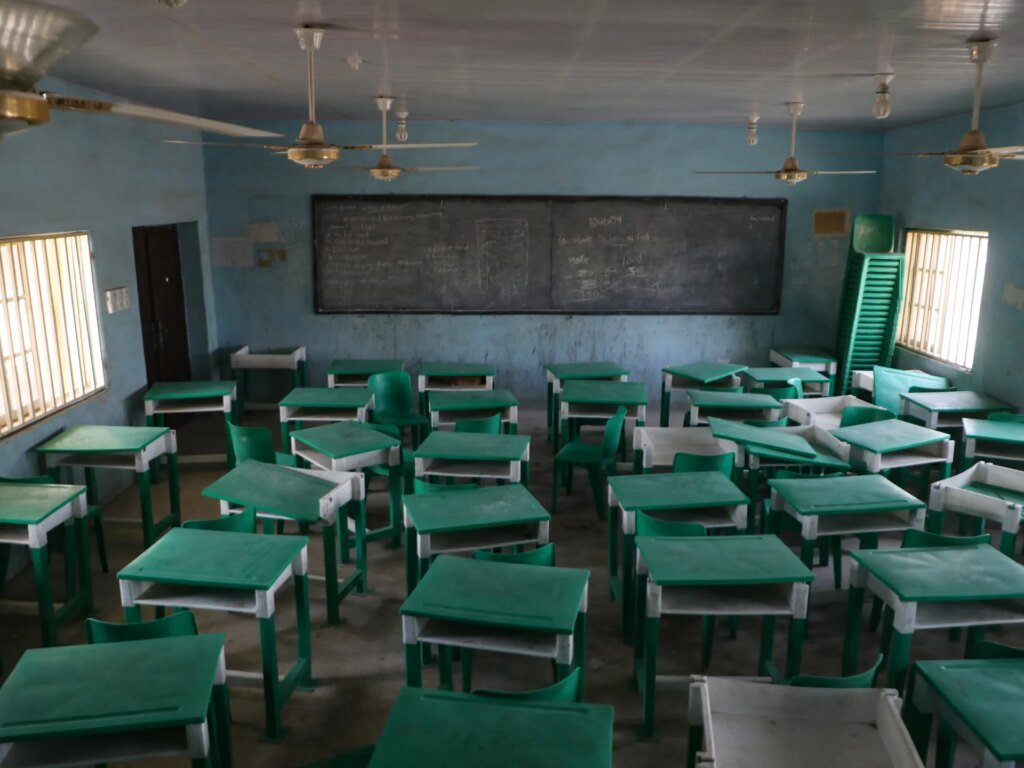
The Oyo School Abduction: A Call for Enhanced Security in Nigerian Education
Nigerian President Bola Tinubu expressed profound relief following the rescue of 39 pupils and six teachers after they spent an agonizing 56 days in captivity. Gunmen had taken them from three schools in the Oriire Local Government Area of Oyo State on May 15. While their safe return is a source of joy, it also highlights a troubling reality: over a decade after the Chibok abduction spurred Nigeria to enhance school security, numerous students and educators remain vulnerable to abduction and violence.
A Stark Reminder of the Past
On April 14, 2014, Boko Haram infamously kidnapped 276 schoolgirls from Chibok in northeastern Nigeria, an event that shook the globe and marked a pivotal moment in the nation’s history. In response, the United Nations, international business leaders, and Nigerian authorities initiated the Safe Schools Initiative (SSI) just a month later, aimed at bolstering security for educational institutions. Initially, this initiative targeted 500 schools within the northeastern states of Nigeria.
Reassessing the Safe Schools Initiative
The recent kidnapping has not only reignited discussions about the safety of schools but has also raised critical questions about the achievements of the SSI. It brings into focus whether merely enhancing school grounds can effectively protect children if broader security issues persist.
Components of the Safe Schools Initiative
On paper, the SSI encompasses a variety of measures, including:
- Perimeter fencing for schools
- Access controls
- Improved security infrastructure
- Deployment of local guards and security personnel
- Community-based early-warning systems
- Relocation of at-risk students to safer schools
- Psycho-social support for survivors
- Temporary learning centers in camps for internally displaced individuals
Since its inception, the initiative has broadened its scope to cover all 36 states and the Federal Capital Territory. Some areas, like Lagos and Ogun, have made strides in adapting and strengthening its implementation by conducting safety audits and forming safety committees.
Shortcomings and Concerns
Despite these advancements, the initiative has struggled to meet its promises on a national level. In June, a prominent rights group called for an investigation into potential mismanagement or diversion of the 145 billion naira (approximately $106 million) funding allocated for the SSI. Alarmingly, the National Plan on Financing Safe Schools reveals that over 42,000 primary and secondary schools across northern Nigeria lack perimeter fencing, highlighting a significant gap between available resources and on-ground realities.
In July, the Nigerian House of Representatives mandated a thorough review of the initiative, as well as an assessment of the funding allocation for school safety measures. Meanwhile, attacks on educational institutions and kidnappings continue unabated. A media report documented at least 603 abductions of students and teachers in several mass attacks between March 2024 and May 2026. The ramifications extend far beyond those abducted; many communities affected by such violence remain without schools, denying children their right to an education.
The Persistent Crisis
On July 9, the Kebbi State government announced that schools in areas plagued by banditry would remain closed until security improves, a continuation of a policy introduced about seven months prior. This ongoing crisis starkly reveals the inadequacies in implementing the SSI. Many targeted schools either lie outside the program’s protective sphere or have received enhancements only on paper.
The Complexity of Security
Even with security measures in place, they cannot function in isolation. Building walls around schools does little to inhibit armed groups operating in nearby regions. Furthermore, it does not protect students as they travel to and from school. Without complementing measures, such as community security initiatives and early-warning systems, simply fortifying a school leaves a looming threat outside its walls.
Addressing Underlying Issues
The broader security challenges stem from various factors: economic stagnation, lack of governance, and the proliferation of armed groups that flourish under conditions like rampant unemployment, poverty, and local governmental corruption. These groups often exploit societal grievances, including feelings of marginalization—politically, economically, or socially. Effective execution of the SSI necessitates ongoing funding. In a nation where the education sector is already suffering from severe underfunding, the initiative’s success hinges on budgeting funds not just for physical defenses like walls or gates but also for personnel training, maintenance, and emergency responses. Without this financial commitment, initiatives can quickly deteriorate and leave schools exposed once more.
Psychological and Educational Impacts
Fortification strategies can also come at a psychological cost. Schools should ideally serve as inclusive, community-oriented spaces for learning. However, turning them into fortified spaces might instill fear and anxiety among students, potentially impairing their academic performance and mental well-being while undermining schools’ roles in community life.
Towards a Sustainable Solution
Rather than abandoning the SSI, it requires integration into a more comprehensive security strategy. Schools should not be isolated entities; their safety must extend to the roads, forests, and communities that surround them. A holistic approach to security involves reforming Nigeria’s security protocols, incorporating schools into local early-warning networks, enhancing citizen-security force relationships, and extending state protection into at-risk areas. Additionally, addressing the economic challenges that contribute to insecurity is crucial, as is the fight against terrorism and the recruitment of extremists.
Ultimately, for Nigeria’s schools to attain genuine security, the surrounding communities must be rendered safe as well.
Conclusion
The recent events in Oyo State serve as a poignant reminder of the challenges facing school safety in Nigeria. While the Safe Schools Initiative has made strides, its efficacy is far from guaranteed without broader community involvement and sustainable funding. Only by addressing the root causes of insecurity can we hope to create a safer environment for students across the nation.
Key Takeaways
- Recent abduction of students raises serious concerns about school safety in Nigeria.
- The Safe Schools Initiative has expanded but struggles to achieve its goals.
- Security measures must address broader community challenges to be effective.
- Sustainable funding and comprehensive strategies are essential for improving safety in schools.