
The Press Freedom Crisis in Hong Kong: A Growing Concern
Recent statements from Hong Kong’s authorities indicate a troubling trend regarding press freedom in the region. Accusations against foreign media, particularly in relation to imprisoned media tycoon Jimmy Lai, have highlighted the increasing pressures faced by journalists. Lai, recently recognized with a Freedom of Speech Prize by a German news organization, has become a symbol of the fight for media independence in Hong Kong, a city once celebrated for its vibrant press.
A Defiant Response to Criticism
Hong Kong’s government has responded defiantly to criticism from foreign media, branding them as part of an “anti-China organization.” In a recent statement, officials dismissed the Reporters Without Borders (RSF) Press Freedom Index as biased and claimed it was being manipulated to tarnish Hong Kong’s reputation. The city now sits at 140th in the world ranking, a dramatic fall from its previous standing of 18th when the index was first published in 2002.
The Risks for Journalists
Once regarded as a beacon of free expression in Asia, Hong Kong has become increasingly dangerous for journalists. The press landscape is shifting, with an escalation in direct threats impacting both local and foreign reporters alike. Just this week, RSF reported that a French journalist was detained and deported upon entering Hong Kong, marking a significant incident in the ongoing repression of press freedom.
The Case of Antoine Védeilhé
Antoine Védeilhé, a former correspondent for a global network, experienced this first-hand when he attempted to cover a documentary on the evolving political situation in Hong Kong. After a decade of reporting across Asia, his entry into the city was abruptly blocked in November 2025. Upon arriving at the airport, he was detained for three hours, interrogated, and ultimately sent back to Paris without explanation. Sources later indicated that he had been labeled a “foreign agent,” a designation that has become increasingly common in politically sensitive cases.
Escalation of Intimidation Tactics
Experts argue that Védeilhé’s case is a worrying escalation in Hong Kong’s strategy for foreign journalists, especially as prior incidents involved visa refusals rather than outright deportation. Aleksandra Bielakowska from RSF noted that this situation is indicative of growing national security pressures being used against foreign media, paralleling tactics employed by Beijing itself.
The Toll of National Security Laws
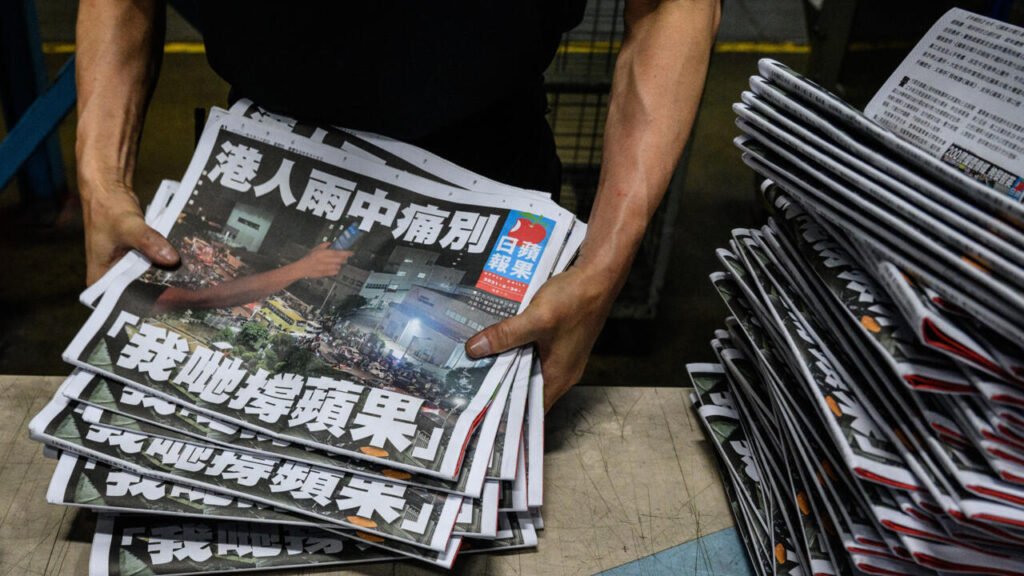
Since the implementation of the National Security Law in June 2020, Hong Kong’s trajectory regarding press freedom has been alarming. The law has instigated a broader crackdown on dissent, culminating in the raid of media outlets such as Apple Daily and the arrest of key figures like Jimmy Lai, whose long prison sentence underscores the intensified risks facing journalists today.
Navigating an Environment of Fear
For those who continue to report, the challenges extend beyond direct censorship. Journalists navigate an atmosphere marked by uncertainty and unarticulated boundaries, where crossing an invisible line can lead to severe consequences. Mak Yin-ting, a member of the Hong Kong Journalists Association, emphasizes that ambiguity is now used as a political tool, creating a chilling effect that compels self-censorship among reporters.
Impact on Reporting
Independent media outlets are frequently forced to avoid controversial topics, and many now publish government statements verbatim, reflecting a pervasive fear of repercussions. The removal of accessible government data further complicates the landscape, as vital information that once supported journalistic integrity is increasingly difficult to procure.
The Resilience of Journalists
Despite the dangers, many journalists remain committed to uncovering the truth. Some engage in collaborative strategies to shield junior staff from immediate risks by signing articles anonymously, thereby reducing individual exposure. The Hong Kong Journalists Association continues to function as a bastion of support for press freedom amidst severe challenges.
A Plea for Global Awareness
The broader concern now is not just the repression within Hong Kong, but how this climate impacts perceptions abroad. Many fear that external observers may mistakenly conclude that the region’s fight for liberty is hopeless. Advocates argue for sustained international support to combat these trends. Offering protection and resources to journalists could help uphold the principles of freedom that are rapidly unraveling.
Conclusion
The situation in Hong Kong is not just a local issue; it resonates globally, reflecting the vital importance of press freedom everywhere. As long as journalists persist, whether within Hong Kong or in exile, the fight for open dialogue will continue. The message is clear: abandoning the struggle for press freedom would signal a defeat too profound to accept.
- Hong Kong is experiencing a severe decline in press freedom, reinforced by national security laws.
- The case of journalist Antoine Védeilhé illustrates escalating tactics against foreign reporters.
- Many journalists resort to self-censorship to evade repercussions, navigating an increasingly dangerous environment.
- International support is crucial in sustaining the fight for press freedom against systematic repression.