
Spain’s Bold Move on Israel: A Call for EU Action
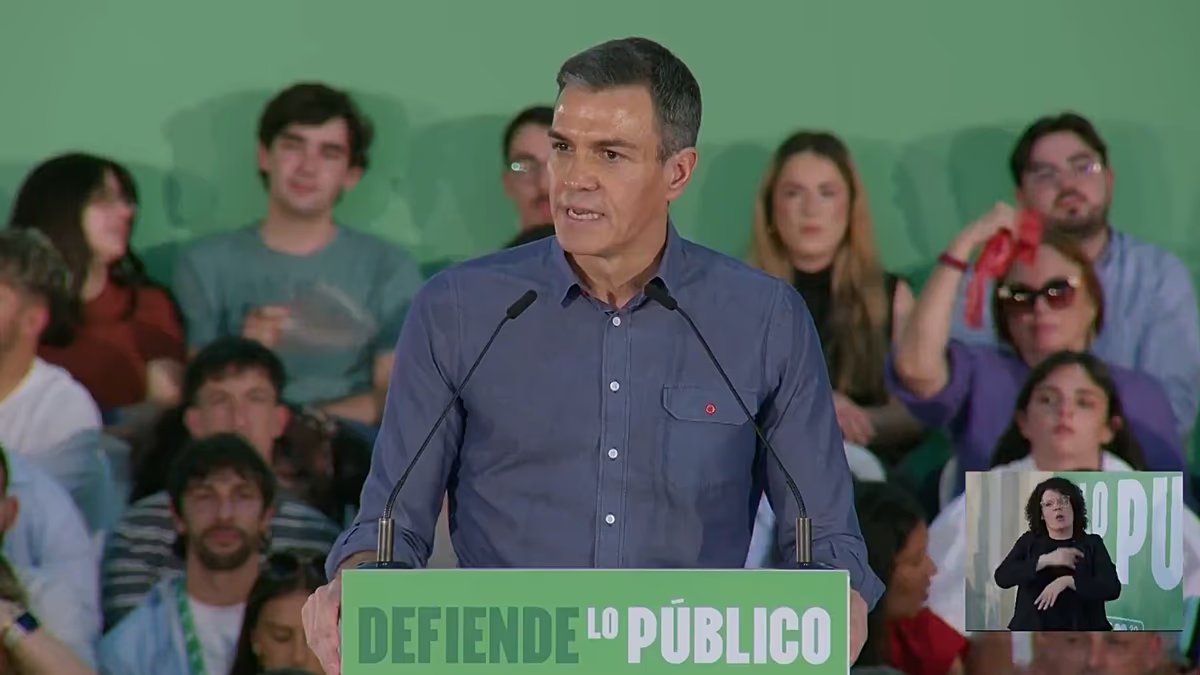
In a recent election rally in Huelva, Prime Minister Pedro Sánchez delivered a significant foreign policy message that has resonated across Europe. He announced that this Tuesday, Spain would propose to the European Union that it cut its ties with Israel. While Sánchez affirmed Spain’s friendship with Israel, he emphasized that the actions of the Israeli government do not reflect these sentiments, urging European nations to support this crucial initiative.
A Shift in Diplomatic Stance
This declaration follows Sánchez’s earlier call for the EU to suspend its Association Agreement with Israel, particularly after what he labeled as the most severe Israeli assault on Lebanon since the onset of the conflict. Days later, this call transformed into a firm commitment, setting a specific date for action.
Escalating Tensions
Spain’s position on this issue has been solidifying over the past several months. Alongside Ireland, Sánchez has advocated for an urgent reassessment of the EU-Israel agreement, stressing that adherence to human rights and democratic values is inherently linked to their partnership. Speaking at the European Pulse Forum 2026 in Barcelona, Sánchez stated that Israel is “trampling on and violating” numerous articles of this agreement, expressing Spain’s readiness to collaborate with various other European nations on this matter.
In response, Israeli Prime Minister Netanyahu accused Sánchez of conducting a “diplomatic war” against Israel. Sánchez retorted by elevating the discussion to European institutions, showcasing Spain’s willingness to lead this dialogue.
Support and Opposition in Europe
The Spanish proposal finds backing from several European countries, including Belgium, Slovenia, Finland, France, Ireland, Luxembourg, Portugal, and Sweden, who have previously supported similar measures. However, nations such as Bulgaria, Croatia, Cyprus, Germany, Greece, Hungary, Italy, and Lithuania oppose it, illustrating a divided stance across the continent.
The EU stands as Israel’s largest trading partner, with annual trade exceeding €45 billion. Therefore, any decision to suspend or sever this agreement would have profound economic and diplomatic ramifications.
Human Rights Concerns
A recent review of the agreement revealed “indications” that Israel may not be upholding its human rights commitments. Nevertheless, many diplomats suspect that these findings might not be enough to halt the treaty’s continuation.
Calls for Peace
During his rally, Sánchez addressed those responsible for the ongoing conflict, urging them to halt hostilities and to “rein in” Netanyahu. This choice of platform for such powerful rhetoric is strategic; the Prime Minister aims to distinguish Spain on the European stage while reinforcing his progressive image among Andalusian voters.
Moreover, the citizens’ initiative “Justice for Palestine” has successfully gathered over a million signatures advocating for EU member states to dissolve their agreement with Israel. This surpasses the necessary threshold that compels the European Commission to consider the matter further, demonstrating broad public support for Spain’s proposal despite potential challenges in Brussels.
Conclusion
Spain’s stance on the EU-Israel relationship marks a pivotal moment in the region’s diplomatic landscape. As Sánchez pushes for action, he embodies the growing demand for accountability regarding human rights and democratic principles on the global stage. The upcoming proposal will undoubtedly shape future discussions and partnerships within the EU.
- Pedro Sánchez announced a proposal for the EU to sever ties with Israel.
- Spain’s diplomatic position has been hardening over recent months.
- A citizens’ initiative has amassed over a million signatures supporting the proposal.
- The EU’s trade relationship with Israel carries significant economic implications.