
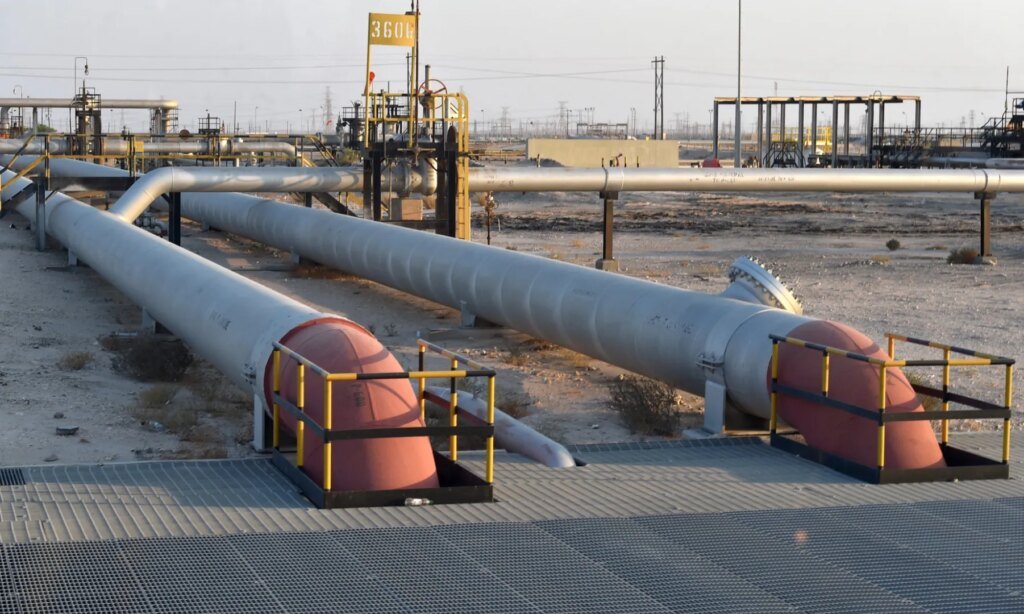
East-West Pipeline Resumes Full Capacity Amid Conflict
The Saudi Ministry of Energy has announced that the East-West oil pipeline has returned to its full capacity of approximately 7 million barrels per day. This development follows the necessary repairs after the pipeline experienced disruptions due to recent escalations during the ongoing US-Israel conflict with Iran.
Restoration and Resilience
Officials confirmed that, after extensive repair efforts, the vital East-West pipeline is back to functioning at maximum capacity. The Ministry released a statement highlighting the achievement as a testament to the operational resilience and efficient crisis management of Saudi Aramco and the broader energy landscape in the kingdom. This reliability supports both local and global markets, ultimately bolstering the world economy.
Current Production Levels
The ministry also reported that the Manifa oilfield, situated off Saudi Arabia’s eastern coast, has restored its production to full capacity, reaching around 300,000 barrels per day. However, efforts continue to regain output at the inland Khurais oilfield, which has faced limitations, resulting in a reduction of about 300,000 barrels per day due to the recent attacks.
Impact of Recent Attacks
Just last week, the Saudi Press Agency revealed that assaults on a pumping station linked to the East-West pipeline had led to a decrease of 700,000 barrels per day in output. In addition, incidents at the Manifa and Khurais oilfields contributed to a loss of an additional 600,000 barrels per day. The report notably did not assign responsibility for these attacks.
Regional Tensions
The situation escalates as Saudi Arabia and other Gulf Cooperation Council nations—like Kuwait, Qatar, Bahrain, and the United Arab Emirates—have experienced raids attributed to Iran. Tehran has indicated that its actions target US interests in the region. Recently, Qatar showcased footage revealing damage to civilian and energy infrastructures resulting from Iranian assaults.
Importance of the East-West Pipeline
The East-West pipeline is a critical channel connecting the Abqaiq oilfield in eastern Saudi Arabia to the city of Yanbu on the Red Sea. Its significance has increased amid Iran’s attempts to block the Strait of Hormuz, which carries approximately one-fifth of the world’s oil supply, causing energy prices to surge globally.
Shipping Status
Despite a fragile ceasefire between the United States and Iran established earlier this week, maritime traffic through the Strait of Hormuz remains severely restricted. Reports indicate that only 22 vessels with functioning automatic identification systems navigated out of the strait between Wednesday and Friday, a stark contrast to the average of about 135 daily transits before the recent conflict.
Conclusion
The restoration of the East-West pipeline signifies a critical step towards stabilizing Saudi Arabia’s oil production and global energy markets amidst ongoing regional tensions. With continued vigilance and recovery efforts, the kingdom aims to enhance its energy supply reliability.
Key Takeaways
- The East-West pipeline is now operating at full capacity after repairs.
- Production at the Manifa oilfield has returned to normal levels.
- Efforts are ongoing to restore capacity at the Khurais oilfield.
- Regional tensions continue to affect shipping and energy production.