
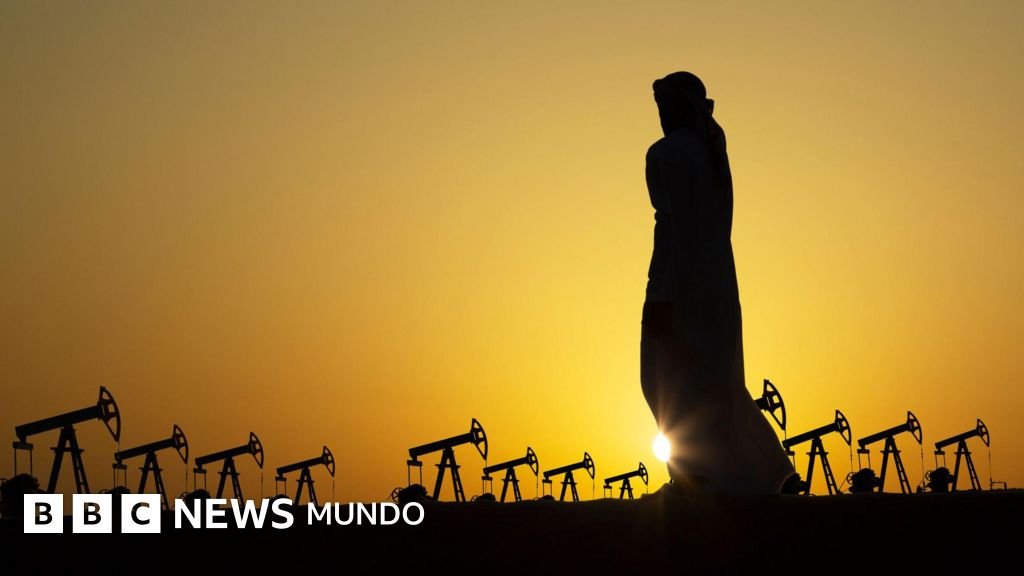
The Intersection of Geology and Oil in the Persian Gulf
Countries surrounding the Persian Gulf are often described as both fortunate and cursed due to their immense reserves of oil and gas. The geological forces at play over millions of years have transformed the region into a global energy hub, and recent conflicts have underscored the potential for a worldwide energy crisis.
As a petroleum geologist with extensive experience studying this area, I am consistently astonished by the scale of its hydrocarbon deposits. The Persian Gulf boasts more than 30 supergiant oil fields, each containing over 5 billion barrels of crude oil. Daily production rates in this region far exceed those of even the most prolific wells in the North Sea and Russia.
A Brief Historical Overview
Humans have known about the existence of hydrocarbons in this region long before the last Ice Age sculpted the Persian Gulf, roughly 14,000 to 6,000 years ago. Natural seepages of oil and gas can be found along rivers and valleys in various locations throughout the Gulf. Thousands of years before the Common Era, early civilizations utilized bitumen—a heavy type of oil—to make mortar and waterproof their boats.
The modern discovery of oil occurred in 1908 at a well-known seep site in western Iran. The 1950s and 60s marked a period of rapid exploration and extraction, establishing that no other area on Earth could rival the abundance found here.
The Geological Landscape
The Persian Gulf region is formed at the collision point of two tectonic plates: the Arabian Plate to the southeast and the Eurasian Plate to the east and north. This collision, ongoing for around 35 million years, has led to a dynamic geological environment characterized by folded and fractured rock layers, deeply transformed by intense heat and pressure.
Geological features differ significantly on either side of the Gulf. In Iran, the Zagros Mountain range stretches 1,800 kilometers (about 1,100 miles) from the Gulf of Oman to the Turkish border. This majestic range, part of the broader Alpine-Himalayan system, comprises tightly folded and fractured rocks formed during the past 60 million years from the colliding masses of Africa, Arabia, and India against Eurasia.
On the Arabian side of the Gulf, a contrasting scenario prevails. Compression forces caused by the tectonic collision have distorted a rigid platform of rock, known as “basement rock,” leading to the formation of extensive domed structures that can stretch for hundreds of kilometers. Beneath the Persian Gulf lies a basin rich in sediment, shaped by the erosion from the surrounding Zagros Mountains. The basin’s deeper regions have experienced the high temperatures and pressures essential for oil and gas formation, creating an ideal environment for large-scale hydrocarbon generation and storage.
Source Rocks for Oil and Gas
The formation of oil and gas is primarily due to organic material, such as marine zooplankton and phytoplankton, which became concentrated in shale, mud-rich limestone, and other sedimentary rocks subjected to heat and pressure. Rocks containing at least 2% organic material are deemed high-quality sources for hydrocarbon production.
The Gulf region is home to a notably high number of these source rock layers, some of which are particularly thick, abundant, and rich in organic content. The Hanifa and Tuwaiq formations found along the Arabian Gulf coast, formed during the Jurassic period between 200 and 145 million years ago, and the Kazhdumi formation in Iran, which dates to the Cretaceous period (145 to 66 million years ago), demonstrate this richness with organic content ranging from 1% to 13%—and sometimes even higher.
Hydrocarbon Structures
The folded and fractured rock layers, along with their numerous domes, are well-equipped to trap hydrocarbons. The Zagros folds, renowned among geologists for their spectacular satellite images, contain vast quantities of oil and gas. A glance at any oil and gas map of the Persian Gulf will reveal elongated fields running from northwest to southeast, reflecting the significant folded structures in the region.
On the Arabian Plate, massive dome structures foster substantial accumulations of oil and gas. The Ghawar oil field in Saudi Arabia is the largest in the world, with potential production surpassing 70 billion barrels of crude oil. The South Pars-North Dome natural gas field, shared by Iran and Qatar, is capable of producing at least 46 billion cubic meters of gas, equivalent to over 200 billion barrels of oil.
Importantly, limestone formations serve as the principal reservoir rocks, where select areas have been partially dissolved to facilitate the movement of oil and gas. In the Zagros reservoirs, fluid migrates through fractures created by tectonic folding and faults. Areas like the Arab-D reservoir in Ghawar and the Asmari limestone found in various Zagros fields present extensive oil storage across hundreds, if not thousands, of square kilometers.
Future Potential
The combined impact of these geological features means that approximately half of the world’s conventional oil reserves and 40% of its gas lie beneath merely 3% of Earth’s surface. Evaluations from geologic surveys indicate that even after more than a century of drilling and extraction, significant oil and gas reserves remain to be explored in the Persian Gulf region.
A 2012 report focusing on the Arabian Peninsula and the Zagros mountains suggested that there might be as much as 86 billion barrels of oil and 9.5 trillion cubic meters of gas still concealed underground, in addition to what has already been discovered. Moreover, the application of horizontal drilling and hydraulic fracturing—methods honed in the United States during the 2000s and 2010s—could yield even greater production levels in Saudi Arabia and the United Arab Emirates, although it is still early to fully assess their effectiveness.
Conclusion
The unique geological conditions of the Persian Gulf have not only made it a treasure trove of oil and gas reserves but also a crucial player in the global energy market. As exploration continues and advanced extraction methods are explored, the region’s potential could significantly impact energy supplies worldwide.
- The Persian Gulf holds about half of the world’s conventional oil reserves and 40% of its natural gas.
- Natural seepages of oil and gas have been known for millennia, with formal exploration gaining momentum in the early 20th century.
- The geological landscape, shaped by tectonic plate collisions, creates ideal conditions for hydrocarbon accumulation.
- Future exploration and technological advances could uncover even more resources beneath the Gulf.