
Emerging Details on Hungary’s Foreign Minister and Russia
Recent disclosures have revealed significant insights connecting Hungary’s Foreign Minister, Péter Szijjártó, with high-ranking Russian officials. This development comes in light of discussions surrounding the €90 billion loan and the European Union’s sanctions against Russia, raising questions about Hungary’s involvement in these matters.
Allegations of Close Ties
A comprehensive investigation led by The Insider, alongside four regional media outlets—VSquare, DelfiEE, FrontStory, and the Investigative Center of Ján Kuciak—has reported that Szijjártó frequently conversed about confidential EU sanctions plans with Russian officials. Allegedly, he sought methods to obstruct or postpone these sanctions.
Conversations with Russian Ministers
During these discussions, Szijjártó reportedly assured Russia’s foreign minister, Sergei Lavrov, that he was “always at your disposal” and even offered assistance in lifting specific individuals off the EU sanctions list. Furthermore, former Lithuanian foreign minister Gabrielius Landsbergis has verified the legitimacy of one of the exchanges relayed to Russian representatives.
Media Rights Concerns
Notably, Szabolcs Panyi, a prominent investigative journalist involved in the article, faced accusations from the Hungarian government of espionage for Ukraine last week, a claim that has drawn widespread criticism from media rights organizations. The coalition of media outlets indicated that Szijjártó did not provide comments on their inquiries.
Response from Szijjártó
In response to the report, Szijjártó took to X to challenge the findings, sarcastically noting, “they proved that I say the same publicly as I do on the phone. Nice work!” He reiterated his long-held position that the sanctions have largely failed, inflicting more damage on the EU than on Russia, and emphasized Hungary’s commitment not to sanction individuals crucial for its energy security or those unjustly placed on the list.
Political Implications
This report is poised to escalate tensions in Brussels and other EU capitals, with mounting frustration regarding Hungary’s amicable ties with Russia. Both Szijjártó and Prime Minister Viktor Orbán have been frequent visitors to Moscow, which has drawn ire from various EU leaders. The timing of these revelations is especially critical as Hungary approaches parliamentary elections that could potentially end Orbán’s long-standing leadership.
Reflections on Bucha
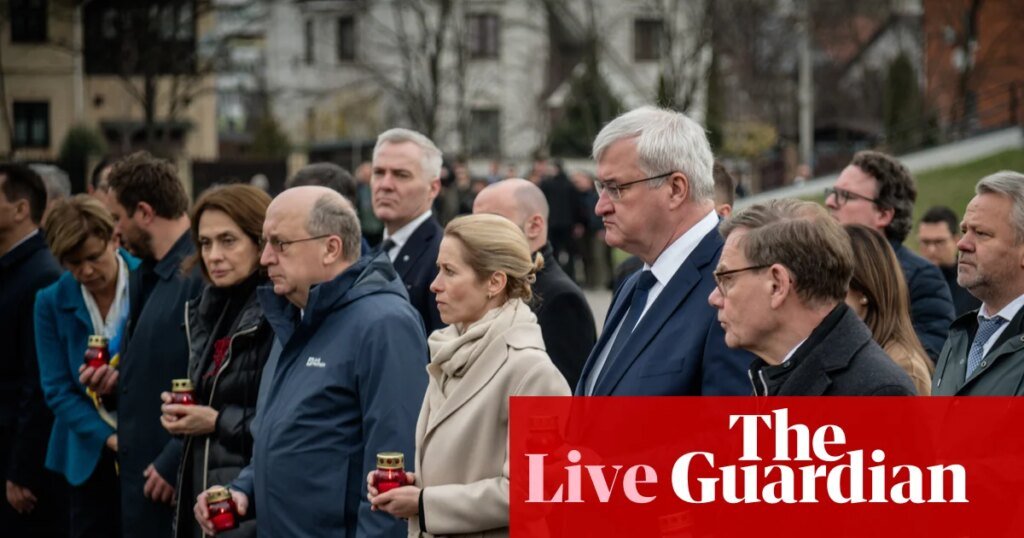
In a related matter, EU top diplomat Kaja Kallas recently remarked that the Bucha massacre has come to symbolize the atrocities committed during Russia’s war against Ukraine. As the EU commemorates the fourth anniversary of this tragic incident, Kallas asserted the necessity of holding Russia accountable for its actions.
EU’s Ongoing Support for Ukraine
During a ceremony to remember the victims, Kallas highlighted the EU’s resolve to ensure that such crimes do not go unpunished. She stated, “Russia must be held accountable for what it has done to Ukraine,” reiterating the EU’s commitment to providing Ukraine with continued military and humanitarian support.
Looking Ahead
Today, several EU ministers will gather in Bucha to discuss plans for addressing war crimes through a special tribunal, which requires additional political endorsements and funding. Ukraine’s foreign minister, Andrii Sybiha, emphasized the need for accountability, drawing parallels to the Nuremberg trials and insisting that there should be no amnesty for perpetrators of aggression.
Despite these significant discussions, no resolution is anticipated regarding Hungary’s €90 billion loan or the proposed sanctions on Russia, both contingent upon Hungary’s approval.
Conclusion
The evolving narrative around Hungary’s foreign minister highlights growing tensions within the EU regarding relationships with Russia, especially amid ongoing challenges from the broader geopolitical landscape. As the political climate shifts, it’s clear that further developments will ensue.
- Details reveal Hungary’s foreign minister discussing EU sanctions with Russian officials.
- Media outlets report on Szijjártó’s offers to help lift sanctions on certain individuals.
- Calls for accountability over the Bucha massacre emphasize the EU’s stance against Russian aggression.
- Potential implications for Hungary’s political landscape loom as elections approach.