
Facing Water Scarcity and Hunger in Turkana, Kenya
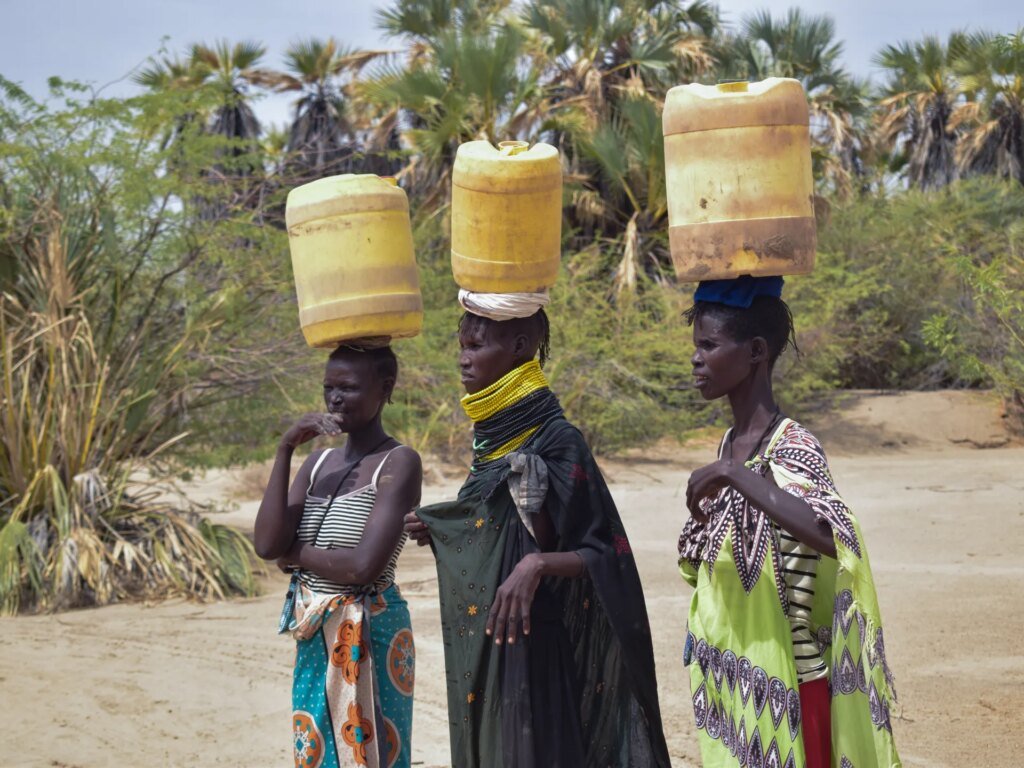
In the searing heat of Kainama, located in Turkana County, Kenya, residents like Veronica Akalapatan and her neighbors embark on long daily treks to a well that has mostly dried up. This dug-out pit, accessible by a wooden ladder, is their sole water source. Many villagers, along with their livestock, gather around the well, often spending hours waiting to fill their buckets with the scant amount of undesirable water available.
The Harsh Reality of Turkana
“When we arrive, we dig for water in the well and pick fruit while waiting for it to refill,” Akalapatan explains. “We take turns because the supply is limited. With so many of us, there are times when disputes arise.” In Turkana, the terrain is rugged, roads dissolve into dust, and communities are spread across a vast expanse inhabited by just over a million people.
Despite the rainy season, weather experts caution that Turkana and similar arid zones may not receive much-needed rainfall. Government officials have reported that drought conditions are resurfacing, affecting 23 out of Kenya’s 47 counties. Approximately 3.4 million people are facing food shortages, with around 800,000 children exhibiting signs of malnutrition, while livestock—central to the pastoral lifestyle—are perishing. In Turkana, alone, 350,000 households teeter on the edge of starvation.
The Voice of Experience
“We are suffering from hunger,” states Peter Longiron Aemun, a local elder. “There’s no water, our livestock have died, and we have nothing left. We used to burn charcoal, but the acacia trees are gone.”
The Compounding Crisis
Kenya is still recovering from a catastrophic drought that lasted from 2020 to 2023, and a new weather crisis threatens to exacerbate the situation. Paradoxically, even as families struggle with severe water scarcity and hunger—due to broken boreholes and dried-up rivers—Lake Turkana’s water levels have increased, leading to the displacement of some coastal communities. In certain areas, sudden heavy rains cause flash floods in normally dry riverbeds, yet the terrain largely remains unproductive. The rainfall often arrives too swiftly and runs off too quickly to support agricultural efforts.
At the same time, while droughts diminish food supplies and funding for aid decreases, experts highlight that a significant quantity of food remains unused or wasted. A report from the World Resources Institute shows that in Kenya, a quarter of the population endures severe food insecurity even as up to 40% of food produced is lost or discarded annually. Food loss occurs during farming, handling, storage, and transportation, while food waste mainly happens in homes, restaurants, and stores.
The Challenges of Access and Security
In parts of the North Rift—Kenya’s agricultural heartland—farmers have recorded bountiful harvests. However, the high costs combined with widespread poverty render those from Turkana unable to buy food transported from these surplus areas. Security concerns add to the stress, as competition for water and grazing land leads to tensions, cattle thefts persist, and armed gangs operate in isolated regions, complicating efforts to maintain order.
“Security is the biggest challenge in drought-prone areas,” asserts Joseph Kamande, a food trader in Wangige, Central Kenya. He believes that with enhanced planning, the country could harness its potential for food production. “The land is vast and some of it is cultivable,” he adds. “Water is the key.”
Untapped Aquifers Beneath the Surface
While Turkana grapples with severe drought, vast underground resources remain untouched. Beneath the earth lie multiple aquifers filled with water. The government aims to utilize these resources, having discovered the Napuu and Lotikipi aquifers in 2013. The latter spans roughly 5,000 km² (3,100 miles) and contains约 250 trillion liters (66 trillion gallons) of water—a significant supply that could support Kenya for decades. However, much of this water is saline and costly to purify, causing delays in the project’s progress.
“Salinity is the core issue,” explains Paul Lotum, Turkana County’s Water Director. “We are identifying areas where safe, reliable water exists and are working step by step to make it accessible for communities.” Until then, aid remains a lifeline for Turkana’s inhabitants.
The Efforts of Relief Organizations
Government disaster management teams and various agencies are pushing to distribute water and food supplies, although resources are limited. Getting essential aid to populations in dire need can be a monumental task in some regions.
“Many governmental organizations either have closed down or are running sparse programs,” notes Jacob Ekaran, the Turkana coordinator for the National Drought Management Authority. “The resource pool has decreased, but the government is striving to do more with less.”
Survivor Strategies Amid Scarcity
As supplies dwindle, many locals resort to harvesting wild berries and fruits. In Lopur Village, Akal Loyeit Etangana cooks berries over an outdoor fire, having gone without a proper meal for two weeks. “This mixture alleviates hunger, but it offers nearly no nutritional value,” she laments, highlighting the long treks to distant clinics for medical assistance.
Another resident, Christine Kiepa from Napeillim, expresses her concerns, “I search for food, but sometimes it’s simply not there. How am I supposed to survive if I can’t find anything?” Many villages are becoming empty as male herders, the primary providers, migrate to neighboring counties in search of pasture and water for their struggling livestock. This leaves behind women, children, the elderly, and their weakest animals.
Slow Progress and Hard-Won Gains
Despite the ongoing challenges, there have been some signs of progress. Since adopting a devolved government system in 2013, Turkana has benefited from new schools, health facilities, irrigation initiatives, boreholes, and improved road networks. Officials claim that these investments in drought response have built community resilience.
“In the past, drought consistently led to disasters,” reflects Ekaran. “We’ve recently survived one of the worst droughts in 40 years without deaths reported, thanks to ongoing resilience-building efforts.”
A Call for Diversification
For generations, nomadic communities in northern Kenya have relied on livestock, but climate change is prompting significant considerations. Advocacy for diversification—encompassing irrigation, drought-resistant crops, and large dams—has grown louder. “We can shift our community’s mindset,” asserts Rukia Abubakar, Turkana’s Red Cross coordinator. “Planting drought-resistant trees and pursuing irrigated farming is viable in our land.”
While these proposals have been made repeatedly in response to droughts, actual implementation has yet to take root for many residents in Turkana, whose daily struggle for survival remains a grim reality.
Conclusion
In Kainama, Akalapatan and her neighbors return from the water well with their filled yellow plastic buckets, making their way back to their community of thatched huts. Akalapatan has managed to collect 20 liters (5 gallons) of water for the day, but she knows it is far from sufficient. The cycle of water scarcity and hunger continues, compelling her to prepare for yet another trek to the well.
Key Takeaways
- Many residents in Turkana, Kenya face extreme water scarcity and food insecurity.
- Untapped aquifers could provide essential water resources, but salinity remains a serious issue.
- Efforts to distribute food and water aid face significant challenges due to logistical issues.
- There is a pressing need for diversification in agricultural methods to build resilience against climate change.