
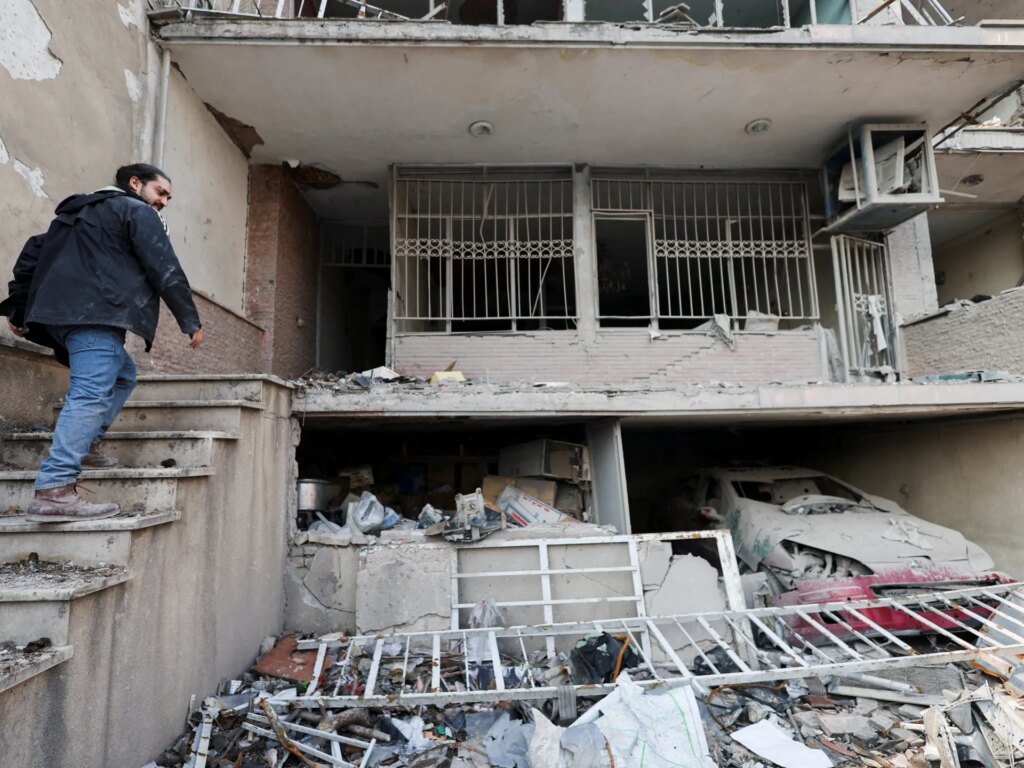
Understanding Recent Attacks in the Middle East
In a situation that continues to escalate, recent assaults by the United States and Israel on Isfahan, Iran, have resulted in at least 15 fatalities. This incident marks the 16th day of ongoing conflict, during which Iran has retaliated with missile strikes aimed at both Israel and Gulf nations. Here’s a recap of the alarming developments from the past day.
Attacks in Iran
The early hours of Sunday saw tragic developments in Shiraz, where residential areas were targeted. According to local reports, the strikes were labeled as acts of terrorism, aimed at vulnerable communities. The assault on Isfahan, a central industrial city, has left multiple casualties and injuries, and additional arrests have taken place in northern Iran regarding alleged collaboration with Israel.
The Nature of the Conflict
The Islamic Revolutionary Guard Corps (IRGC) has reported that it has initiated its “50th wave” of military operations against U.S. bases in the region, targeting locations in the United Arab Emirates, Bahrain, and Kuwait. Iran’s Foreign Minister, Abbas Araghchi, indicated that U.S. forces employed cruise missiles launched from the UAE, suggesting the potential for further Iranian retaliation.
Impact of the Attacks
Tehran’s governor stated that the recent U.S.-Israeli attacks have inflicted damage on over 10,000 homes, with more than 1,400 lives lost in total since the conflict erupted on February 28. Notably, high-ranking Iranian military officials, including Brigadier-General Abdullah Jalali Nasab, have been killed amidst the strikes.
Situation in Gulf Countries
As part of the regional response, Saudi Arabia reported the interception of four drones aimed at the Riyadh area, with casualties from Iranian attacks accumulating. Meanwhile, in the UAE, 10 missiles targeted U.S. forces stationed at Al-Dhafra Air Base. There has been significant infrastructure damage as well, affecting both military and civilian installations.
Political Reactions
The Bahrain government has activated sirens in response to threats, urging residents to remain vigilant. Similarly, Kuwait has reported missile strikes causing injuries and minor damage at its airbase and airport.
U.S. Responses
President Trump has indicated that Iran is seeking a deal, although he remains dubious about the terms currently on the table. He has also emphasized the need for coalition support to secure passage through the crucial Strait of Hormuz, yet many nations have not confirmed their involvement. A recent poll indicated considerable opposition among Americans regarding further military involvement in the conflict.
Ongoing Tensions in Israel
In Israel, air raid warnings were sounded as retaliatory missiles from Iran targeted the country. Reports indicate that air defense systems worked to intercept various threats, and the nation is beginning to feel the strain of ongoing conflict, as they have expressed concerns about dwindling missile interception capabilities.
Unfolding Events in Lebanon
Hezbollah has engaged in confrontations intended to halt Israeli advances in southern Lebanon. Casualties have mounted as Israeli airstrikes have targeted various locations, resulting in the deaths of civilians, including children. Overall, the conflict has displaced numerous individuals and wreaked havoc across the region.
Developments in Iraq and Jordan
The U.S. Embassy in Baghdad urged American citizens to leave Iraq immediately, citing escalating threats. Meanwhile, Jordan’s military has intercepted a significant number of missiles aimed at vital sites within the kingdom, leading to multiple injuries.
Conclusion
The situation in the Middle East is fraught with uncertainty as military engagements continue to take a toll on both civilians and military personnel alike. The reluctance for peace talks only exacerbates the escalating tensions across the region.