
Canada’s Prime Minister Reflects on Military Involvement Amid Middle East Tensions
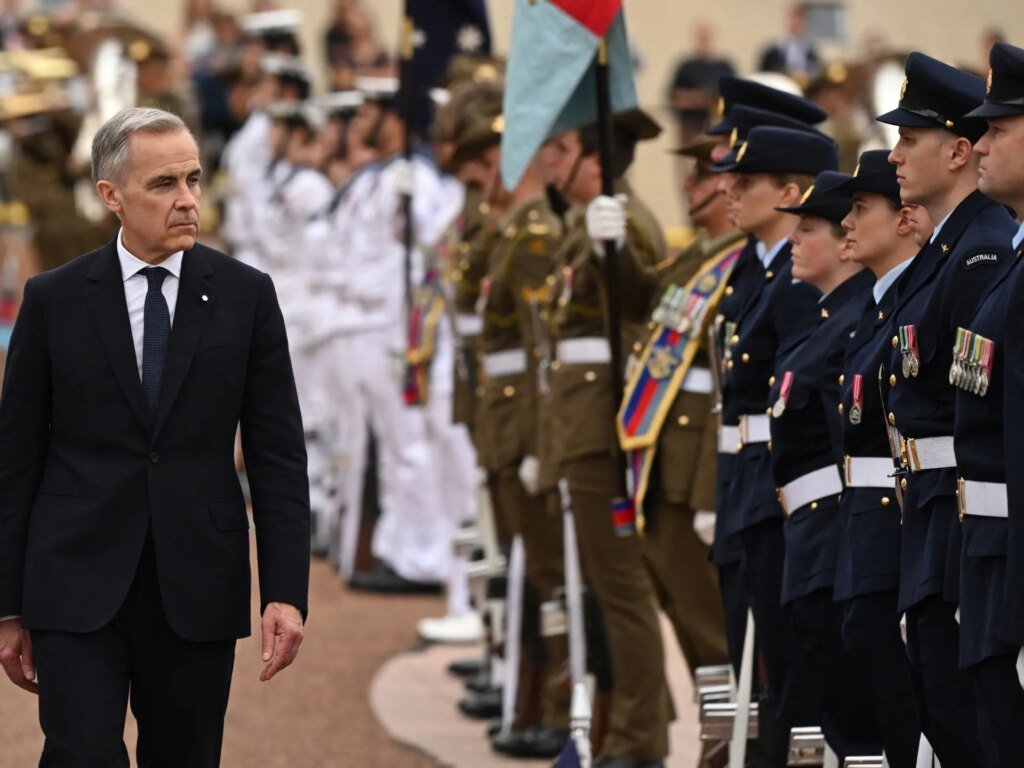
Amid rising tensions in the Middle East, Canadian Prime Minister Mark Carney has indicated that military involvement by Canada cannot be entirely dismissed. This statement comes after he described the recent US-Israeli strikes on Iran as “inconsistent with international law.” Speaking at a joint press conference in Canberra alongside Australian Prime Minister Anthony Albanese, Carney addressed questions about Canada’s potential role in the ongoing conflict.
Canada’s Position on Military Participation
When asked if there could be a scenario where Canada might engage militarily, Carney replied cautiously, stating, “One can never categorically rule out participation,” while noting that the question was largely hypothetical. He emphasized, “We will stand by our allies” and reaffirmed Canada’s commitment to protecting its citizens.
After expressing support for the strikes on Iran, Carney admitted to having “some regret,” characterizing these actions as indicative of a deteriorating global order. He clarified that Canada was not informed prior to the attack, marking his first official comments since the conflict began.
International Law and Consultations
Carney highlighted that the US and Israel acted without prior consultation with Canada or the United Nations. He stated, “Prima facie, it appears that these actions are inconsistent with international law,” and called for all parties involved to adhere to the established rules of international engagement. Regarding whether the actions taken by the US and Israel violated international law, he remarked that this determination is for others to evaluate.
Efforts to Assist Canadians Abroad
Meanwhile, Canada’s Foreign Affairs Minister Anita Anand reported that the government is working to assist over 2,000 Canadians who have sought help to evacuate the Middle East since the onset of the conflict. She noted that a significant number of requests were from Canadians in the United Arab Emirates (UAE), as well as from other countries including Qatar, Lebanon, Israel, and Iran.
The Canadian government plans to arrange charter flights from the UAE, contingent on receiving the necessary clearance from the UAE government to utilize its airspace. Commercial air travel remains severely disrupted across the region, particularly at major Gulf hubs like Dubai, which is generally the busiest airport for international travelers.
The Situation on the Ground
Foreign governments, including those of Britain and France, are also coordinating repatriation flights for their citizens, while the UAE has established secure air corridors for safe passage home. In normal times, the region would see thousands of commercial flights daily, but these operations have drastically decreased amid ongoing hostilities.
Conclusion
As the situation in the Middle East continues to evolve, Canada remains vigilant and supportive of international law while addressing the safety and well-being of its citizens abroad. Prime Minister Carney’s cautious statements reflect the complexities of current geopolitical dynamics and Canada’s role in global affairs.
- Canadian Prime Minister Mark Carney indicates military involvement in the Middle East cannot be ruled out.
- Carney describes US-Israeli strikes on Iran as potentially inconsistent with international law.
- Canada is working to assist over 2,000 citizens seeking evacuation from the region.
- Travel disruptions continue across the Middle East, impacting commercial air traffic significantly.