
Shifting U.S. Foreign Policy: The Iran Conflict
During a significant visit to the Middle East in May, President Donald Trump proclaimed a transformative era for U.S. foreign policy—a shift away from attempts to reshape nations and influence their governance. He criticized the “nation-builders” of the past, suggesting that their efforts caused more harm than good. However, less than a year later, Trump initiated a military campaign against Iran, claiming that he aimed to bring “freedom” to the nation, echoing terminology reminiscent of past interventionist strategies, including those favored by former President George W. Bush.
Contradictions in Trump’s Foreign Policy
Experts in Iranian affairs have expressed skepticism regarding the rationale behind Trump’s assault on Iran, arguing that it contradicts his political ideology and campaign promises. Analysts have pointed out that the current conflict appears to serve primarily the interests of Israel and its Prime Minister, Benjamin Netanyahu. Negar Mortazavi, a senior fellow at the Center for International Policy, remarked, “This is yet another war of choice instigated by the U.S. with significant encouragement from Israel, which has pushed for military action against Iran for the past two decades.”
Despite his strong critique of previous administrations that engaged in regime-change wars, Trump’s actions have raised eyebrows. Mortazavi noted the irony of a president who has branded himself the “president of peace” engaging in aggressive military action.
A Familiar Narrative: The Iranian ‘Threat’
For over twenty years, Netanyahu has warned that Iran is on the brink of acquiring nuclear weaponry. Despite Iran’s consistent denial of such ambitions, even officials from the Trump administration have conceded they lack evidence of nuclear weaponization in Tehran’s uranium enrichment program. Following a 12-day conflict last June, where U.S. forces bombed Iran’s primary enrichment facilities, Netanyahu shifted focus to a different threat—Iran’s ballistic missile capabilities.
Netanyahu claimed, “Iran can blackmail any American city,” citing their development of intercontinental missiles potentially capable of reaching the East Coast of the U.S. Trump echoed this assertion in his recent State of the Union address, despite the absence of credible evidence backing these claims.
The Dissonance of Public Opinion
Trump’s administration appears to be laying the groundwork for a broader military conflict with Iran, frequently suggesting further escalation. Yet, a contradiction exists between his administration’s actions and the established National Security Strategy, which emphasizes prioritizing spheres nearer to home. Public sentiment reflects a clear reluctance for new military engagements, especially following the prolonged conflicts in Iraq and Afghanistan. A recent University of Maryland poll revealed that only 21% of respondents supported the idea of a war with Iran.
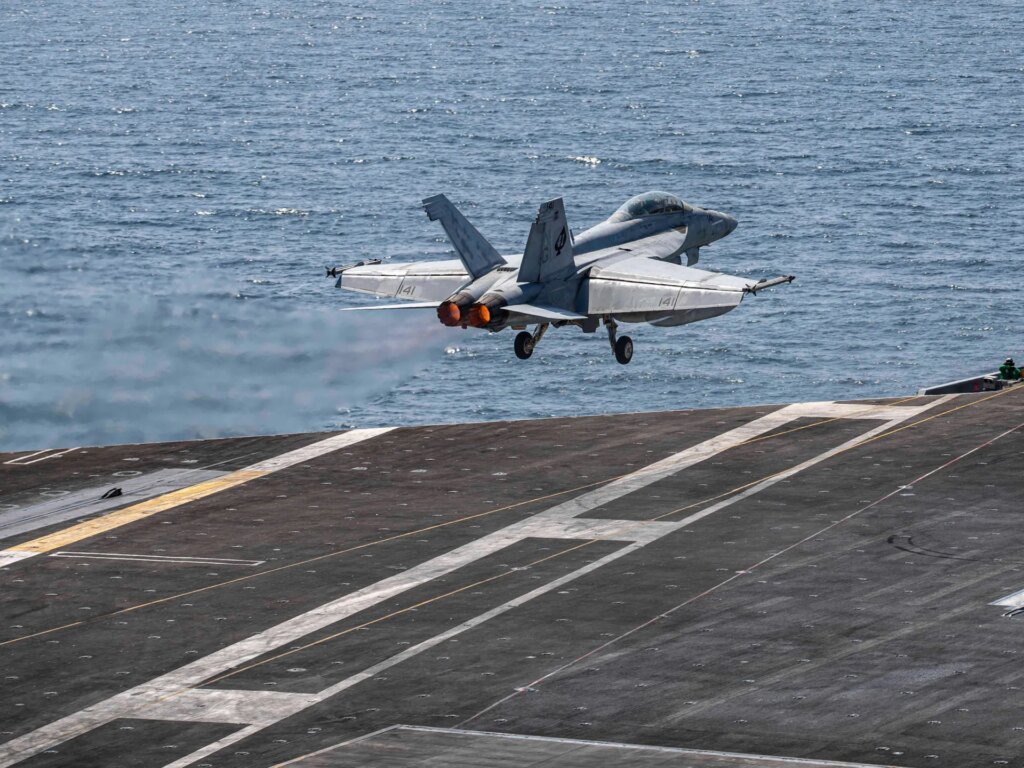
The onset of military action saw Iran retaliating immediately, launching missiles at U.S. installations throughout the Middle East—an act that has undoubtedly intensified the regional chaos.
Domestic and International Reactions
Although there were recent diplomatic overtures between the U.S. and Iran, signaling a potential thawing of relations, hostilities rapidly escalated once again. Jamal Abdi from the National Iranian American Council noted, “Netanyahu has always aimed to derail any diplomatic resolution. The timing of this conflict, coinciding with negotiations, benefits his agenda.” Trump’s framing of the conflict as necessary for safeguarding U.S. national interests has drawn criticism, with many pointing out that Iran poses no direct threat given the distances involved.
Responses within the U.S. have mirrored this skepticism, with some voices within Trump’s own base questioning the justification for confrontation. Congresswoman Rashida Tlaib underscored the disconnect, stating that “Trump is acting on the violent fantasies of the American political elite, ignoring the vast majority of Americans who clearly advocate for peace.”
Conclusion
The current U.S. stance towards Iran represents a sharp departure from earlier promises of restraint and a focus on diplomatic resolutions. By navigating this complex landscape, the implications for both domestic and international stability remain precarious.
Key Takeaways
- Trump’s rhetoric against nation-building conflicts with his actions towards Iran.
- Public opinion largely resists further military engagements, particularly with Iran.
- The conflict with Iran appears to align more closely with Israeli interests than with U.S. national security.
- Critics highlight the irony in Trump’s self-proclaimed identity as the “president of peace.”