
The Turbulent Situation Around the Druzhba Oil Pipeline
As Budapest confronts Kyiv over the future of the Druzhba oil pipeline, Brussels is urgently exploring solutions to quell the escalating crisis. The stakes are high, with energy security for EU member states hanging in the balance.
Political Tensions Rise
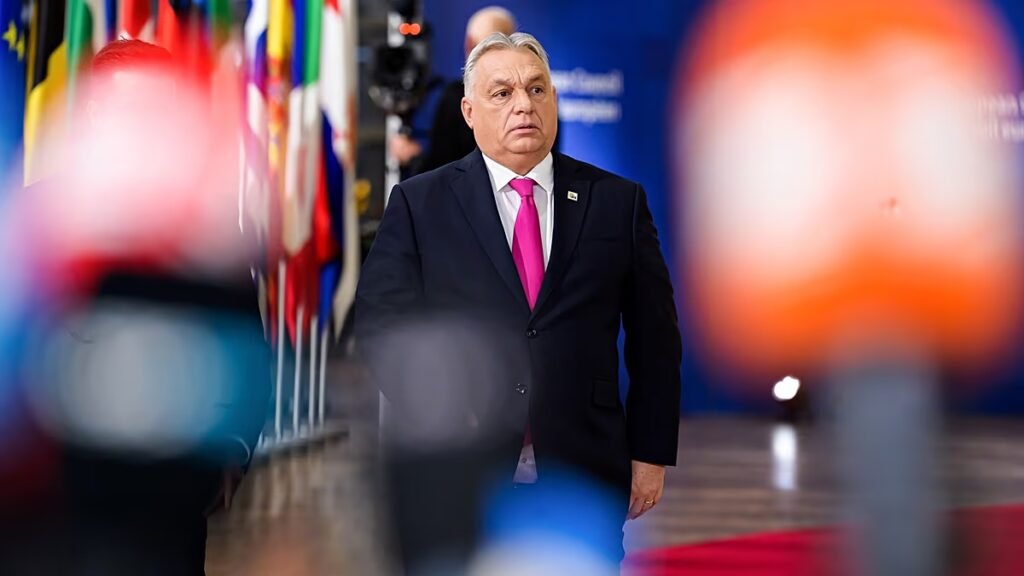
“Hungary has a critical decision to make,” commented an EU representative. Hungarian Prime Minister Viktor Orbán has halted a significant €90 billion loan intended for Ukraine, asserting that President Volodymyr Zelenskyy’s actions are designed to impede the flow of affordable Russian oil. Amid a tough election campaign, Orbán has framed the matter as one of national sovereignty and has shown no willingness to compromise. In turn, Zelenskyy claims that Russian drones have attacked the pipeline and suggests that Orbán should direct his concerns toward Moscow.
The European Commission’s Dilemma
The European Commission is caught in this tug-of-war, balancing its role in ensuring energy security while also supporting a nation under attack. “We will fulfill our commitment to the loan, no matter what,” asserted Commission President Ursula von der Leyen during her visit to Kyiv, where she stood alongside Zelenskyy. “We have several alternatives in mind, and we intend to utilize them,” she further elaborated.
Exploring Repair Options for Druzhba
EU officials and diplomats believe that encouraging Ukraine to repair the Druzhba pipeline would be the most straightforward and effective resolution to the ongoing dispute. Reports from Kyiv indicate that a section of the pipeline in the Lviv region sustained heavy damage from a Russian drone strike on January 27. Von der Leyen has publicly urged Zelenskyy to expedite repairs, a request relayed during a press conference.
Zelenskyy responded affirmatively but cautioned that progress wouldn’t be swift due to continuous Russian attacks. During a meeting among experts, Ukraine shared a document indicating that it is actively pursuing restoration efforts. “We are implementing security measures while facing daily threats from new missile strikes,” it stated. “Our aim is to restore transit as quickly as possible within the given legal framework.”
Orbán suggested forming a fact-finding mission to inspect the damaged pipeline section. Slovak Prime Minister Robert Fico, whose nation also relies on Druzhba, supported this initiative and called for Brussels’ involvement. The Commission viewed this as a positive first step to ease tensions, but no commitment has been made, and such efforts are still in very preliminary stages. Access to the strategic energy infrastructure remains a significant hurdle, as Kyiv has expressed hesitance about permitting inspections.
Alternative Solutions: The Adria Pipeline
Given the volatile situation, Kyiv has not yet provided a clear timeline for the Druzhba repairs. In light of this uncertainty, the European Commission is advocating for the Adria pipeline, also referred to as JANAF, which connects Croatia with several Central European countries. This pipeline could serve as a critical alternative to ensure that Hungary and Slovakia continue receiving oil.
Authorities from JANAF recently announced their capability to meet Hungary’s (5.75 million tons) and Slovakia’s (4.66 million tons) annual oil needs. Both nations have already started utilizing their emergency reserves in response to the Druzhba pipeline disruption. Croatian Prime Minister Andrej Plenković emphasized Croatia’s role as a supportive neighbor committed to ensuring energy security for Hungary and Slovakia: “We are here as a partner to maintain the smooth running of your economies.”
Legal Pathways to Resolve the Impasse
EU officials are exploring potential legal strategies to dissolve Hungary’s veto and facilitate the release of the €90 billion loan. The urgency is palpable; Ukraine requires new support by early April, especially with American assistance tapering off. Failure to secure aid may result in severe cuts to essential public services.
This complex situation is amplified by the loan’s intricate legal framework, which has already been negotiated and ratified. Any attempt to modify it risks delaying the implementation further. Recently, High Representative Kaja Kallas suggested revisiting a previous strategy focused on immobilized Russian assets, but this could provoke a renewed contentious debate.
Some EU leaders point to articles within the EU treaties that could provide pathways to overcome Hungary’s objections. For instance, Article 4.3 mandates sincere cooperation, compelling member states to refrain from actions that undermine the Union’s goals. Additionally, Article 327 emphasizes that those not participating in enhanced cooperation, like Hungary, “shall not impede its implementation” by others.
Potential Implications of Further Delays
The dispute over the Druzhba pipeline complicates a multi-billion-euro program known as SAFE, set up to boost defense spending via low-interest loans. Current records indicate only Hungary, France, and the Czech Republic’s plans are pending approval, which makes matters increasingly politically volatile.
If Hungary’s €16.2 billion plan is verified first, Orbán may use it to claim victory in the lead-up to the forthcoming election. Conversely, a rejection could provide him a platform to reinforce his grievances against the EU. Orbán has frequently criticized the Commission for delaying funds amid claims of democratic regression in Hungary.
Conclusion
The landscape surrounding the Druzhba oil pipeline is fraught with political complexities and urgent demands. As Hungary and Ukraine grapple with their positions, the European Commission faces the formidable challenge of balancing energy security with geopolitical implications. The coming weeks will be critical in determining the path forward for all parties involved.
Key Takeaways
- Hungary’s veto on the €90 billion loan to Ukraine has raised tensions within the EU.
- Efforts are underway to assess and repair the damaged Druzhba pipeline.
- The Adria pipeline serves as a potential alternative for oil supplies to Hungary and Slovakia.
- Legal strategies are being explored to navigate Hungary’s objections and expedite financial assistance to Ukraine.