
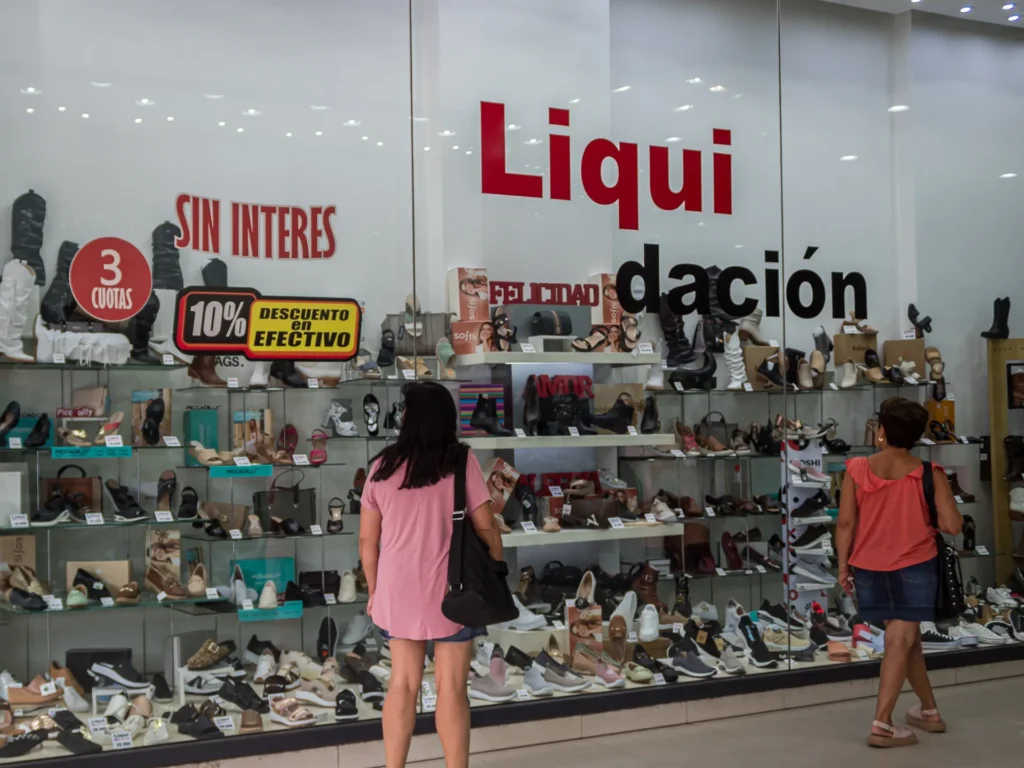
Struggles of Everyday Argentines Amid Economic Crisis
Diego Nacasio, a 43-year-old full-time salesman at a large hardware store located in Florencio Varela, a suburb of Buenos Aires, shares a reality that many in Argentina are facing today. His family’s financial struggles highlight the broader economic challenges affecting countless households across the country. Despite working hard for over two decades, he finds himself having to rely on loans and credit cards just to put food on the table. This article explores the ongoing economic crisis in Argentina, the growing reliance on debt, and the impact on everyday life.
The Daily Grind
Diego’s routine is simple yet harrowing. He can instinctively tell when mid-month arrives—not by looking at a calendar, but by watching his paycheck vanish. Alongside his wife, who also works full-time, they both find themselves scrambling for extra work or selling personal belongings to make ends meet. “It’s all about survival,” he explains. “We start borrowing when our money runs out, usually around the 15th.”
Nacasio reflects on a more prosperous time in their lives, noting, “Despite working hard for 25 years, and having better jobs now, we still struggle to afford food for a whole month.” He describes the cycle of living on credit as perilous, leading to stress and anxiety. “It feels like there’s no end to this chasing we do.” His story mirrors those of countless others in Argentina, where many are cutting back on essentials or borrowing money just to cover the basics.
Statistics Reveal the Strain
Recent reports indicate that nearly half the population is dipping into savings, selling possessions, or depending on loans for their essential needs. Another study highlights that over 63% of Argentines have reduced their spending on services and activities to stay afloat. “It’s alarming to see people with multiple jobs needing loans not for luxuries but simply for food,” warns Violeta Carrera Pereyra, a sociologist and researcher.
A Tale of Economic Disparity
Argentina’s President Javier Milei, who took office in December 2023, touts an austerity plan aimed at achieving fiscal balance through significant public spending cuts. He claims this initiative has revitalized the economy and lifted millions out of poverty. Supported by the International Monetary Fund, the administration projects a four percent economic growth in the coming years.
However, a deeper analysis presents a starkly different picture. While some sectors like banking and agriculture are indeed seeing growth, others, particularly manufacturing and retail, are struggling and shutting down due to decreased demand. Independent food retailers have reported a notable 12.5% drop in consumption, prompting concerns about the state of food access in the country.
Inflation: A Persistent Concern
Inflation continues to be a critical focus, making essential foreign credit hard to obtain. Although Milei’s initial measures reduced inflation rates from record highs, some experts criticize his controversial tactics, such as imposing wage freezes and facilitating cheaper imports. Critics argue that these methods have left many without disposable income, resulting in factory closures.
Furthermore, the methodology used to measure inflation is seen as outdated and not reflective of today’s realities. “Consumers are currently facing price hikes in essentials like electricity and fuel, which the metrics do not adequately capture,” Carrera Pereyra points out.
The Struggles of Daily Life
For many Argentines, navigating day-to-day life has become a complex challenge. They juggle multiple jobs, sell items like clothing, and turn to borrowing—both from acquaintances and informal lenders. Veronica Malfitano, a teacher whose salary has drastically decreased, shares her strategy: “I now collaborate with others to buy in bulk and rely heavily on credit.” Her experience reflects a wider trend, with nearly half of supermarket purchases being made via credit card.
A Soaring Debt Crisis
The rising rates of both borrowing and defaults are alarming. Recent data from the Central Bank of Argentina reveals that around 11% of personal loans are currently unpaid—the highest figure recorded since 2010. Griselda Quipildor, a family woman, admits that her household often runs out of funds by the 18th each month, forcing them into a cycle of debt. “It feels like an endless loop,” she claims.
Lucia Cavallero, an economist, emphasizes that while these problems have historical roots, their impact is now more acute. “Debt has indeed become a crisis,” she notes, advocating for structural reforms to address the issue comprehensively.
Seeking a Way Forward
In response to the mounting pressures, some political parties are proposing initiatives to consolidate debts for lower-income families, allowing for long-term repayment plans at reduced rates. While Cavallero commends the political move as an acknowledgment of the issue, she believes it does not address the fundamental problem. “We need to ensure wages keep pace with the cost of basic necessities, not just provide temporary debt relief,” she argues.
Despite the myriad challenges, Diego Nacasio maintains a semblance of hope. “At least we own our house. Renting would be a nightmare,” he reflects. He yearns for systemic change that benefits all Argentines, asserting, “Things cannot keep going like this.”
Conclusion
The struggles faced by families like Diego Nacasio’s serve as sobering reminders of the economic disparities present in Argentina today. As citizens continue to navigate the complexities of job insecurity, rising debt, and inflation, their resilient spirit shines through. Addressing these systemic issues remains essential for the country’s future.
- Many Argentines are relying on loans and credit just to afford basic necessities.
- Economic growth is uneven, leaving some sectors thriving while others struggle.
- Inflation and outdated measurement methods exacerbate financial challenges.
- Proposed political solutions may provide temporary relief but deeper reforms are necessary.