
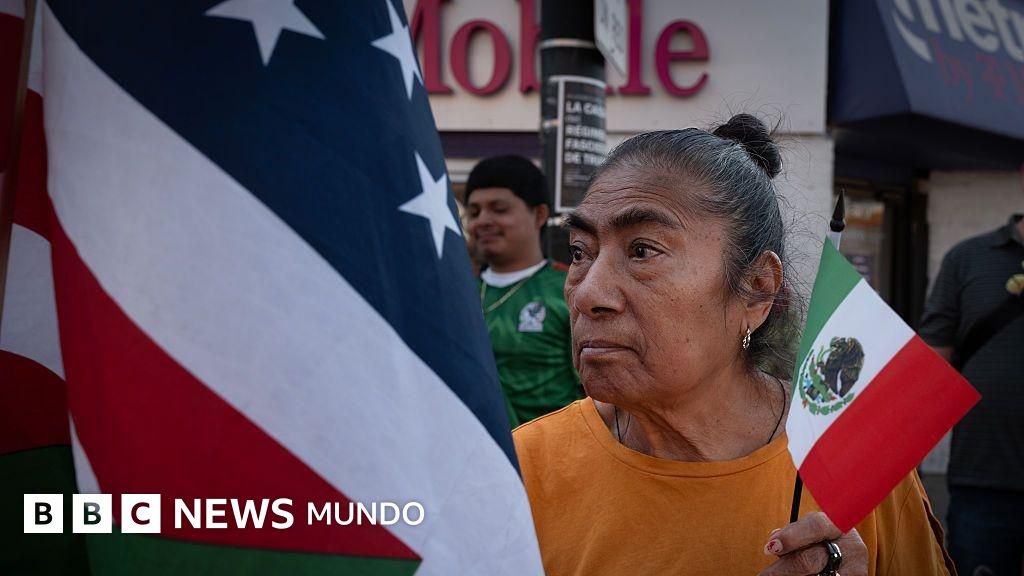
Impact of ICE Raids on Little Village: Community Struggles Amidst Fear
In recent weeks, Minneapolis, Minnesota, has become a focal point as public outrage grew following the deaths of two American citizens at the hands of U.S. Immigration and Customs Enforcement (ICE) agents. This unrest has sparked protests across the city. In response, President Trump promised to “reduce the intensity” of the situation, while border czar Tom Homan announced the end of the operation in the state. Similarly, Chicago has experienced a slight decrease in additional immigration agents being deployed and their aggressive tactics on the streets.
The Midway Blitz Operation in Chicago
The so-called Midway Blitz operation began in September, targeting what the Trump administration labeled “criminal illegal immigrants.” This operation reached its peak shortly after its initiation. Following this, neighborhoods in Chicago, particularly those with Hispanic communities, have struggled to adapt to this unsettling new reality.
The Ghost Town Effect in Little Village
In the Little Village area, the fear of raids has caused residents to stay indoors, transforming one of Chicago’s economic backbone neighborhoods into what resembles a ghost town, according to local business owners and city officials. Carlos Macías, who owns Carnicería y Taquería Aguascalientes—a business started by his father 50 years ago—reports a drastic drop in sales. “Business has decreased by half during the week, sometimes even less,” he says. “People don’t want to spend money.”
The Fear Factor from Raids
Macías recalls an ICE raid at his own store that instilled fear within the community. Agents arrived with their faces covered, some holding rifles, while others sported handguns. “People crouched under tables, and some began to cry,” he remembers. Many ran to the back, unsure of the agents’ intentions. Attempting to assert his rights, Macías confronted the agents, declaring, “This is my property. You do not have permission to be here.” His words, however, had little effect, and the memory still haunts him, contributing to the business’s decline.
Government Justifications and Community Impact
Despite the fear these raids create, President Trump defends their necessity by stating they are aimed at protecting U.S. citizens. The Department of Homeland Security asserts that Operation Midway Blitz was launched in memory of Katie Abraham, a 20-year-old student killed by a drunk, undocumented immigrant. More than 800 undocumented immigrants have reportedly been detained, including sex offenders, thieves, and gang members. However, federal court records released in November showed a high number of those detained posed no significant risk to the public.
The Broader Economic Repercussions
The decline in business in Little Village is affecting the broader economy of Chicago, as officials point out. This three-kilometer stretch is a critical economic hub, generating substantial tax revenue and largely serving a predominately Hispanic community. Unlike the upscale boutiques lining the Magnificent Mile, these local businesses cater to residents, many of whom are staying home out of fear.
Declining Sales and Local Support
City council member Michael Rodríguez has received reports from local restaurants indicating sales have plummeted by as much as 60%. One local cell phone store reported zero sales in a two-week period. “Since Trump took office, we have seen significant setbacks in January and February,” Rodríguez stated. “Any negative impact on the business environment along 26th Street affects the entire region.”
Political Perspectives on Immigration Policies
Some political leaders and community members support Trump’s deportation strategy, a key issue in his 2024 campaign. Lupe Castillo, a Little Village resident and Republican congressional candidate, expressed her support: “I feel sorry that it has come to this, but it’s the Democrats’ fault. This country has rules. You can come in, but do it the right way.”
Castillo, who has lived in Little Village for over 40 years, noted that while federal agents were previously unseen, residents should keep supporting local businesses. “Just try not to draw too much attention,” she advises. “These people from the neighborhood are not bad; they are just trying to earn a living.”
Impact on Daily Life and Economy
Rodríguez noted that some businesses have managed to stay afloat during this turbulent time, such as a few specialty grocery stores. “Public parking has been available along 26th Street for the first time,” he remarked. “During lunchtime, our typically busy restaurants were empty. Even during the pandemic, we seemed more resilient.”
Community Initiatives Amid Uncertainty
In light of the immigration raids, the city of Chicago has introduced a support program for local businesses affected. Municipal Secretary Ana Valencia launched the “Shopping in Solidarity” initiative to encourage residents to shop locally and support their neighbors. “I believe Chicagoans have found ways to come together during these crises,” Valencia commented. “It warms my heart to see people rally around this vibrant neighborhood.”
Despite these efforts, the decline in foot traffic is palpable across the corridor, even affecting long-standing establishments like Taquería Los Comales. Although the Little Village Chamber of Commerce doesn’t track daily sales, Christina González, a board member and owner of Taquería Los Comales, noted that many businesses have seen sales decline by 30% to 60%. She has had to cut back on employee hours: “We don’t need ten servers for four tables; it just doesn’t make sense.”
Concerns Over Future Economic Impact
Though it’s too early to gauge the full national economic impact, economists warn that mass deportations could harm GDP since many migrants work in agriculture, construction, and manufacturing. A 2024 report from the Peterson Institute for International Economics suggested that mass deportations could reduce GDP by 7% over three years. Another report from the Congressional Joint Economic Committee estimated that prices could rise as much as 9.1% by 2028.
Meanwhile, advocates of the President’s policies argue that uncontrolled immigration ultimately costs more by straining public services. In 2024, the Center for Immigration Studies testified before Congress, suggesting that each undocumented immigrant has a fiscal burden of around $68,000.
Real-life Concerns for Business Owners
For business owners like González, the pressing concern is much more immediate: keeping the lights on and food on the table. Adolfo Peña, owner of Linda’s Shoes, shared his disappointment, reporting a revenue drop of at least 50% since Trump took office. “This is the worst that has happened to us,” Peña said. “Unfortunately, I voted for him, which stings the most. I genuinely believed he would drive change.”
Peña’s choice to support Trump was partly fueled by discontent with Joe Biden’s border policies. Under Biden, Chicago has seen an influx of migrants, with over 51,000 individuals arriving from the southern border. Little Village has become a key entry point, hosting one of the region’s largest shelters, accommodating 220 people in early 2024. Trump’s electoral victory in 2024 was bolstered by increased support from Latino voters like Peña, who were concerned about the economic impact of undocumented immigration.
However, Peña noted that since Trump took office, his profits have plummeted, especially after tariff implementations and during the Midway Blitz. “When ICE showed up, everyone disappeared,” he lamented.
The Local Perspective on Safety and Business
At Pollo Feliz, a neighborhood restaurant, Marya, who works at the cash register, has observed a notable decrease in customer traffic. “Those who come in are the ones with papers,” she remarked, preferring not to give her last name. “People used to come from afar, but since the immigration agents appeared, that has stopped.” Marya noted she witnessed agents detaining street vendors selling traditional foods, with agents often appearing in unmarked vehicles, faces concealed, and rifles in hand.
Rodríguez pointed out that the number of street vendors has dwindled. Previously, numerous food vendors would arrive early to secure spots, with customers lined up before they were fully set up. That bustling atmosphere has vanished; some vendors have ceased operations altogether, while corners once packed with goods now sit empty. “The street vendors, who may not have formal documentation, have expressed concerns not only about losing their livelihoods but also the potential of being forcibly separated from their families,” he explained. “They fear their children will miss their parents at the dinner table.”
The Persistent Fear of ICE Raids
Edwin and Luna, who sell eggs at one of the street corners, reflected that vendors are hesitant to venture out, shortening their working hours. “They don’t want to go out,” they said. “We’re not scared, but at the same time, we are. They don’t care if you belong here. They don’t care.”
In the coming months, ICE may ramp up its raids across the United States, supported by government plans to deploy thousands of additional agents, open new detention centers, and collaborate with private companies to locate undocumented individuals. Congress has approved $170 billion in funding for ICE and Border Patrol until September 2029.
For Little Village residents, the fear of ICE is an ever-present reality, influencing who ventures out, who works, and who shops. Despite the uncertainty, families, businesses, and community members are determined to adapt and persevere in this challenging new landscape.
Conclusion
The repercussions of immigration policies and community fears are profoundly affecting Little Village, shaping not just individual lives, but the broader economic landscape. As the community grapples with fear and uncertainty, local initiatives aim to support and sustain the vibrancy that has long characterized this neighborhood.
- ICE raids have led to significant declines in business and community engagement in Little Village.
- Local leaders and residents express mixed feelings towards deportation policies, highlighting the diverse perspectives within the community.
- Despite fear, there are efforts to encourage local shopping and support businesses affected by recent raids.
- Residents are anxious about the future, prioritizing their safety and economic well-being amidst ongoing uncertainty.