
Concerns Arise Over Central Bank Independence Following New Appointment in Indonesia
The recent appointment of Thomas Djiwandono, the nephew of President Prabowo Subianto, as a deputy governor of Bank Indonesia (BI) has sparked renewed discussions about the central bank’s autonomy. This decision is under close scrutiny from foreign investors and currency analysts, who are keen to understand what this means for the future of Southeast Asia’s largest economy.
Balancing Interests: Independence vs. Government Influence
Analysts are divided on the implications of Djiwandono’s appointment. Some experts express concern that this move might signal a shift towards greater government influence over the central bank’s operations, possibly leading to capital outflows and putting pressure on the Indonesian rupiah. However, there are those who argue that the collective decision-making approach of Bank Indonesia will mitigate the impact of any single appointee, ensuring the institution’s continued independence.
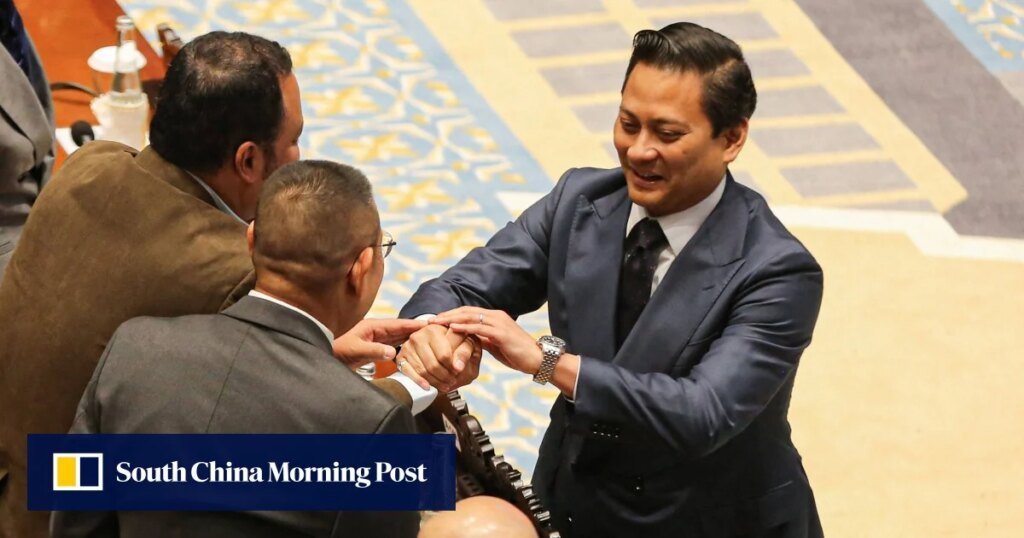
On Tuesday, Indonesia’s House of Representatives officially confirmed Djiwandono’s position, which he is set to occupy until 2031. He passed a series of fit-and-proper tests and received unanimous approval for his role as deputy governor.
A Legacy in Banking
Djiwandono takes over from Juda Agung, who will assume a role as deputy minister at the Ministry of Finance. With academic credentials from the United States, Thomas is poised to continue his family’s longstanding connection to Indonesia’s banking sector. His father, Soedradjad Djiwandono, served as the governor of Bank Indonesia from 1993 to 1998, while his grandfather, Margono Djojohadikusumo, is recognized as a pivotal figure in the nation’s financial history, having founded the first central bank, Bank Negara Indonesia, in 1946.
Government Confidence in Experience
Muhammad Misbakhun, the chairman of Commission XI in the parliament, which oversees finance and banking, noted that Djiwandono’s selection was heavily influenced by his experience within the Ministry of Finance. This experience, supporters argue, will be valuable as he navigates the complexities of his new position.
Conclusion
As Indonesia embarks on this new chapter under Djiwandono’s leadership at Bank Indonesia, the balance between independence and government influence remains a critical topic for stakeholders. How this will play out in terms of economic stability and investor confidence is yet to be seen.
- Thomas Djiwandono has been appointed deputy governor of Bank Indonesia amid concerns over central bank independence.
- Analysts are divided on the implications of the appointment for the Indonesian economy and currency stability.
- Djiwandono takes over from Juda Agung and brings a notable family legacy in banking to the role.
- The parliament’s selection was based on Djiwandono’s experience in the Ministry of Finance.