
The EU-Mercosur Trade Agreement: Opportunities and Concerns
The newly established trade agreement between the Mercosur countries and the European Union is poised to bring significant changes to commerce in both regions. This landmark deal aims to unite around 700 million individuals under a vast free trade zone, facilitating deeper economic ties among Argentina, Brazil, Paraguay, Uruguay, and Bolivia with the 27 member states of the EU. However, the agreement has sparked opposition, particularly from European agricultural sectors fearful of increased competition.
Overview of the Trade Agreement
The EU-Mercosur agreement, finalizing over many years, will remove most tariffs within 15 years and ease access for various agricultural products, such as beef, chicken, sugar, and soybeans, into Europe. European farmers are concerned that the reduced costs from South American producers, attributed to lower labor and environmental costs, will unfairly undercut local prices.
Voices of Discontent
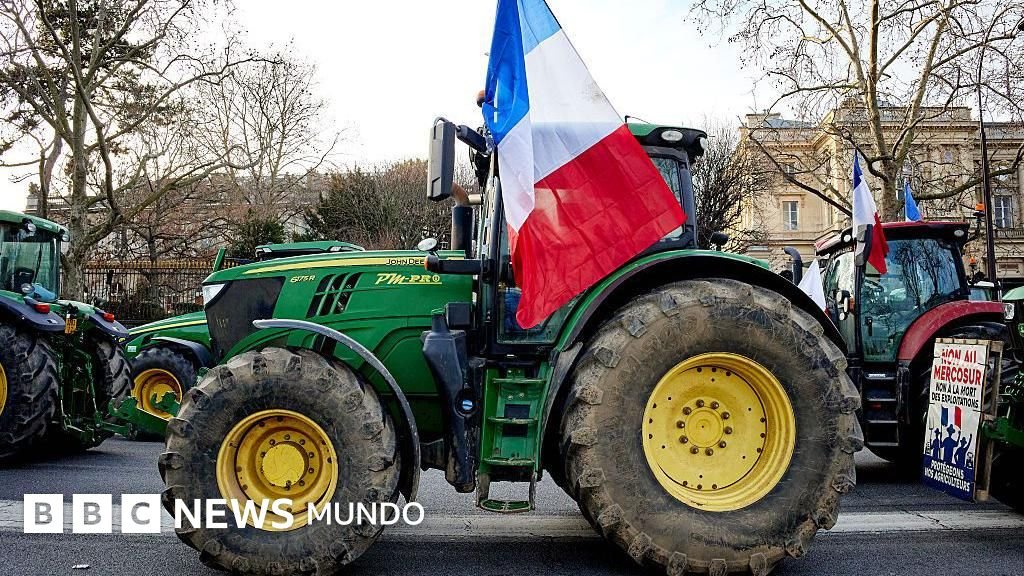
This week, French farmers took to the streets again, with as many as 350 tractors descending on the iconic Champs-Élysées, camping close to Parliament. These protests reflect a deep-seated frustration with the agricultural sector’s prospects, exacerbated by the impending EU-Mercosur agreement.
Similar demonstrations have rippled through Ireland, Poland, Hungary, and Austria, with farmers rallying on highways and calling for a reconsideration of a treaty that has been in the works for 25 years. In Ireland, protesters displayed slogans like “Stop EU-Mercosur,” while in other countries, roads were blocked in solidarity against the deal.
Concerns Over Fair Competition
Many European countries fear the potential impact on their agricultural incomes, with stringent production standards in Europe creating higher costs compared to those in Mercosur nations. Experts highlight significant disparities in sanitary and animal welfare regulations between the two regions. The EU mandates strict rules on traceability, pesticide use, hormonal treatments, and animal welfare that could lead to imported products not meeting equivalent standards, yet still competing in price.
“Many French farmers are already grappling with measures triggered by animal disease outbreaks,” notes Benjamin Melman, CIO at Edmond de Rothschild AM. “The impending agreement is seen as the final straw.”
Economic Implications
Though predictions suggest that the EU-Mercosur agreement could overall benefit France, the distribution of these benefits is expected to be uneven. Certain sectors like industry and services may thrive, while agriculture—particularly beef, poultry, sugar, and ethanol—could face significant challenges from increased competition.
Germán Ríos, an economist at IE University, warns of two primary risks for farmers: localized losses leading to farm closures and job losses, coupled with potential national fiscal risks due to increased subsidy demands that may widen deficits or necessitate tax hikes over time.
Political Landscape and Future Considerations
The varying impacts of the agreement have caused a rift among EU states, with Germany backing the deal for its lucrative prospects, especially for its automotive sector, while countries like France express significant reservations. The political scene in France is precarious, especially with elections approaching, where dissatisfaction could be politically exploited.
Once fully implemented, EU exporters are expected to save approximately $4.6 billion annually in tariffs, primarily benefiting sectors like chemicals, pharmaceuticals, and machinery.
Strategically, this agreement could help the EU diversify sources for critical minerals vital for the green transition and defense-related supply chains, reducing reliance on China and fostering closer ties between the EU and Mercosur.
“This agreement helps diminish Chinese influence in the region by strengthening trade relationships and regulatory convergence,” concludes Ríos.
Conclusion
As protectionist sentiments escalate globally, the Mercosur countries have chosen to deepen their economic relations with Europe, acknowledging the reality that some industries will flourish while others may suffer. Many analysts view the Mercosur agreement as more strategic than purely economic, asserting that its geopolitical implications will resonate beyond merely economic benefits.
Key Takeaways
- The EU-Mercosur agreement will create one of the largest free trade zones globally.
- Agricultural sectors in Europe express significant concerns about competition from South American products.
- Protests in various EU countries highlight the politically charged atmosphere surrounding the agreement.
- Strategic advantages may arise for the EU in diversifying mineral sources and enhancing geopolitical standing.