
Canadian Prime Minister’s Visit to China: A New Chapter in Canada-China Relations
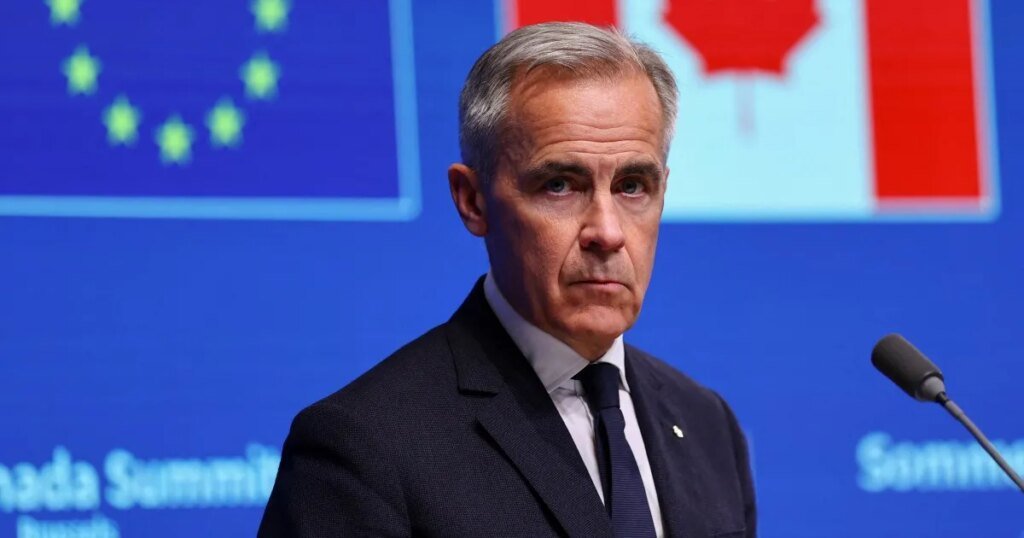
Canadian Prime Minister Mark Carney has embarked on a significant trip to China, marking the first visit by a Canadian leader since 2017. The timing of this visit is crucial as both nations navigate the complexities of their relationship amidst varying challenges.
A Shift in Relations
Relations between Canada and China have experienced severe turbulence since December 2018, when Canadian authorities arrested a prominent official from Huawei, Meng Wanzhou, during her transit through Vancouver International Airport. This move, prompted by a request from the United States, led to China taking retaliatory measures, including the detention of two Canadian citizens.
Over the years, diplomatic ties have remained strained. In 2024, Canada imposed a 100 percent tariff on Chinese electric vehicles in alignment with U.S. policy, prompting Beijing to retaliate by imposing tariffs on various Canadian agricultural products, such as canola. Furthermore, Ottawa has accused China of engaging in political interference, adding another layer of complexity to their relationship.
Against this challenging backdrop, Carney’s visit is seen as a pivotal moment to recalibrate and enhance relations with China. Vina Nadjibulla, vice president of research and strategy at the Asia Pacific Foundation of Canada, noted that this trip signifies Canada’s intent to foster better ties with its Chinese counterpart. “This is probably Prime Minister Carney’s second-most challenging trip after his first visit to the White House,” remarked Nadjibulla.
Strategies for Economic Growth
Understanding the pressing need to diversify Canada’s economy—currently heavily reliant on the United States for nearly 80 percent of its exports—Carney is eager to explore new opportunities. Despite historically being a close ally of the U.S., the relationship has soured, especially following Donald Trump’s administration, which imposed hefty tariffs on Canada.
As Carney travels to various regions, including the European Union and the Gulf, he aims to attract new market opportunities and investors. His goal is to double non-U.S. trade within a decade.
Engagement with Chinese Leadership
In a preliminary effort to mend fences, Carney previously met with President Xi Jinping during the Asia-Pacific Economic Cooperation Summit in South Korea last October. Nadjibulla believes that Carney will adopt a pragmatic approach during this visit, focusing on concrete economic agreements, particularly concerning the export of Canadian energy and agricultural products. Nonetheless, a complete lifting of tariffs is not expected.
Implications of Trade Agreements
As Canada reviews its trade agreement with the U.S. and Mexico, known as USMCA, the potential for benefits remains high. Currently, 86 percent of Canadian and Mexican goods entering the U.S. under this deal are tariff-free, leading to a relatively low effective tariff rate of about 6 percent on Canadian products. However, uncertainty looms as U.S. sentiment shifts towards considering the trade agreement as “irrelevant,” as stated by Trump.
If an agreement to renew or adjust USMCA isn’t achieved, it may lead to mandatory annual reviews until 2036, resulting in significant trade policy uncertainty. This situation could force Canada, the U.S., and Mexico to revert to bilateral agreements, potentially increasing costs and complicating investments across North America.
Political Considerations and Future Challenges
While the stakes are high for Canada, the visit also holds importance for China. Beyond seeking new markets and advocating for the removal of trade restrictions, Beijing desires to showcase a “political and narrative win.” Nadjibulla highlighted that China will perceive any policy shifts following Carney’s visit as Canada’s attempt to amend past errors.
China’s long-term aim likely includes gaining Canadian compliance on sensitive issues such as Taiwan and the South China Sea. In a move that underscores the delicate state of Canada-China relations, two Canadian MPs from Carney’s party recently concluded a visit to Taiwan earlier than planned, citing the need to reduce “confusion” in Canada’s foreign policy framework prior to Carney’s trip.
Nadjibulla described these developments as “worrying,” emphasizing that Canada faces a considerable challenge in balancing its relationship with China moving forward.
Conclusion
Prime Minister Mark Carney’s visit to China represents a pivotal moment in Canada-China relations. With the potential for economic deals on the table and a need to navigate sensitive political waters, Carney’s efforts could redefine how these two nations interact moving forward.
Key Takeaways
- Mark Carney is the first Canadian Prime Minister to visit China since 2017, amidst strained relations.
- Canada faces challenges with tariffs and political interference issues in its relationship with China.
- The Prime Minister aims to diversify Canada’s economy by enhancing trade with China.
- Political implications and sensitivity regarding issues like Taiwan further complicate the diplomatic landscape.