
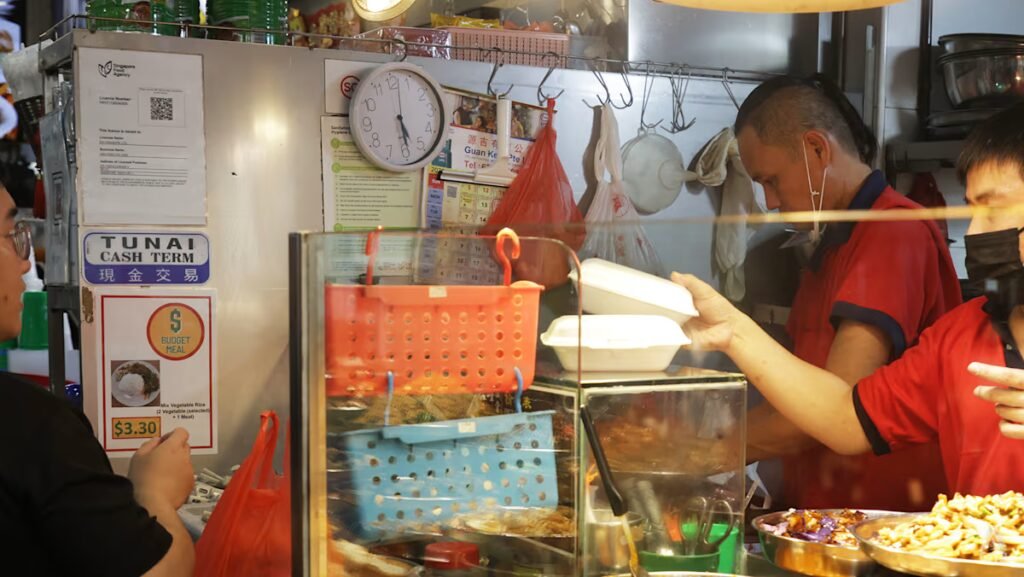
Singapore’s Coffee Shops Embrace New Budget Meal Initiative Changes
In a recent development, operators of coffee shops in Singapore are expressing their approval of the revised budget meal initiative. The Housing and Development Board (HDB) has made these changes to enhance sustainability, making it optional for coffee shops to provide budget meals as they renew their tenancy agreements.
Flexible Participation in Budget Meal Offerings
Effective from Saturday, January 10, current rental coffee shops will no longer be obligated to offer budget meals upon renewing their leases. Additionally, privately owned coffee shops can choose to withdraw from this requirement immediately. This shift allows operators to decide their level of involvement, balancing participation against the opportunity for increased discounts on rent or Temporary Occupation License (TOL) fees.
Standardized Meal Options
To simplify the initiative, the HDB has standardized the budget meal offerings, limiting them to three fixed choices instead of the previous range of two to six options. The designated meals include:
- Economy rice consisting of one meat dish, rice, and two vegetables
- A halal meal option
- A breakfast item
Despite these changes, the stipulation to offer two budget drinks at approximately S$1.20 remains unchanged. Typically, these budget meals are priced around S$3.50 (US$2.70).
Support from Industry Leaders
Mr. Hong Poh Hin, chairman of the Foochow Coffee Restaurant and Bar Merchants Association, emphasized the benefits of standardization in defining budget meals. “Previously, the lack of clarity led to confusion around what constituted a budget meal,” he noted. He also highlighted that some vendors were offering limited meal options due to tight profit margins.
Hong, also a coffee shop owner in Serangoon, pointed out that the extension of the 5% rent discount for rental coffee shops over the entire three-year tenancy will provide considerable relief for operators. “This additional two years of discounts is a significant advantage for us,” he stated.
Agreeing with Hong, Mr. Glenn Koh, managing director of coffee shop chain De Tian, mentioned that the enhanced discounts will likely motivate more operators to join the program, though he cautioned that these discounts may not fully cover all operational expenses. Currently, 15 of De Tian’s 20 coffee shops provide budget meals, and while the majority will probably continue, a thorough evaluation is necessary.
Challenges Remain for Operators
One prominent issue, as noted by Koh, is pricing the budget drinks at S$1.20, which leaves slim profit margins. “This poses a challenge for operators, as maintaining profitability is crucial,” he remarked. Additionally, ensuring that each coffee shop offers a halal option may require significant planning.
Koh also acknowledged that foot traffic in coffee shops has been impacted by increased travel and rising competition from various Chinese cuisine stalls. “With all this competition, we face several challenges,” he stated.
Gaining Flexibility for Stallholders
A spokesperson from Chang Cheng coffee shop chain expressed that the revised initiative grants stallholders greater flexibility. Before the changes, some stallholders found the one-year 5% rental subsidy to be minimal relief. The spokesperson added that many were concerned that budget meal pricing might hinder overall sales despite their support for the initiative.
By reducing the meal options to three per coffee shop, vendors can concentrate on fewer items, potentially improving operational efficiency. Currently, Chang Cheng operates 25 HDB coffee shops offering budget meals and plans to maintain this offering following the recent changes.
Conclusion
As Singapore’s coffee shops adapt to these updated policies, operators have welcomed the newfound flexibility and potential for better profitability. While challenges persist, the streamlined approach to budget meals could lead to improved operations and customer satisfaction in the long run.
- Coffee shop operators are now not required to offer budget meals, with participation being optional.
- The budget meal options have been standardized to three choices, including an economy rice, a halal option, and a breakfast item.
- The extension of rent discounts over three years aims to alleviate operational costs for coffee shop owners.
- Challenges such as profit margins and competition remain significant concerns for operators.