
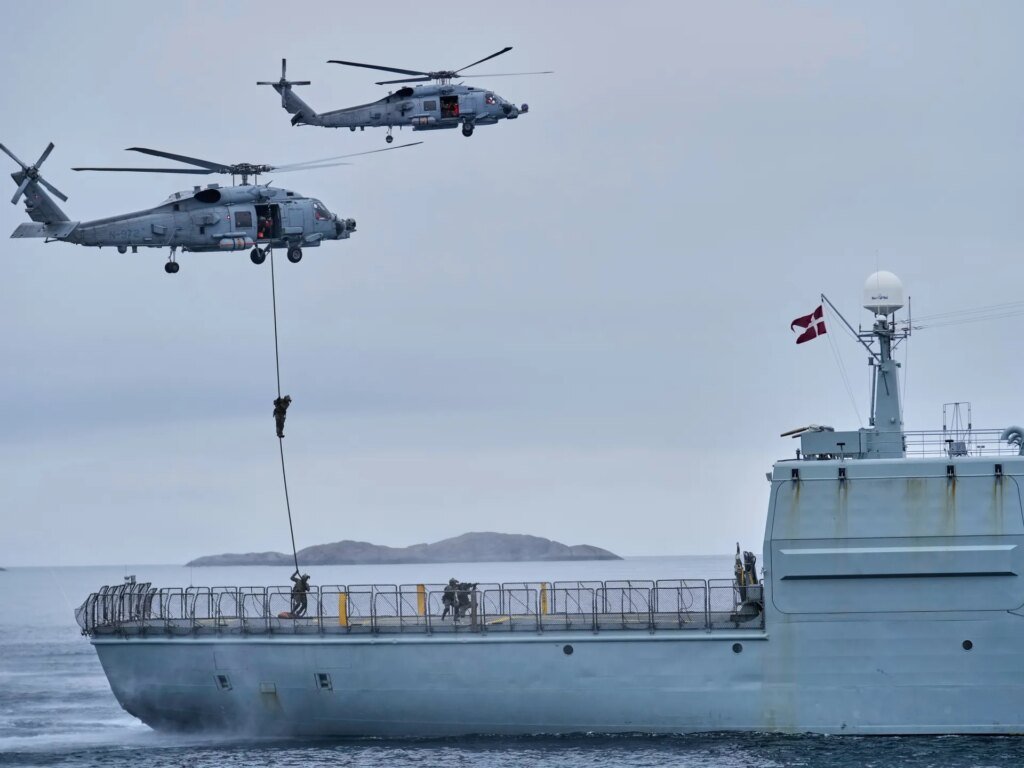
The U.S. Military Interest in Greenland: A Complex Scenario
Recently, discussions have emerged regarding the United States potentially utilizing military force to assert control over Greenland, a territory currently associated with Denmark. This news comes amid strong alliances formed among European and Canadian leaders, who firmly advocate that Greenland belongs to its indigenous population.
U.S. Interests in Greenland
The White House released a statement indicating that President Trump views the acquisition of Greenland as crucial for national security, particularly to “deter adversaries in the Arctic region.” His administration is reportedly evaluating various strategies to pursue this foreign policy objective, and military options remain under consideration.
A direct grab for Greenland from Denmark would significantly disrupt NATO unity and deepen tensions between Trump and European leaders. Nevertheless, Trump’s interest in Greenland, initially expressed in 2019, has been reignited and is now amplified by the recent geopolitical events surrounding Venezuela.
Strategic Importance of Greenland
Trump emphasizes that Greenland holds large strategic value due to its location and resources. He claims the island is increasingly frequented by Russian and Chinese naval vessels and argues that Denmark lacks the means to safeguard it properly. With a modest population of approximately 57,000, Greenland’s vast mineral resources are also perceived as vital to U.S. interests aimed at reducing dependency on Chinese imports.
International Response
In response to the growing tensions, leaders from France, Germany, Italy, Poland, Spain, and the United Kingdom have collectively supported the stance that Greenland is fundamentally its own territory. Danish Prime Minister Mette Frederiksen emphasized that decisions regarding Greenland’s future should rest solely with its people and Denmark.
Canadian Prime Minister Mark Carney echoed these sentiments, announcing a forthcoming visit to Greenland by representatives from Canada. Additionally, Nordic foreign ministers from Finland, Iceland, Norway, Sweden, and Denmark reaffirmed Greenland’s right to self-determination and pledged enhanced investments in regional security, in consultation with the United States and NATO allies.
Polish Prime Minister Donald Tusk cautioned that any threats against a NATO member could jeopardize the alliance’s integrity, stating, “No member should attack or threaten another.” This sentiment was further echoed by Greenland’s Prime Minister Jens-Frederik Nielsen, who expressed gratitude for the support from European leaders.
Denmark’s Stance
Denmark has rejected Trump’s claims of being unable to protect Greenland. Danish Foreign Minister Lars Lokke Rasmussen asserted, “We do not see the island as being overtaken by Chinese investments or warships.” He added that the U.S. is always welcome to enhance its investments in Greenland.
Greenland’s government has also reached out to U.S. Secretary of State Marco Rubio for an urgent discussion regarding the situation, indicating the seriousness of their concerns.
Direct Engagement with Greenland Residents
In a different approach, Louisiana Governor Jeff Landry, appointed by Trump as the U.S. Special Envoy to Greenland, expressed a desire to engage directly with the residents of Greenland rather than diplomatic representatives from Denmark. He emphasized focusing on improving the quality of life for Greenlanders.
The Concept of Purchase
According to reports, Rubio has reassured lawmakers that U.S. threats do not point toward an imminent invasion of Greenland but rather reflect an interest in purchasing the island from Denmark. White House Deputy Chief of Staff Stephen Miller reinforced this perspective, downplaying concerns about Danish sovereignty by emphasizing the global realities governed by power.
However, some members of Congress, including both Democratic and Republican representatives, have responded to Trump’s stance by advocating respect for Denmark’s sovereignty and obligations under international treaties.