
Impact of U.S. Interventionism on Mexico Amidst Venezuela Crisis
The recent attack on Venezuela and the attempted abduction of President Nicolás Maduro have sent reverberations throughout Latin America, reigniting fears of direct U.S. intervention in the region. This anxiety is particularly palpable in Mexico, the United States’ neighbor and longstanding ally, where leaders and citizens are concerned about the implications of such actions.
U.S. Actions Spark Concerns
The tension escalated after U.S. President Donald Trump singled out Mexico, alongside Cuba and Colombia, in remarks following the attack on Venezuela that resulted in significant casualties and was largely condemned as a breach of international law. Trump suggested that military action could extend to Mexican soil under the guise of combating drug trafficking, stating, “Something’s going to have to be done with Mexico.” He elaborated that Mexican President Claudia Sheinbaum is “very frightened of the cartels” that are allegedly controlling parts of the country.
Mexican Sovereignty in Question
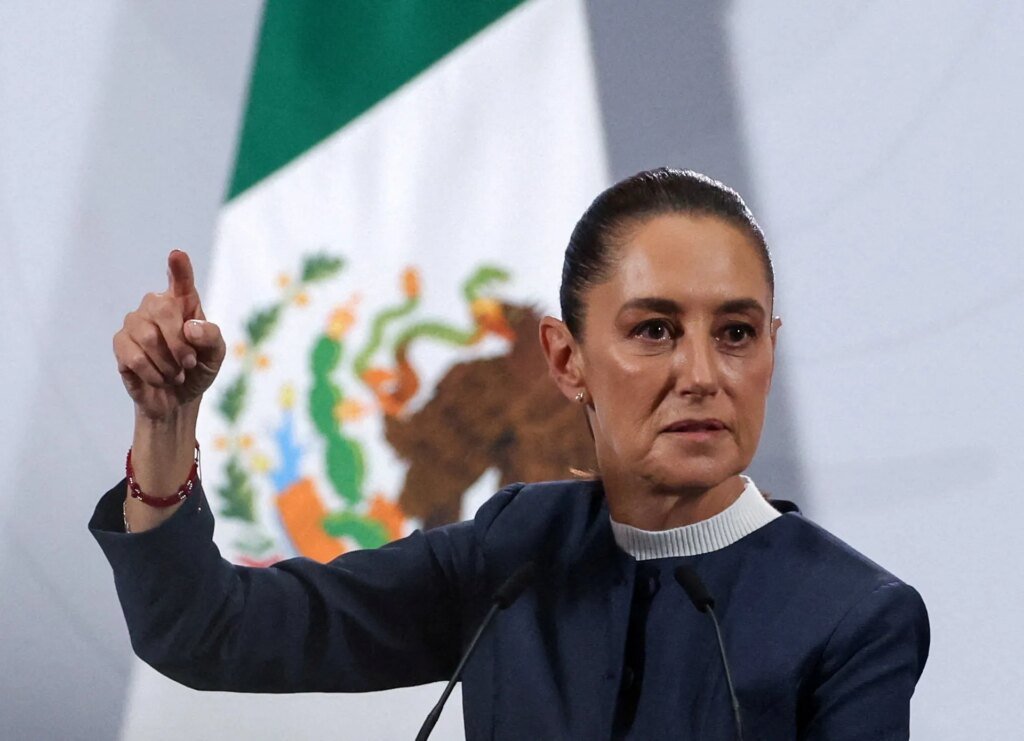
In response to Trump’s provocative statements, Sheinbaum was quick to reaffirm Mexico’s sovereignty. “We categorically reject intervention in the internal matters of other countries,” she stated emphatically to the press. “It is essential to reaffirm that, in Mexico, the people rule and that we are a free and sovereign country,” underscoring a commitment to cooperation without subordination.
Navigating Between Nations
Maintaining healthy relations with the U.S. while protecting national interests has always been a delicate balance for Mexican leaders, a challenge that has grown increasingly complex under Trump’s administration. The rhetoric and policies being used today are reminiscent of historical periods marked by explicit U.S. intervention.
Historical Context of U.S. Intervention
Pablo Piccato, a historian at Columbia University, notes that historical instances of U.S. intervention resonate in Mexican collective memory. The U.S. war on Mexico in 1846, which led to the occupation of Mexico City and the annexation of vast territories, is a chapters of a fraught history. Additionally, the U.S. involvement during the Mexican Revolution and assaults such as the 1914 bombing of Veracruz further entrench a sense of caution among contemporary leaders and citizens.
As Piccato points out, these events form a backdrop against which current relations must be navigated, with sentiments echoed in the words of former President Porfirio Diaz: “Poor Mexico. So far from God, so close to the United States.”
Trump’s Doctrine and its Implications
Recent declarations by Trump have tied past U.S. interventions to his current policies, referencing the Monroe Doctrine—a 19th-century principle that sought to limit European influence in the Americas. Trump declared, “The Monroe Doctrine is a big deal, but we’ve superseded it by a lot,” hinting at a more aggressive U.S. stance in the region.
On a similar note, the U.S. State Department’s comments—showcasing Trump with the caption, “This is OUR hemisphere”—further indicate a troubling assertion of dominance.
Cooperation Amid Tensions
Despite these challenges, Sheinbaum has taken steps to collaborate with the Trump administration on significant issues such as immigration, security, and trade. After facing the threat of tariffs, she deployed Mexican National Guard troops to the U.S. border to help manage illegal immigration and drug trafficking.
Historically, the U.S. has pressured Mexico to adopt strict anti-drug policies, which many in Mexico argue have exacerbated violence and insecurity. Nonetheless, in managing relations with Trump, Sheinbaum has maintained a firm stance that any unilateral military action on Mexican soil would cross a fundamental boundary.
A Tightrope Walk
Experts suggest Sheinbaum’s readiness to cooperate with the U.S. should serve as a deterrent against potential U.S. military actions. Stephanie Brewer from the Washington Office on Latin America emphasizes that Sheinbaum’s cooperation should incentivize the U.S. to avoid violating Mexico’s sovereignty.
However, the recent military strikes in Venezuela have further highlighted the more aggressive posture of the Trump administration toward Latin America. While the likelihood of U.S. actions on Mexican territory may not have changed, they spotlight the seriousness of Trump’s threats.
Brewer notes, “Sheinbaum is doing a balancing act on an increasingly thin wire,” a precarious situation that could impact the future of U.S.-Mexico relations.
Conclusion
The rising tensions and indirect military threats emerging from the U.S. pose intricate challenges for Mexico, a country that continues to navigate its sovereignty while managing its relationship with a powerful neighbor. As historical memories linger, the call for caution resonates strongly among Mexican leaders.
Key Takeaways
- The recent attack on Venezuela has reignited fears of U.S. intervention in Latin America, particularly in Mexico.
- President Claudia Sheinbaum firmly rejected threats of U.S. military action, emphasizing Mexican sovereignty.
- Historical instances of U.S. intervention are deeply embedded in Mexico’s national consciousness.
- Sheinbaum’s cooperation with the U.S. highlights a complex and delicate balancing act in international relations.