
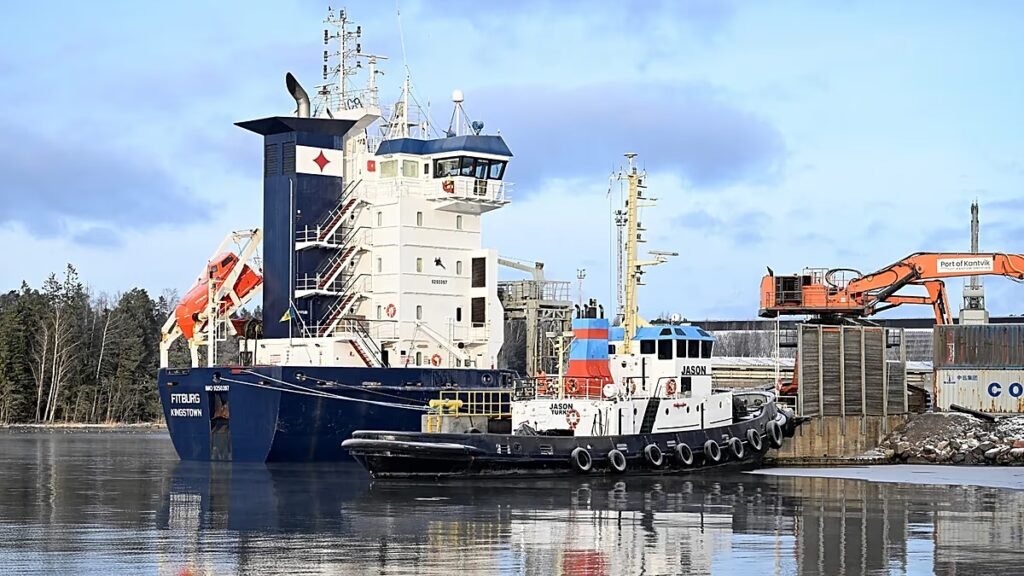
Investigation Launched into Vessel Seized for Sabotaging Telecom Cable
In a significant development, Finnish customs officials have seized a cargo ship believed to have caused damage to an undersea telecommunications cable linking Helsinki and Tallinn. This vessel, carrying Russian steel, is suspected of violating European Union sanctions.
Details of the Seizure
On Wednesday, authorities detained the Fitburg, a 132-meter cargo ship that was traveling from St. Petersburg, Russia, to the Israeli port of Haifa. Along with the vessel, 14 crew members were also detained because it’s suspected that the ship’s anchor had harmed the telecom cable in the Gulf of Finland.
Cargo Under Scrutiny
According to Finnish Customs, initial reports indicated that the cargo consisted of steel products sourced from Russia, which are currently under strict sanctions imposed by the EU. An inspection of the ship’s cargo confirmed these findings.
“Experts at Finnish Customs determined that the structural steel in question falls under the EU’s sectoral sanctions,” the agency stated. “Importing such goods into the EU is strictly prohibited under existing regulations.”
Ongoing Investigation
Officials are continuing to investigate how EU sanctions might apply in this case. The cargo remains impounded while clarifications are being sought. Finnish Customs has initiated a preliminary inquiry that may lead to a pre-trial investigation for potential violations of sanctions.
Addtionally, Finnish police have reported that they are treating the damaged cable incident as cases of aggravated criminal damage, potential aggravated criminal damage, and significant interference with telecommunications systems.
Details About the Crew
The Fitburg is registered under the flag of St. Vincent and the Grenadines. Its crew members hail from various countries including Russia, Georgia, Azerbaijan, and Kazakhstan. Some were arrested and others face travel restrictions, although authorities have not disclosed specific nationalities or roles of the detained crew.
Context of the Incident
In recent years, there have been multiple incidents of damage to energy and communication infrastructures, particularly in the Baltic Sea. Since Russia’s large-scale invasion of Ukraine in February 2022, many analysts and policymakers regard these acts of sabotage as part of a broader “hybrid war” against Western nations.
Kaja Kallas, the EU’s foreign affairs chief, remarked that Europe remains on high alert due to the elevated risk of sabotage against critical infrastructure. She emphasized the need for enhanced security measures, such as investment in new cables and increased surveillance to protect against these threats.
Previous Incidents and NATO’s Response
In December 2024, Finnish authorities dealt with a similar case involving the oil tanker Eagle S, which was implicated in damaging power and telecom cables in the Baltic Sea. However, the case was dismissed in a Finnish court due to a lack of evidence showing intent.
With eight NATO countries bordering the Baltic Sea alongside Russia, tensions have been running high. Nations in the region have ramped up security measures following a series of attacks on undersea cables and pipelines, which are often suspected to be acts of sabotage linked to Russia. NATO has bolstered its presence with patrol ships, aircraft, and naval drones to safeguard the area.
Conclusion
This case underscores the ongoing concerns regarding the safety of critical infrastructure against potential threats from state-based actors. As investigations continue, the focus remains on understanding the extent of violation and ensuring future protections against similar incidents.
Key Takeaways
- The vessel Fitburg was seized for damages to a telecom cable and carrying sanctioned Russian steel.
- Finnish Customs is investigating potential violations of EU sanctions pertaining to the cargo.
- The incident highlights ongoing tensions in the Baltic Sea linked to broader geopolitical conflicts.
- NATO is enhancing its presence in the region in response to increasing threats against critical infrastructure.