
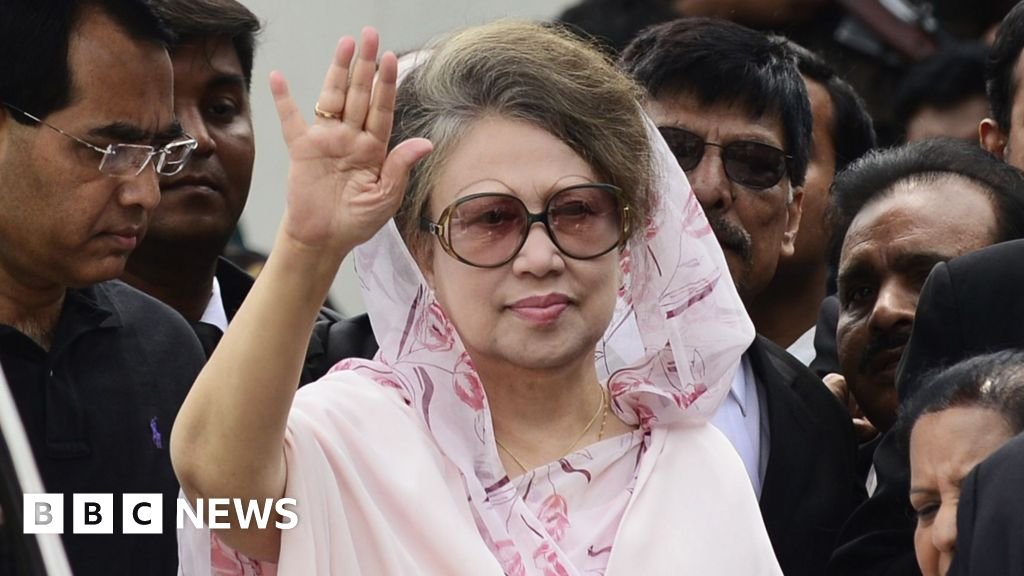
Khaleda Zia, Bangladesh’s First Female Prime Minister, Passes Away at 80
Khaleda Zia, the first female prime minister of Bangladesh and a notable figure in the nation’s political landscape, has died after a long battle with illness at the age of 80. Her death marks the end of an era marked by a fierce rivalry with the ousted leader, Sheikh Hasina, and an impactful political journey that began under tragic circumstances.
The Rise of Khaleda Zia
Zia’s political career was ignited following the assassination of her husband, Ziaur Rahman, who served as president. She ascended to become Bangladesh’s first female prime minister in 1991, navigating a complex political environment that often saw her imprisoned or under house arrest due to her ongoing feud with Hasina. Her return to public life came after Hasina’s departure from power, which allowed Zia to travel abroad for medical treatment.
A Life Marked by Political Struggles
Doctors reported her condition had become “extremely critical” prior to her passing. Although she was placed on life support, the severity of her health issues limited treatment options. The Bangladesh Nationalist Party (BNP), which she led, expressed deep sorrow through a social media announcement, revealing that Zia passed away at 6 a.m. on Tuesday.
As one of the leading figures in Bangladeshi politics, Zia’s entrance into the political realm came after the devastating loss of her husband in a military coup in 1981. Quickly rising to prominence, she led the BNP during the nation’s first elections after a 20-year hiatus. Her steadfast refusal to participate in a controversial election under General Hussain Muhammad Ershad in the 1980s further established her as a formidable leader in a male-dominated sphere.
Legacy and Political Impact
During her first term as prime minister, Zia received acclaim for promoting women’s education and advancing social development. She played a crucial role in restoring parliamentary democracy by amending the constitution with bipartisan consensus. However, her second term was notably brief and marred by allegations of electoral impropriety.
After returning to the office in 2001, Zia stepped down ahead of elections in 2006 amid rising corruption claims against her administration. For the last 16 years, she became a symbol of opposition against what many perceived to be Hasina’s increasingly authoritarian rule. After boycotting the 2014 elections, Zia faced corruption charges that she consistently claimed were politically motivated, culminating in her imprisonment.
A Time of Hope and Uncertainty
Following her release in January 2025, there was a brief hope for a political comeback, especially as anti-government demonstrations led to Hasina’s exile. The BNP indicated that Zia would be active in the upcoming general elections, with her son, Tarique Rahman, likely positioned to lead, especially after his recent return from a lengthy exile.
Zia had recently been hospitalized for various health issues, including kidney damage and pneumonia. Despite her absence from public life due to health complications, she remained a significant figure in opposition politics. Her passing elicited an outpouring of tributes both domestically and internationally.
Condolences and Tributes
Interim leader Muhammad Yunus acknowledged Zia as a “source of utmost inspiration for the nation,” offering condolences for her death—a sentiment echoed by leaders both in Bangladesh and abroad. Former rival, Sheikh Hasina, shared remembering Zia’s contributions to the nation and its political landscape, noting her passing as a substantial loss. Prime Minister Narendra Modi of India expressed his sorrow, reflecting on Zia’s role in Bangladesh’s journey towards development and its relations with India.
In a statement, Pakistan’s Prime Minister Shehbaz Sharif recognized Zia as a committed friend of Pakistan, emphasizing the lasting impact of her service to Bangladesh. Family members were present during her final moments, with the BNP urging the public to remember her legacy and to keep her spirit in their prayers.
- Khaleda Zia, Bangladesh’s first female prime minister, passed away at the age of 80.
- She was instrumental in restoring parliamentary democracy and empowering women during her tenure.
- Zia’s political career was highlighted by her rivalry with Sheikh Hasina and her resilience against corruption allegations.
- Her passing has drawn tributes from prominent leaders, reflecting on her significant impact on Bangladeshi politics.