
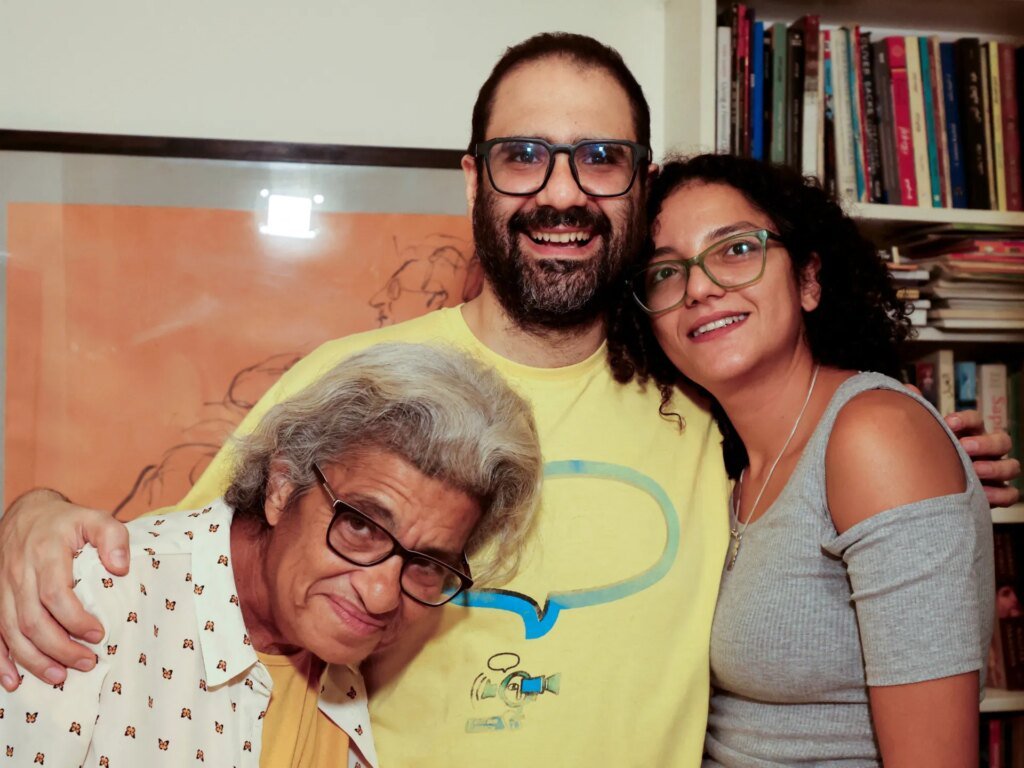
The Selective Outrage Over Alaa Abdelfattah
The current backlash against Alaa Abdelfattah in Britain is striking—not because it signifies a newfound commitment to justice, but because it lays bare the selective nature of public outrage. Alaa, an Egyptian-British writer and activist, has spent over a decade enduring incarceration in Egypt following the 2011 uprising that dethroned President Hosni Mubarak. His incarceration has been marred by severe hunger strikes, deprivation of basic rights, and treatment that various human rights organizations have denounced as cruel and degrading. After a protracted campaign led by his family and friends, Alaa was finally released on September 23. A travel ban was lifted just this month, allowing him to reunite with his family in the UK on December 26.
The Irony of Reception
Upon returning to London, Alaa was not met with the warmth one might expect after escaping a decade of repression; instead, he faced public condemnation and demands for the revocation of his British citizenship and deportation. This backlash was fueled in part by the resurfacing of a social media post from 2010, in which Alaa expressed that he viewed “killing any colonialists… heroic,” including references to Zionists. This statement has been widely criticized, referred to counter-terrorism authorities for review, and seized upon by politicians advocating for punitive action.
The Disparity of Attention
Interestingly, the fervor surrounding Alaa’s tweet sharply contrasts with the silence that often greets far more consequential remarks and actions that the UK tolerates or even supports. While Alaa’s words are being dissected as a moral crisis, senior Israeli officials, accused of instigating and committing genocide, are welcomed in the UK. For instance, in July, Israeli Air Force Chief Tomer Bar, responsible for widespread missile strikes on Gaza that have resulted in immense civilian casualties, was granted legal immunity to visit the UK, shielding him from potential arrest for war crimes.
Public Response to International Figures
Israeli President Isaac Herzog also visited the UK in September, where he engaged in high-level discussions. Notably, Herzog has suggested that the entire Palestinian populace bears responsibility for the ongoing violence and has made statements that support the genocide case against Israel at the International Court of Justice (ICJ). Yet, despite being characterized as an inciter of genocide, Herzog’s reception in the UK occurred without controversy, drawing no outrage from those who criticized Alaa’s past comments.
Ongoing Complicity
Furthermore, the British public remains largely silent on citizens who have traveled to serve in the Israeli military during offensives in Gaza, operations documented by credible organizations that have led to massive civilian casualties and destruction. Despite extensive evidence of war crimes and international law violations, there has been no systematic investigation into the potential involvement of British citizens in these atrocities.
The Unbalanced Moral Landscape
At the same time, the UK continues to supply arms to Israel and engage in military and intelligence collaborations, maintaining these policies even amid warnings from international bodies about dire humanitarian repercussions. The lack of effective political consequences for these actions underscores a troubling imbalance in public outrage.
The Inconsistency in Outrage
Surprisingly, it is the decade-old tweet from Alaa—not the mass killings or the systematic destruction of civilian life—that has incited a wave of political panic in the UK. This stark contrast reveals a troubling hierarchy of outrage, where dissenting voices are punished while state-sanctioned violence goes unchecked. Alaa’s situation illustrates the selective application of moral language—not as a means of accountability, but rather as a way to manage public discomfort.
The Road Toward Change
This inconsistency undermines the credibility of the values the UK claims to champion. When human rights are upheld only when convenient, they become mere tools rather than universal principles. For those who justify this approach through “quiet diplomacy,” it’s essential to recognize that silence has not brought accountability for either Alaa or the civilians suffering extreme violence in Gaza. On the contrary, discretion has often functioned as a license for impunity.
The UK possesses various means to pursue a different course: suspending arms exports, investigating potential crimes committed by its nationals, conditioning cooperation on adherence to international law, and curtailing visits from officials accused of serious abuses. The reluctance to employ these strategies is telling.
Conclusion
Until these issues are addressed, public outrage will likely remain selective, accountability will be contingent, and impunity will persist, highlighting the widening gulf between the values the UK professes and the violent actions it enables.
Key Takeaways
- The backlash against Alaa Abdelfattah illustrates selective public outrage.
- Senior Israeli officials face minimal scrutiny despite serious allegations.
- The inconsistency in moral outrage questions the UK’s commitment to human rights.
- Effective measures for accountability remain largely underutilized in the UK.