
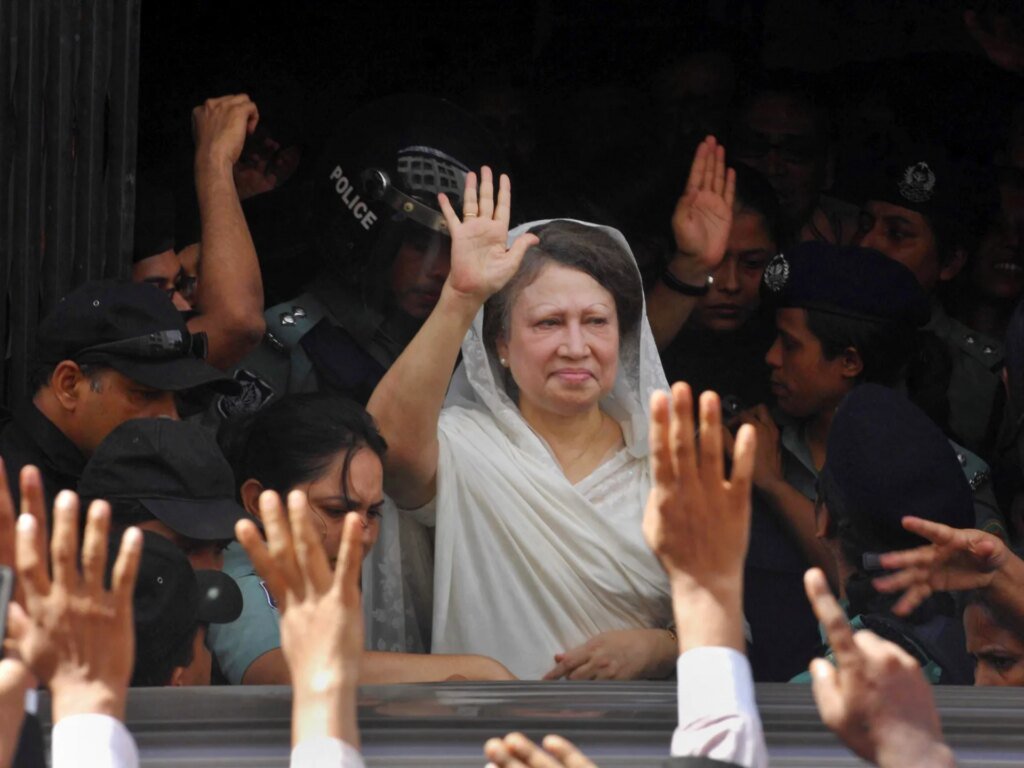
The Legacy of Begum Khaleda Zia: A Pivotal Figure in Bangladeshi Politics
In a heart-wrenching turn of events earlier this December, 48-year-old grassroots activist Tipu Sultan made headlines by publicly expressing his desire to donate a kidney to Begum Khaleda Zia, the chairperson of the Bangladesh Nationalist Party (BNP) and a former prime minister, who had been hospitalized since November 23. His poignant message, captured on a placard, caught the attention of the nation as it highlighted the emotional connection many felt towards Khaleda, especially during such a critical time. Sadly, after a long fight for survival, Khaleda passed away on December 30, marking the end of an era in Bangladeshi politics characterized by her fierce rivalry with Sheikh Hasina and her tumultuous journey through leadership.
As news of Khaleda’s death spread, the BNP announced the loss of a beloved national leader who had left an indelible mark on the political landscape of Bangladesh over three decades. Khaleda and Hasina, often referred to as the ‘battling begums’, had been central figures in a political saga filled with both resilience and conflict, standing on opposite sides of the political spectrum.
The Rise of Khaleda Zia
Born on August 15, 1946, in Dinajpur, Khaleda’s political journey began with personal tragedy. The assassination of her husband, President Ziaur Rahman, in 1981 thrust her into the political arena when the nation was plunged into uncertainty. Despite her initial withdrawal from politics, Khaleda was seen as a unifying figure for the BNP, which was left in disarray following her husband’s death. Her resilience shone through as she rose through the ranks of the party, being elected chairperson by 1984 and securing her place as a pivotal player in Bangladesh’s political history.
Over the years, Khaleda led the BNP to three significant electoral victories, positioning herself as a formidable leader. However, her terms in office were not without personal sacrifice; she faced considerable struggles in her family life, including the exile of her elder son, Tarique Rahman, and the tragic death of her younger son, Arafat Rahman Koko. Khaleda’s political career was marked by a relentless pursuit of democracy, even as she faced legal challenges and imprisonment under the Awami League government.
From Wife to Political Leader
Khaleda’s entry into public life occurred at a critical juncture in Bangladesh’s history. Initially a reserved and kind individual, her marriage to Ziaur Rahman in 1960 set her on a path she had not anticipated. As her husband became a significant political figure, she took on the role of First Lady with grace, managing family affairs while the nation’s politics unfolded around her.
The turning point came after her husband’s assassination. Khaleda was encouraged to step into a leadership role during a time of turmoil. Her subsequent decision to boycott the 1986 election solidified her image as a principled leader unwilling to compromise her values, earning her respect among political peers.
A Controversial Legacy
Khaleda’s governance style was marked by grand ambitions and severe criticisms. Throughout her administrations between 1991-1996 and 2001-2006, she implemented policy reforms aimed at economic stabilization and growth, particularly in the garment industry. While her tenure saw economic progress, such as high GDP growth rates, it also attracted accusations of corruption and nepotism. Allegations against her son and the BNP’s close ties to cronyism sparked public outrage, complicating her legacy.
Despite her achievements, Khaleda faced significant political missteps, with accusations of attempting to manipulate elections and respond inadequately to major national crises, including violent protests and acts of terrorism that marred her governance. The instability resulting from her mismanagement contributed to the military coup in 2007, further complicating her political journey and leading to years of political isolation.
A Commitment to Democracy
Throughout the challenges, Khaleda remained steadfast in her commitment to democracy, garnering admiration from supporters and critics alike. Her resolve to face adversity instead of fleeing the country during crises distinguished her as a figure of resilience. Analysts often highlight how her dedication to preserving her party and ideals under immense pressure solidified her place in history as a prominent female leader in a region traditionally dominated by male counterparts.
Now, as Khaleda’s legacy is reflected upon, questions arise about the future of the BNP without her leadership. Her son, Tarique Rahman, has stepped into the spotlight, returning from exile as the party’s acting chairman while continuing the political legacy of his parents. Upcoming elections present a crucial test of whether the BNP can galvanize support and unify under Tarique’s leadership while navigating a rapidly changing political landscape.
- Tipu Sultan’s heartfelt gesture for Khaleda Zia garnered national attention as she fought for her health.
- Begum Khaleda Zia’s political journey began abruptly after the assassination of her husband, leading her to challenge authoritarianism.
- Her governance was marked by significant economic reforms but also controversies surrounding corruption and political manipulation.
- Khaleda’s enduring commitment to democracy establishes her legacy against the backdrop of Bangladesh’s evolving politics and her party’s future with Tarique Rahman at the helm.