
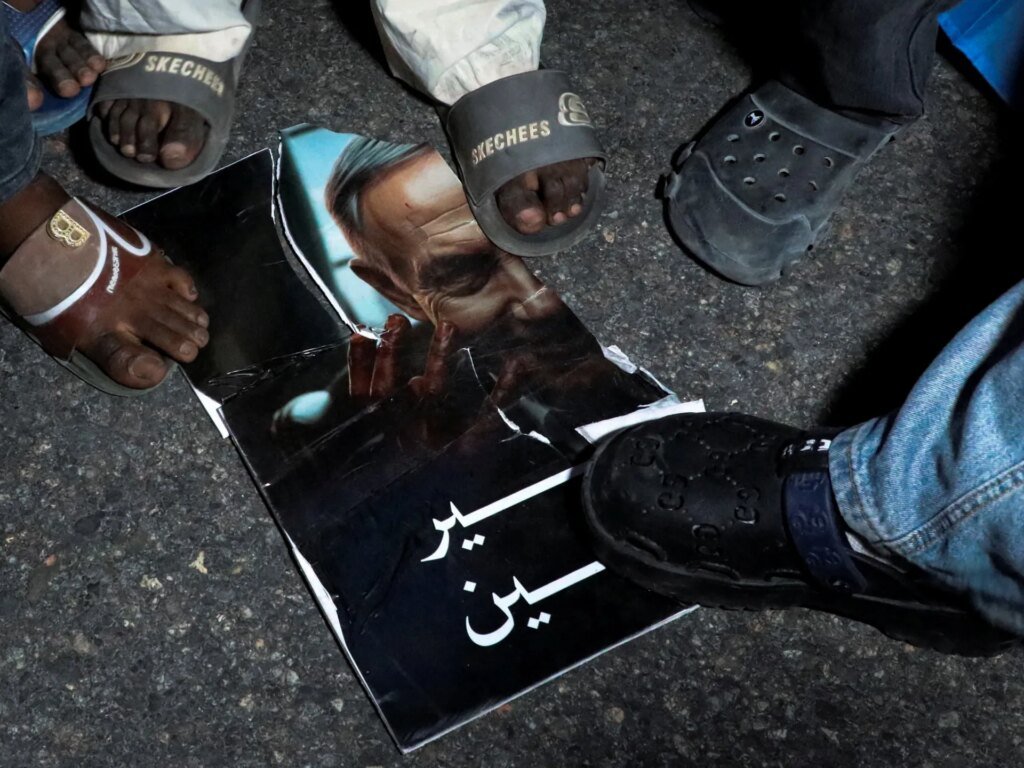
The Challenges Surrounding Israel’s Recognition of Somaliland
Israel’s recent recognition of Somaliland, a self-declared region in Somalia, has stirred significant controversy. The Somali government has expressed deep concerns that this move may not only threaten its sovereignty but also risk unsettling the already fragile peace in the region and internationally. This article explores Somalia’s strong reaction to Israel’s recognition and the broader implications it may hold for international relations.
Somalia’s Concerns about Recognition
In a formal communication to the United Nations Security Council (UNSC), Somalia described Israel’s recognition of Somaliland as a “direct and grave threat to international peace and security.” The Somali government categorically rejected this decision as a violation of its sovereignty, labeling it as “morally indefensible.”
The Motivation Behind Israel’s Recognition
Last week, Israel made headlines by becoming the first country to officially recognize the Republic of Somaliland as an independent state. Israeli officials framed this action as consistent with the Abraham Accords, a series of agreements that improved relations between Israel and various Arab nations.
Potential Consequences for Palestinians
In its letter to the UNSC, Somalia voiced alarm over reports suggesting that this recognition could be a pretext for the forced relocation of Palestinians to Northwestern Somalia. This concern reflects deeper anxieties about the stability of the Horn of Africa and the implications of such geopolitical changes.
Calls for Rejection and Solidarity
Somalia emphasized that Israel’s actions could set a dangerous precedent that undermines regional stability. The letter implored UNSC members to respect Somalia’s sovereignty, warning that such recognition threatens both regional and global peace and security.
Statements from Somali Officials
Abu Bakr Dahir Osman, Somalia’s representative at the UNSC, reiterated the letter’s message, stating, “This region [Somaliland] is not legally entitled to enter into any agreement or arrangement, nor to receive recognition from any other state.” He firmly rejected what he termed an act of aggression aimed at dividing Somalia and called for a united front against such moves from all member states.
International Responses to Somaliland’s Recognition
Shortly after Israel’s announcement, the United Kingdom reaffirmed its stance by explicitly refusing to recognize Somaliland’s independence, emphasizing ongoing support for Somalia’s territorial integrity. The UK encouraged collaboration between the Federal Government of Somalia and Somaliland authorities to resolve differences constructively, highlighting that internal divisions facilitate instability.
Refusals from Other Nations
China echoed the UK’s criticism, cautioning against recognizing separatist claims for self-interested reasons. “No country should encourage or support other countries’ internal separatist forces for its own selfish interests,” stated a spokesperson from China’s Ministry of Foreign Affairs during a press conference.
Similarly, South Africa’s Foreign Ministry emphasized the necessity for the international community to reject external interference and advocate for a united, stable Somalia.
US Perspective on the Issue
Amid the backlash, Tammy Bruce, the US deputy representative to the UN, asserted that Israel, like any sovereign nation, holds the right to establish diplomatic relations. She criticized the UNSC for perceived double standards, pointing out that several members had previously recognized a Palestinian state without prompt action from the council. Bruce noted that there was no new announcement regarding US policy on Somaliland’s status.
The Historical Context of Somaliland
Somaliland has been attempting to assert its independence since breaking away from Somalia in 1991, amidst a civil war led by former military leader Siad Barre. The self-declared republic operates with its own constitution, currency, and national flag. However, parts of its claimed territory remain under the control of rival Somali administrations, and it has sought international recognition for over thirty years without success.
Conclusion
The recognition of Somaliland by Israel has sparked significant tension, particularly in relation to Somalia’s sovereignty and the sensitive dynamics of regional politics. As international responses continue to unfold, the implications for both Somalia and broader relations in the Horn of Africa remain to be seen.
- Somalia views Israel’s recognition of Somaliland as a violation of its sovereignty.
- The move raises concerns about potential forced relocations of Palestinians.
- International responses vary, with some countries reaffirming support for Somalia’s unity.
- Somaliland continues to seek recognition, despite historical and contemporary challenges.